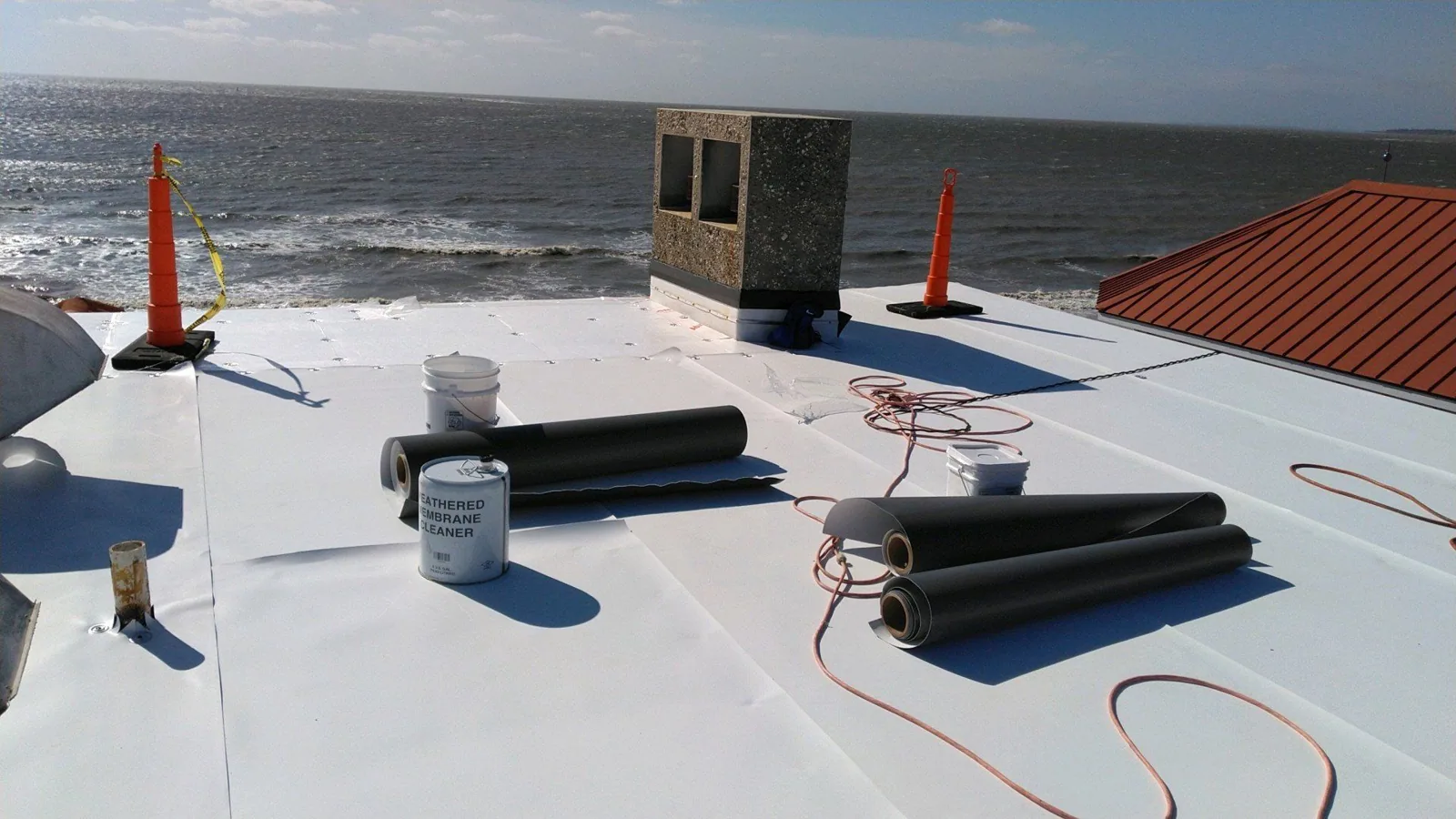
A KEE membrane needs a repair plan that accounts for its actual formulation and the section where a bond has failed. In Frisco, TX, we inspect the sheet, welds, flashing, penetrations, and insulation before recommending a patch or a larger scope. KEE is a PVC alloy that includes ketone ethylene ester, but the label alone does not identify an installed product or prove its remaining service life. We confirm the assembly from visible details and building records where available. North Platinum's corporate and mixed-use sites differ from the historic commercial properties in the Rail District, especially in access and occupied hours. Those local contexts shape staging, not a roof diagnosis. A condition inspection maps the suspect area, photographs each detail, and gives the owner a decision point before material is ordered or another layer is proposed.
Confirm the Sheet Before Choosing Materials
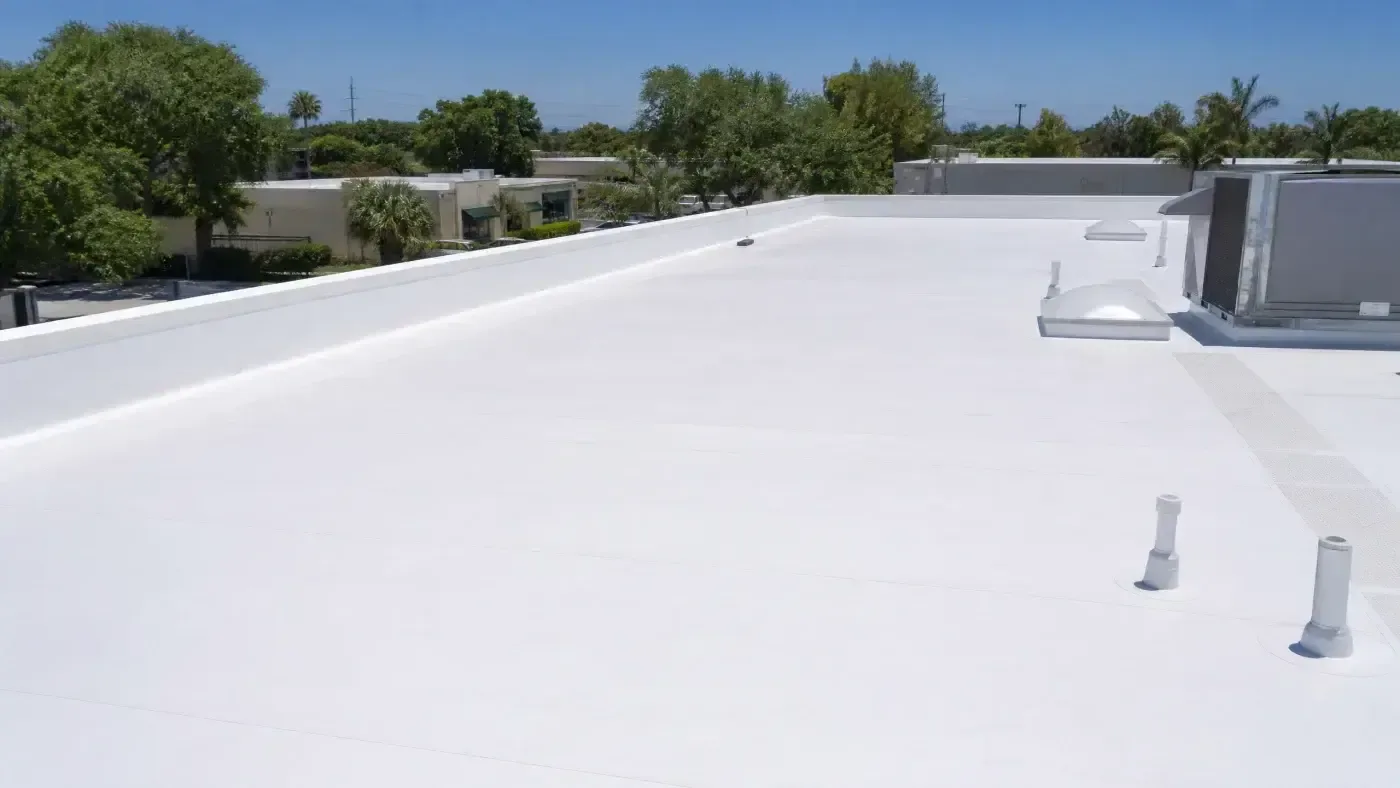
KEE and standard PVC are closely related thermoplastic sheets, and field appearance may not distinguish one formulation from another. We review exposed material, seam construction, repair history, manufacturer labels, and available roof records. If the difference changes the welding rod, accessory, or patch method, we verify it before work begins. A surface that has been coated or repeatedly repaired may hide the information needed for a reliable match. We document what is known and isolate any assumption that needs an opening or product record. A PVC roof system can share heat-welding principles with KEE, yet accessory details and compatibility still have to be checked for the installed sheet. The repair scope names the material basis and does not treat every white roof as interchangeable. That protects the new work from a mismatch and gives the owner a useful reference for later service.
Check Welds at Corners and Transitions
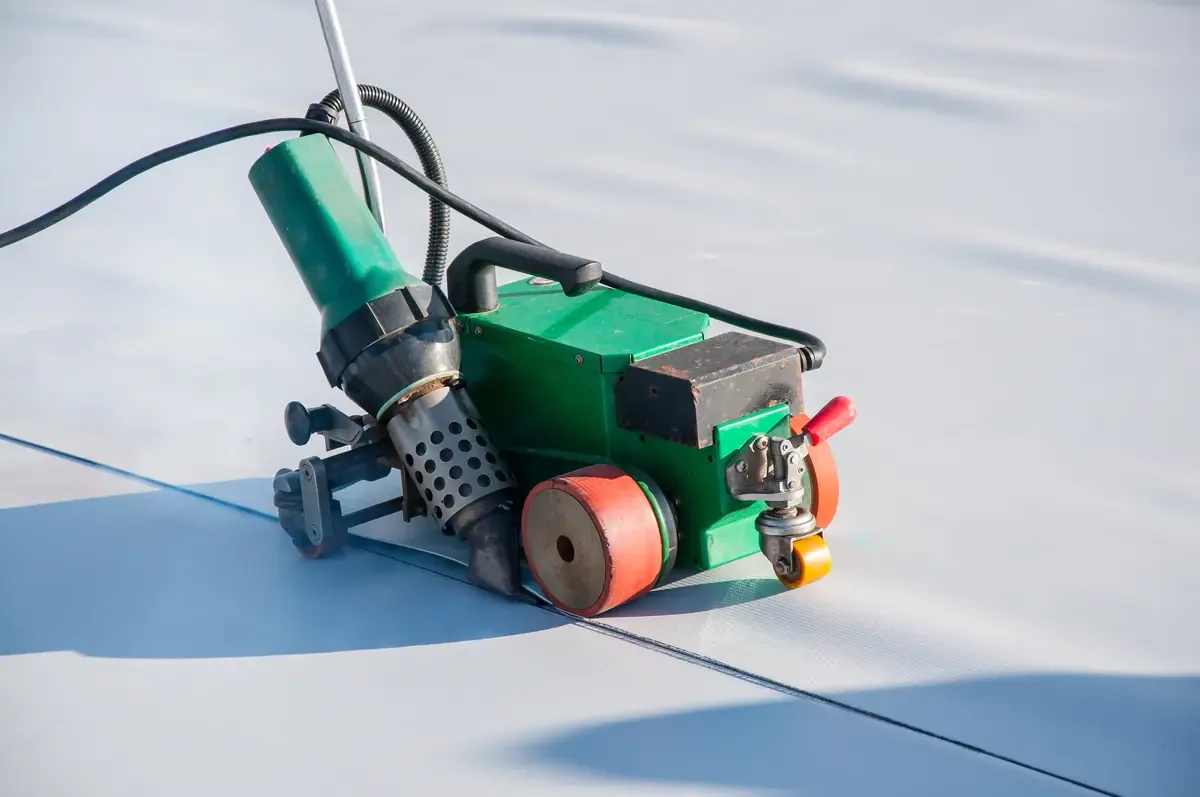
Seam performance changes where a field lap meets a curb, wall, drain, or perimeter detail. We inspect those intersections for wrinkles, incomplete welds, contamination, movement, and separation along the edge of a previous patch. A probe can expose a loose bond, but a single test point does not map the full failure. We follow the seam until it reaches stable material and check the adjacent sheet for heat aging or mechanical damage. If the defect is contained, a localized membrane repair may keep cost and downtime limited. Several open transitions or brittle material can change the decision toward a section replacement. We record each condition separately so the owner can approve a repair boundary without including unrelated items. The written scope identifies preparation, patch extent, and the closeout check needed before the roof returns to normal service. We also note whether a wall termination, metal edge, or pipe boot must be disturbed to reach the weld. That detail can change labor, trade coordination, and the time a roof section stays open.
Trace Drainage Beyond the Membrane
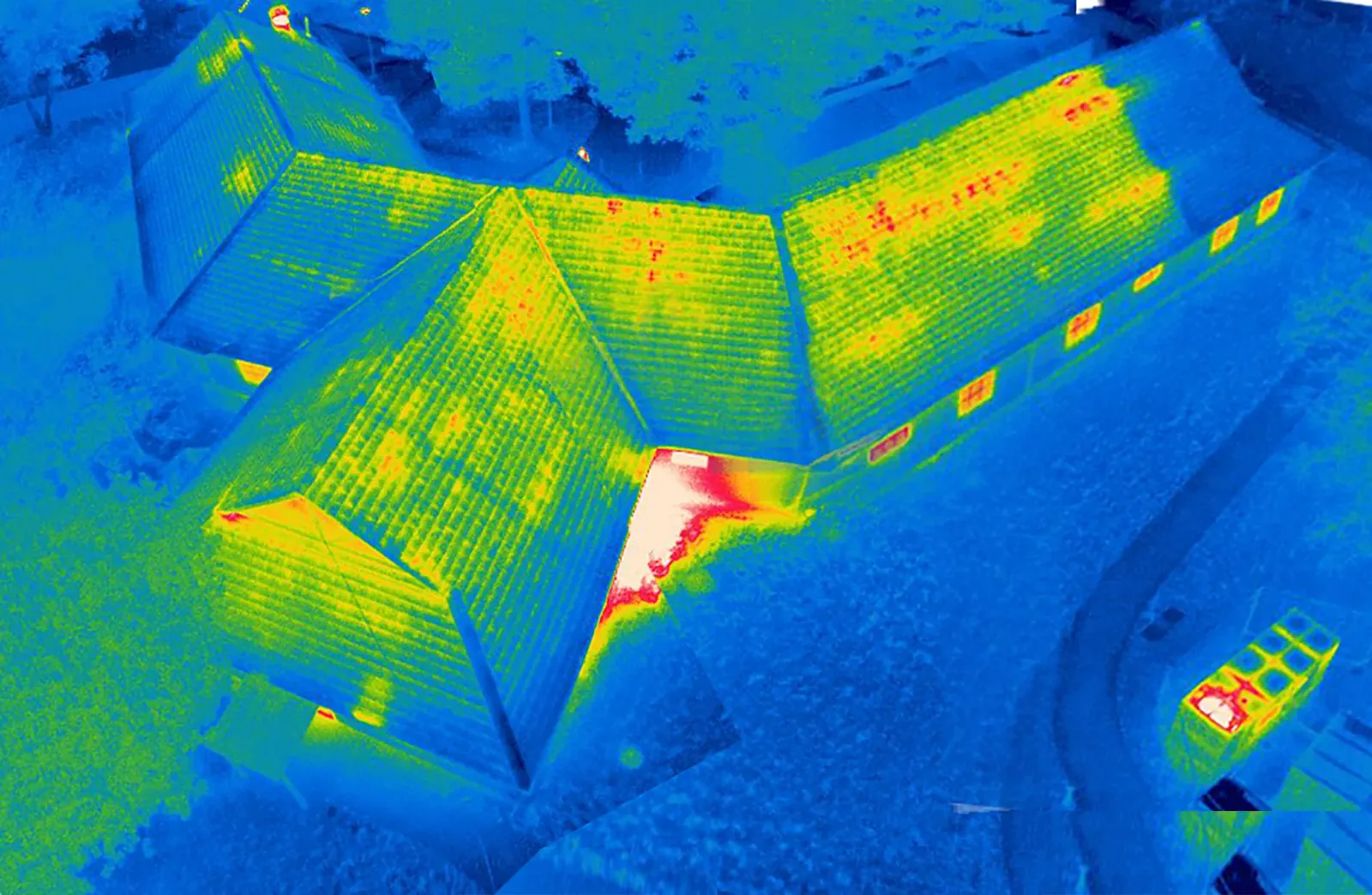
A KEE roof inspection follows water from a seam to the outlet rather than treating each as an isolated defect. We inspect where the welded sheet turns into a drain flange, then check whether the assembly has a compatible termination at the bowl. A reflective stain can show where water traveled, but it does not identify a failed weld by itself. We mark seam intersections, outlet corners, and any repair that bridges the field membrane. The infrared survey may help prioritize suspect insulation zones, with confirmation testing used before removal quantities are approved. May brings 4.78 inches of average precipitation across DFW, a seasonal planning consideration rather than proof about this roof. The scope records which water path is confirmed and which remains a test question. A drain correction, membrane weld, and insulation replacement stay on separate lines so the owner can authorize only the work supported by the inspection.
Choose a Work Period the Roof Can Hold
KEE welding should be sequenced around the conditions on the roof, not a generic calendar. Before the crew unloads, we confirm the lift location, walk path, roof temperature, and surface condition with the building contact. Frisco's mobility network includes Dallas Parkway and US 380, while the precise route from public road to roof remains site-specific. The Dallas Parkway corridor helps orient the discussion, but it is not a substitute for a delivery check. We choose a panel length and seam sequence that can be secured before work pauses. A sample weld provides a reference point for the day's settings; the technician records adjustments as surface or weather conditions change. The plan also names the point where tenants or loading crews need notice. This keeps the membrane's open edge controlled and gives the owner a clear cutoff if access or temperature moves outside the agreed window.
Keep Repair and Replacement on Separate Lines
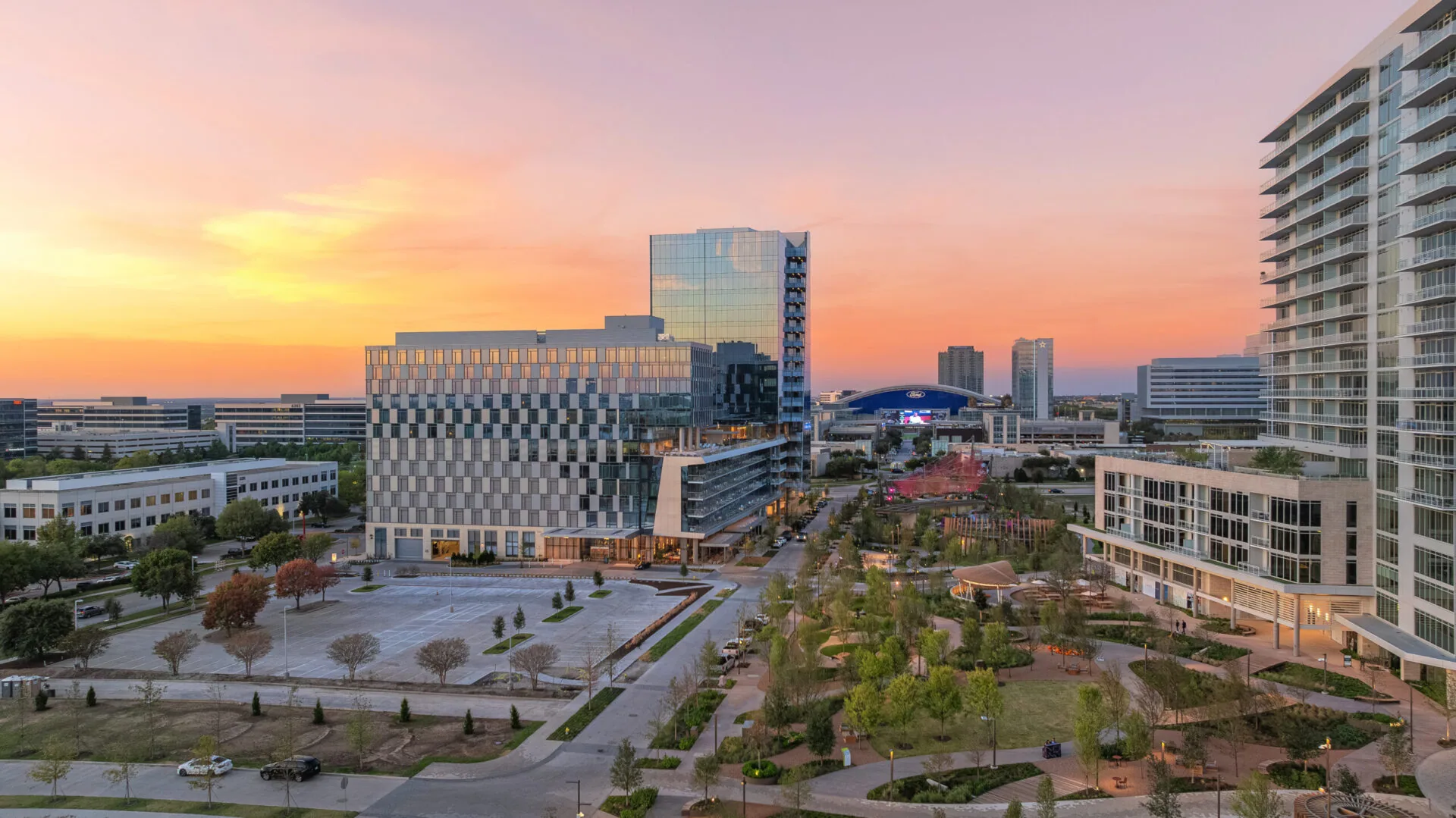
Repair cost follows seam length, preparation, flashing count, wet insulation, roof height, and material access. We separate observed defects from concealed conditions so the estimate does not treat a possible wet area as confirmed removal. If recurring weld failures appear in multiple sections, the owner can compare another repair with replacement of a defined area. A TPO assembly may be part of a future comparison, but deck capacity, drainage, attachment, use, and maintenance access determine whether it fits. Frisco's downtown reinvestment planning includes Main Street and Fourth Street, while North Platinum contains larger corporate and mixed-use sites. A storefront access window may differ from a larger office or warehouse schedule, so we confirm the building's own constraints. A condition map preserves photographs, repair limits, and open questions for the next budget review. The owner sees what can be done now and what decision date controls the larger spend.
Commercial Roofing Questions
How do you tell KEE from another white thermoplastic roof?
We compare visible sheet characteristics, seam details, repair materials, labels, and building records. Color is not enough to confirm a formulation. When KEE versus PVC changes the accessory or weld procedure, we verify the product before ordering. The report records what was confirmed and any identification that remains open.
Can a failed KEE weld be repaired without replacing the whole section?
A localized failure may be repaired when sound material surrounds it and the sheet accepts proper preparation. We follow the separation to a stable limit and check nearby transitions before pricing. If the same bond loss appears across several roof areas, we set a broader comparison so the owner can weigh recurring access and repair expense against replacement.
Does KEE require a different inspection after Frisco spring storms?
The same roof-level checks apply: seams, edges, flashings, penetrations, drains, and interior signs of water. Regional severe-weather records help set the timing of a review, but they do not prove damage at an individual building. We document visible conditions and keep the event record separate from conclusions the inspection cannot support.
What can delay a KEE repair after approval?
Material identification, surface preparation, roof temperature, wind, moisture, equipment access, and a safe dry-in window can affect the start date. We name those dependencies in the work plan and identify the last point at which the section can be opened safely. If weather moves that point, the temporary protection and next decision are clear.
What should the KEE closeout record include?
The owner should receive the repaired section, preparation method, material used, seam or flashing photographs, completion date, and any adjacent condition left to monitor. If a test opening was made, the record includes its location and what was observed. That gives the next inspection a defined baseline and keeps a local repair separate from a future capital decision. The file also makes clear that one repaired section is not a system-wide sign-off.