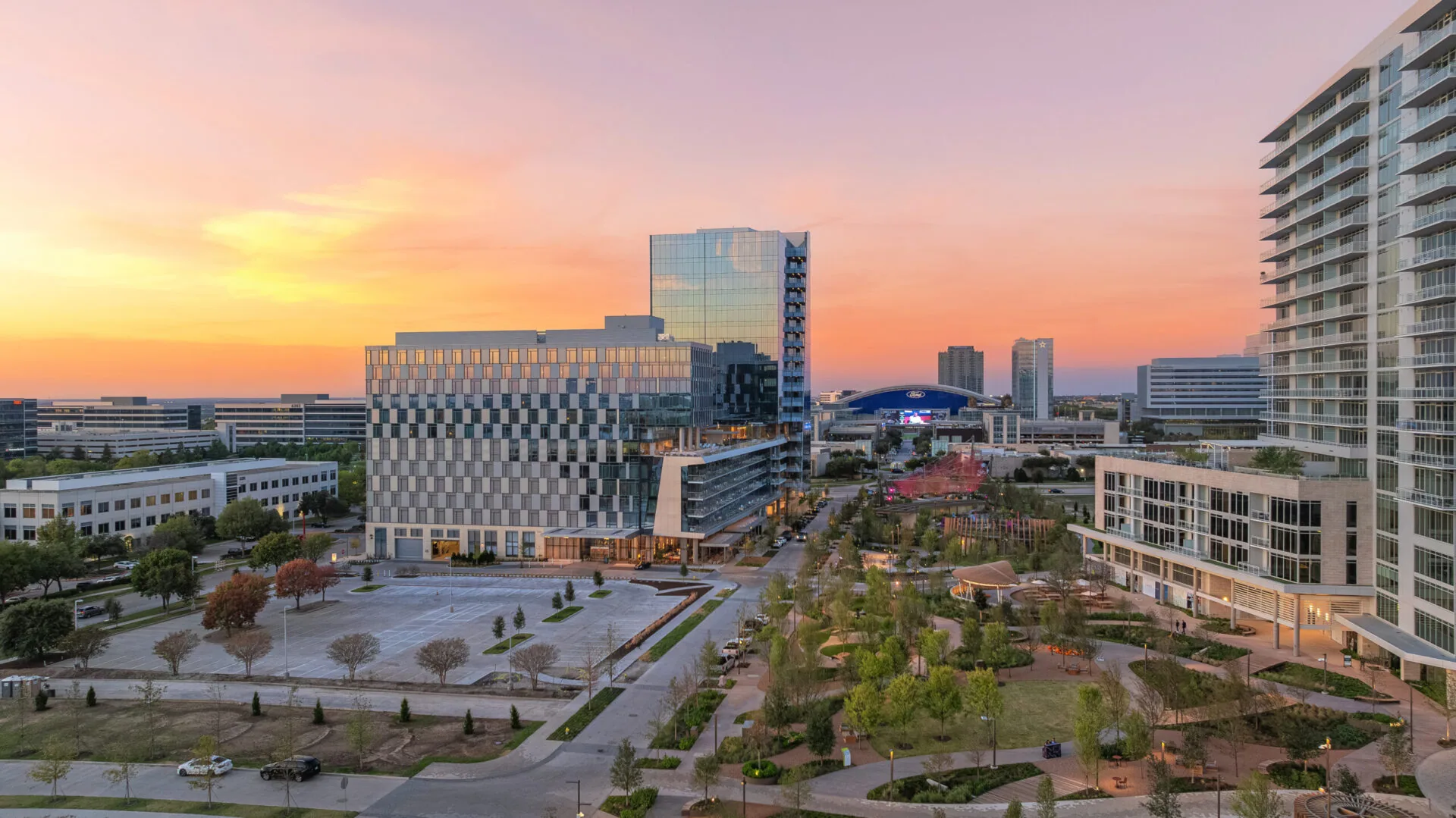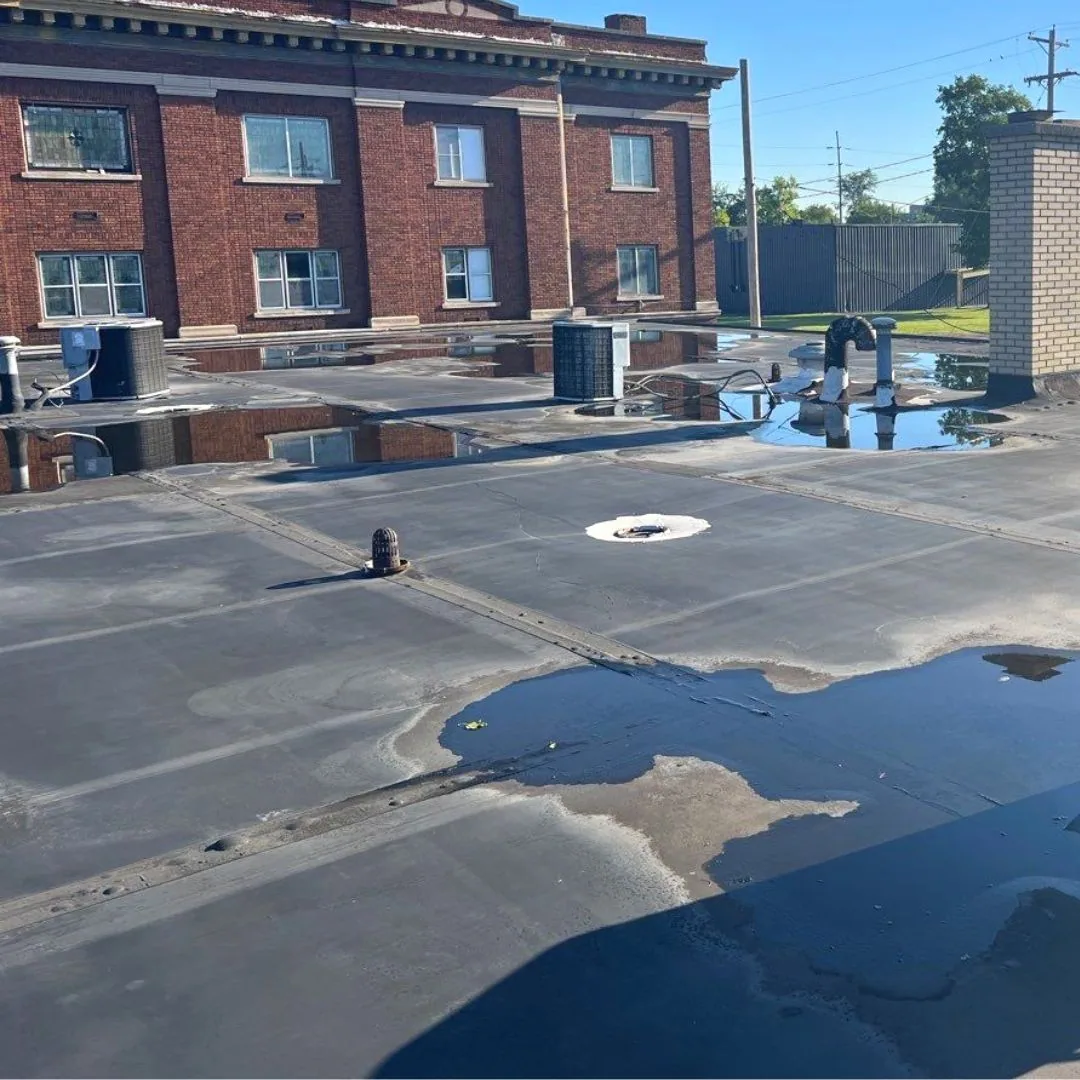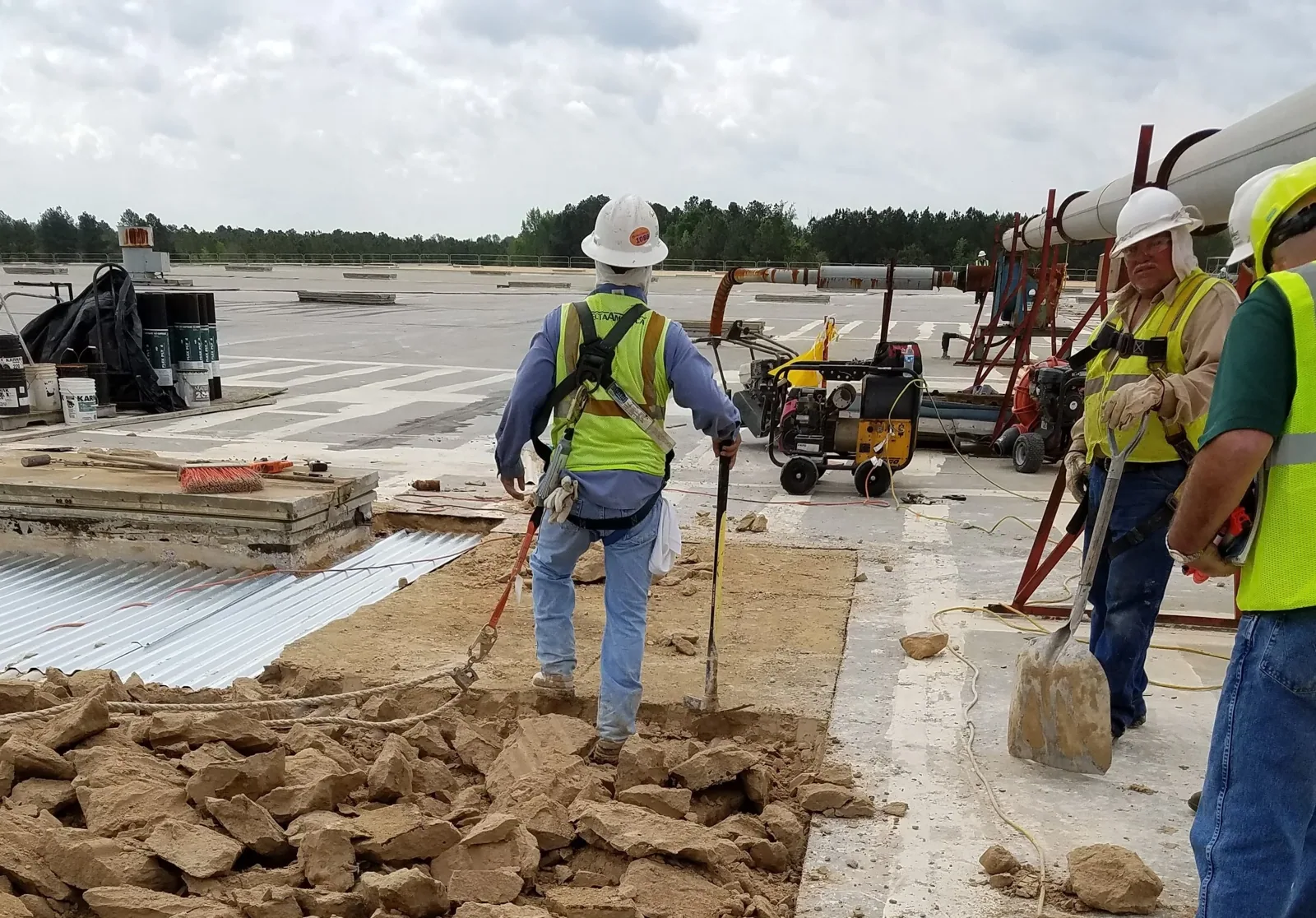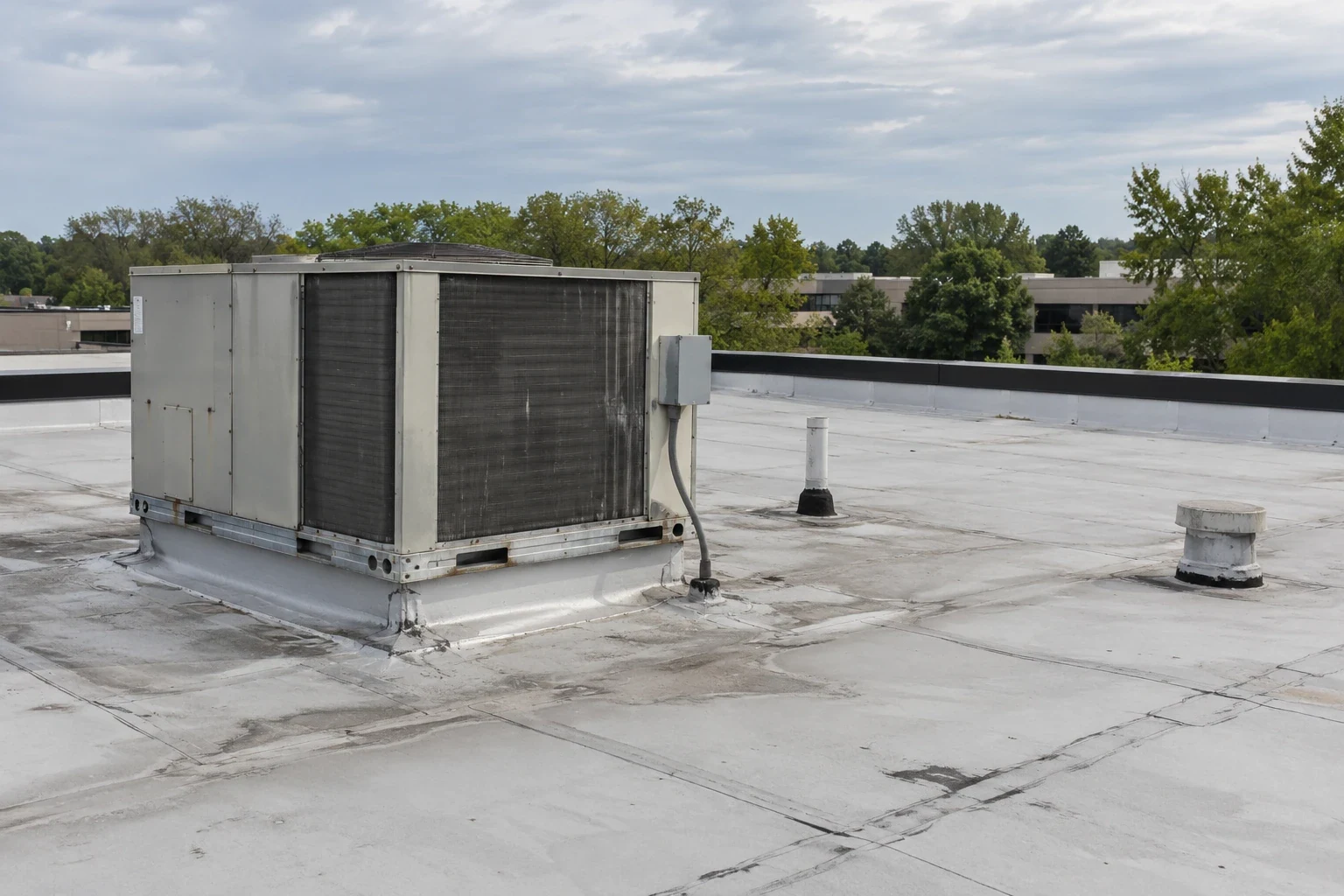
A drip near a dock can change receiving, put cartons at risk, and pull a supervisor away from the shift. We locate the water path, protect stock below, and mark the roof section before moving material. Frisco's business-park plan allows office, warehouse, distribution, and showroom forms when zoning and city truck-route access support them. North Platinum is a broad corporate and mixed-use corridor, while nearby Wylie connects a logistics park to regional rail and SH 78. Those facts describe a larger freight context, not the roof or truck gate at one operator's building. We verify both on site. A Dallas Parkway corridor inspection begins with the dock schedule and access route that must stay open.
Protect Inventory before Tracing the Roof
The first call identifies the affected bay, active water, stock below it, and the contact who can arrange interior access. We protect a clear zone and work back from the ceiling mark to seams, penetrations, drains, curbs, and wall transitions above. Water may follow a deck flute or conduit before it reaches inventory, so a stain does not set the repair boundary. Our around-the-clock response can provide temporary protection while the operator decides whether a receiving lane needs a short hold.
For a 3PL, an aisle closure can interrupt pick paths or cross-dock movement. The plan notes which lane stays clear, how lift access will be separated from trailers, and where materials can be staged. If the crew cannot close the roof section before operations resume, we identify that limit before the shift starts. A leak repair visit returns the water path, affected bay, and next approval contact rather than leaving an open-ended interior watch.
Map Large Roof Sections by Practical Work Zones
A long roof field is easier to price when it is divided into sections with known seams, drains, equipment curbs, and perimeter details. We record the system that is visible, surface movement, previous patches, and any area that needs a test opening. Rooftop units and later trade work can create transitions that do not match a broad membrane assumption. A section-by-section inspection helps the owner distinguish a localized defect from a larger wet or unstable assembly.
We keep the map useful to operations by marking dock areas, internal travel lanes, and access points beside roof conditions. The record can identify which area is closed, which one remains under observation, and what evidence supports the next repair. Frisco planning recognizes that distribution and warehouse forms depend on zoning and truck access, while Wylie has a separate freight setting tied to SH 78. The specific property determines staging, not the general presence of a regional logistics network.
Keep Freight Access in the Roof Work Plan
Frisco’s city mobility work names the Dallas Parkway frontage road and US 380 as projects within its transportation network. For a freight operator, those are regional reference points; dispatch still needs the building’s approved gate, trailer appointment, queue location, and turning clearance. The site lead confirms which fire lanes and dock approaches must remain open, then records a fallback staging area before the roofing crew arrives. That prevents a roof access plan from colliding with receiving.
Wylie's CPKC Intermodal Terminal and approximately 362-acre logistics park connect distributors to Class I rail operators via SH 78, a regional fact that does not define access at a Frisco building. Each Frisco roof gets its own work boundary, dock note, and handoff contact. A property access record can keep the site contact and tenant notice beside the roof map. For a mixed property with owner and operator approvals, a capital decision file can carry the repair boundary without turning it into a freight forecast.
Set a Closeout Boundary for Heat and Storms
Keep receiving and roof work on one daily status board. DFW July and August normals reach 95.6°F and 95.8°F; during a hot shift, the supervisor and roofer agree when exposed work stops and which bay remains protected below. Spring is DFW's wettest and most active severe-weather season. That seasonal context can change a planned staging window, yet a warehouse inspection still follows the reported leak, roof section, and visible evidence rather than the calendar. The shift report includes dock status and trailer-queue impact, giving dispatch a clear restriction to remove before the next appointment.
If a delivery window or weather interruption shortens the shift, the crew records the last completed roof detail, temporary cover, and the area that needs a return visit. The operations lead can then see whether an aisle is clear and whether receiving can proceed under the secured zone. A storm follow-up inspection documents visible change by roof section. Where the water route involves an overflow or drain, a drain and overflow review can be separated from membrane work, so pricing and timing remain traceable.
Keep Repair, Restoration, and Replacement Separate
A repair may solve an isolated opening; a repeated leak or wet assembly can call for more testing or a broader capital comparison. We show preparation, materials, drainage, edge details, disposal, and concealed-condition approval as separate scope items. A capital plan can distinguish a same-day response from work scheduled around a planned inventory cycle. A coating or recover is not priced as a shortcut when moisture or attachment remains unresolved.
Closeout includes photographs, section labels, completed repairs, remaining observations, and the next review date. The operations lead can keep this file with dock and shift notes, while the asset manager carries the repair line into a budget review. A general contractor coordination file can also show which trades have roof access and when their penetrations need follow-up. We leave the site with a clear roof boundary and a named person responsible for the next decision.
Commercial Roofing Questions
What should a 3PL do when water reaches a loading area?
Protect exposed stock, identify the dock or aisle affected, and provide a contact who can arrange roof and interior access. We can respond at any hour, set temporary protection, and trace the reported water path. The scope then identifies whether a lane can reopen and which permanent repair still needs approval.
Can roofing work continue while trucks are loading?
It may be possible when the lift, material route, debris area, and roof opening remain separate from active trailer movement. We review the approved route and shift timing with the site lead. If that separation cannot be maintained, the plan shows the short hold needed before the crew opens the section.
How do you protect goods stored beneath a roof repair?
We map the affected bay from inside, set a protection area, and coordinate any relocation or aisle restriction with operations. On the roof, we close the exposed area within the planned shift and document remaining moisture or concealed conditions. The owner receives a location-based record rather than a general warehouse-wide finding.
Does a nearby rail or highway corridor change roof access?
Regional corridors help explain freight activity, but property access still comes from the specific gate, site route, and operator rules. Frisco mobility plans identify Dallas Parkway and US 380, and Wylie reports its own connection near SH 78. We confirm the route for the building under repair before staging equipment.
What makes a distribution roof repair expand in scope?
Wet insulation, damaged deck, multiple seam failures, inaccessible drains, and added flashing or attachment work can extend beyond the visible drip. We document each condition, protect the roof opening, and obtain direction before adding work outside the approved boundary. That gives the operator a chance to review cost and shift impact together.