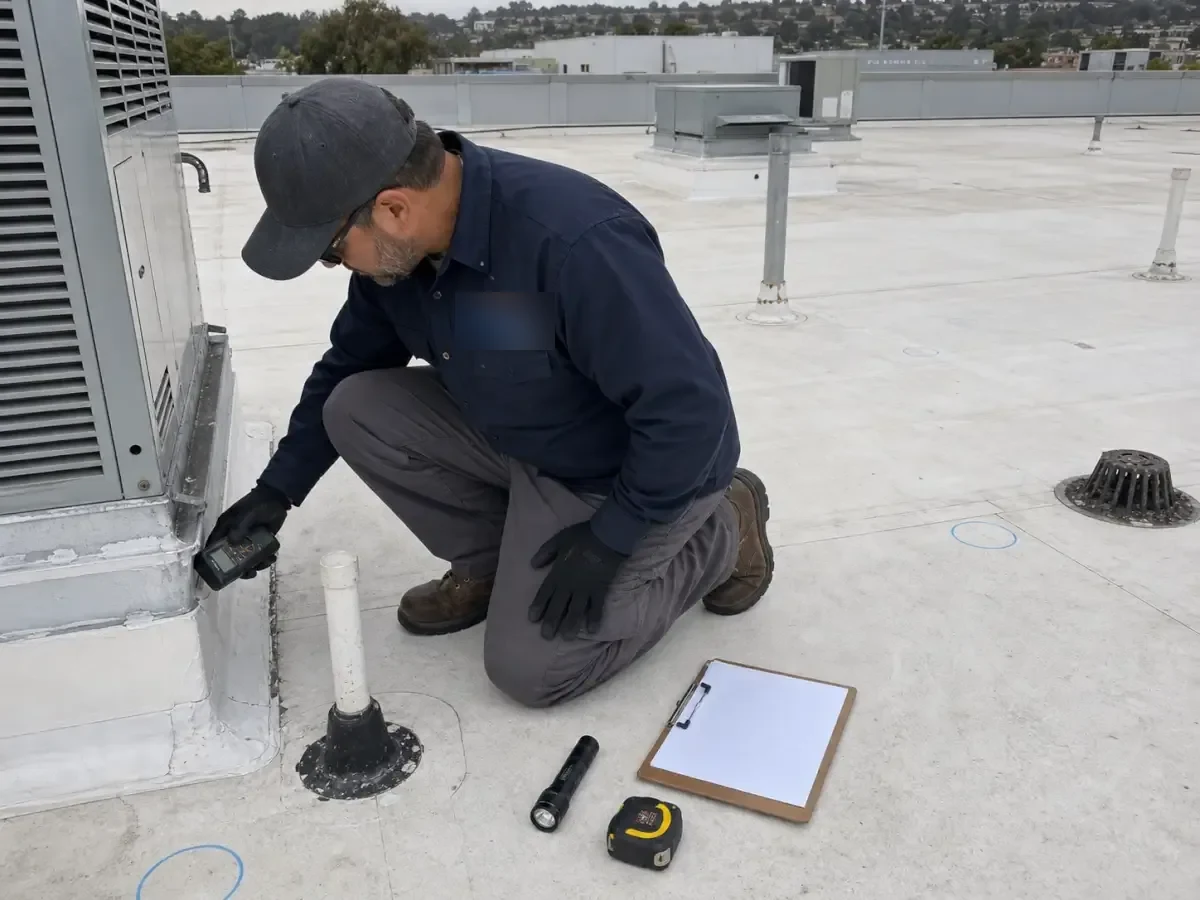
A leak over an active business needs a defined roof section before the next work window closes. Lewisville's adopted Business 121 plan covers five focus areas with about 19 million square feet of industrial space and 2 million square feet of retail space. Those figures describe the corridor, not any roof, so we inspect the property before setting a repair line. We trace the water path, protect the affected interior, and note the access window that keeps loading or customer areas usable.
That first record matters during a North Texas storm week or a long stretch of summer heat. DFW July and August average highs reach the mid-nineties, and spring is the region's severe-thunderstorm peak. Neither fact establishes damage at a specific address. We check seams, edges, drains, penetrations, and prior patches, then separate temporary protection from permanent work. An owner comparing a Plano roof inspection with commercial roofing in Carrollton still needs a Lewisville condition map for this building.
Mark the Roof Section First
The ceiling stain gives us a starting point, not the repair boundary. We compare the interior mark with the roof above it, look for a path through insulation or a deck joint, and inspect the nearest curb, seam, drain, and wall transition. Water can travel before it appears, so we photograph the conditions that support the repair location and identify any concealed area that needs a test opening. That keeps the first authorization tied to evidence rather than a guess at the full roof.
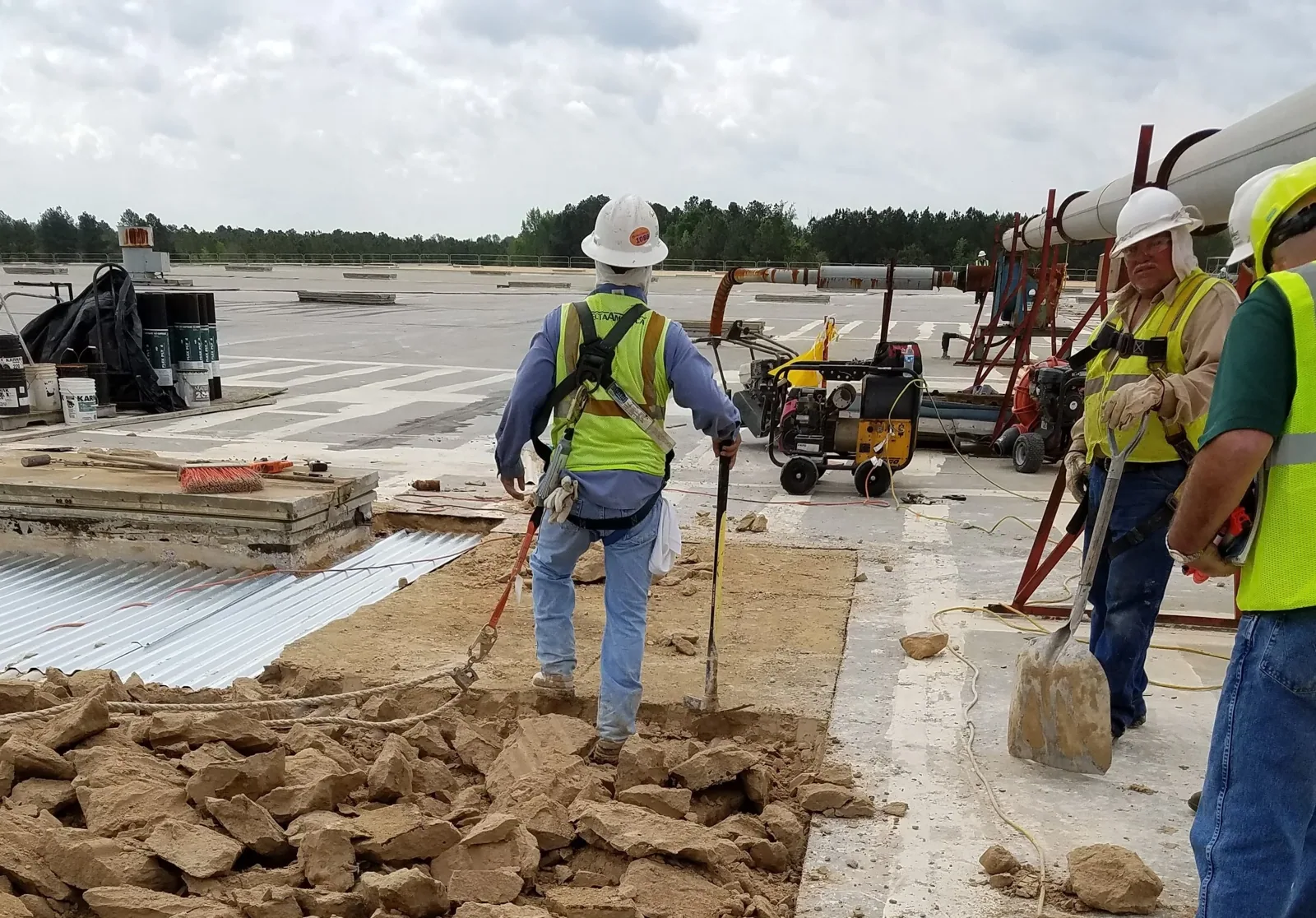
For an active leak, we protect the space below and use temporary cover only where the roof condition and weather allow it. A permanent patch needs a sound surface, compatible materials, and an edge that can be closed against water. The crew records what was opened, what was repaired, and what remains under observation. If the entry point is not ready for permanent work, the report names the next safe step and the decision deadline. This is the same measured sequence we use for commercial leak repair, with the Lewisville roof section determining the scope.
Separate Corridor Context from Roof Facts
Business 121's five focus areas create a broad commercial setting, with industrial and retail uses in the plan. That mix can place different demands on access: a loading route may need to stay open at one property, while customer entrances or delivery hours set another building's work window. The plan does not tell us which roof system sits on a given property. We identify the assembly on site and note roof height, staging limits, rooftop equipment, and areas where an open repair could affect operations.
Each scope starts with the owner or site contact's access rules. We agree on a safe route, material drop, daily work boundary, and who can approve a test if concealed layers change the repair. A portfolio team can compare this record with commercial roofing in Grapevine, but each building receives its own photographs, findings, and approval trail. A corridor figure is not a roof measurement, and it does not replace an inspection of the property. That distinction keeps labor, staging, and follow-up costs tied to observable conditions.
Use Weather to Set Inspection Timing
Summer conditions can change the safe time for a roof walk. DFW normals put July and August average highs close to 96 degrees, so we plan access before a surface has accumulated the day's heat and confirm how long exposed work can remain open. The inspection records the observed condition at each seam or transition. A normal temperature does not tell us whether a membrane has aged or whether a particular opening came from heat movement.
Spring brings the strongest severe-thunderstorm frequency across North Texas. Regional storm history is a reason to compare a new report with the property's own roof history, not a finding against every building. We note the event date supplied by the owner, photograph any visible change, and separate storm-related openings from maintenance already on file. An inspection with photographs keeps the baseline clear. If the owner needs roof damage documentation, the record stays tied to observed conditions. For Lewisville's mix of industrial and retail space along Business 121, the operating calendar can also affect when we inspect or repair. A written storm record keeps the next decision tied to the roof section and the building's actual access window.
Price the Repair Boundary
A localized repair can make sense when the membrane or metal around the failure remains serviceable and the affected section is limited. Replacement enters the discussion when recurring openings, widespread moisture, attachment concerns, or deterioration cross several details. We do not infer those conditions from corridor statistics or weather alone. The inspection records the roof system, seam condition, flashing, drainage, prior repairs, and any test results that support the choice.
Cost and timing follow the work area. Roof height, access hours, equipment protection, tear-off layers, material compatibility, and disposal all affect the estimate. We separate a defined base repair from optional work that depends on opening the assembly. For a TPO roof, for example, the repair material and weld procedure must fit the installed membrane; if the existing system is different, the recommendation changes. The written scope sets out each roof section, the reason for the work, exclusions, and the next decision date. That lets the owner compare repair and replacement without blending uncertain conditions into one number.
Keep the Condition Map Current
Closeout should leave the next manager with a usable record. We label photographs by roof section, show completed work and any area still under review, and note what access or testing remains. A roof condition report can help compare the next inspection with this visit, especially when the property changes hands or a budget date is approaching. The record should distinguish verified damage, maintenance items, and questions that need an opening or additional test.
Lewisville owners can use that map to schedule around tenants, inventory, deliveries, or customer hours without assuming every roof has the same assembly. We will respond around the clock when water is active, then set permanent work after the section and repair boundary are clear. Share the building use, leak status, available roof records, and decision window. We will inspect the affected area and return a prioritized repair-versus-replacement scope for the next spend.
Commercial Roofing Questions
Does the Business 121 square footage tell you how large my roof is?
No. The plan reports industrial and retail space along a corridor, not roof area or roof system. We measure the property section during inspection, record assembly and access conditions, and price work from those observations. That avoids treating corridor totals as a building takeoff.
What should happen during the first visit for an active leak?
We protect the affected interior, trace the likely water path, and document nearby roof details. If weather or surface conditions prevent a sound permanent repair, we identify temporary protection and set the next inspection or repair window. The report keeps immediate containment separate from the permanent scope.
Can a roof repair proceed while deliveries continue?
Yes, when the work area, material staging, and delivery route can be separated safely. We confirm the access window with the site contact and define the section that can be left weather-tight at the end of each shift. If those boundaries conflict, we schedule a different period before mobilization.
How do summer heat and spring storms change the recommendation?
They affect inspection timing and the details we prioritize, but neither proves damage to a particular roof. We inspect exposed seams, edge metal, penetrations, and drainage, then compare findings with prior records. The recommended repair reflects what is present on this roof, not the regional weather summary.