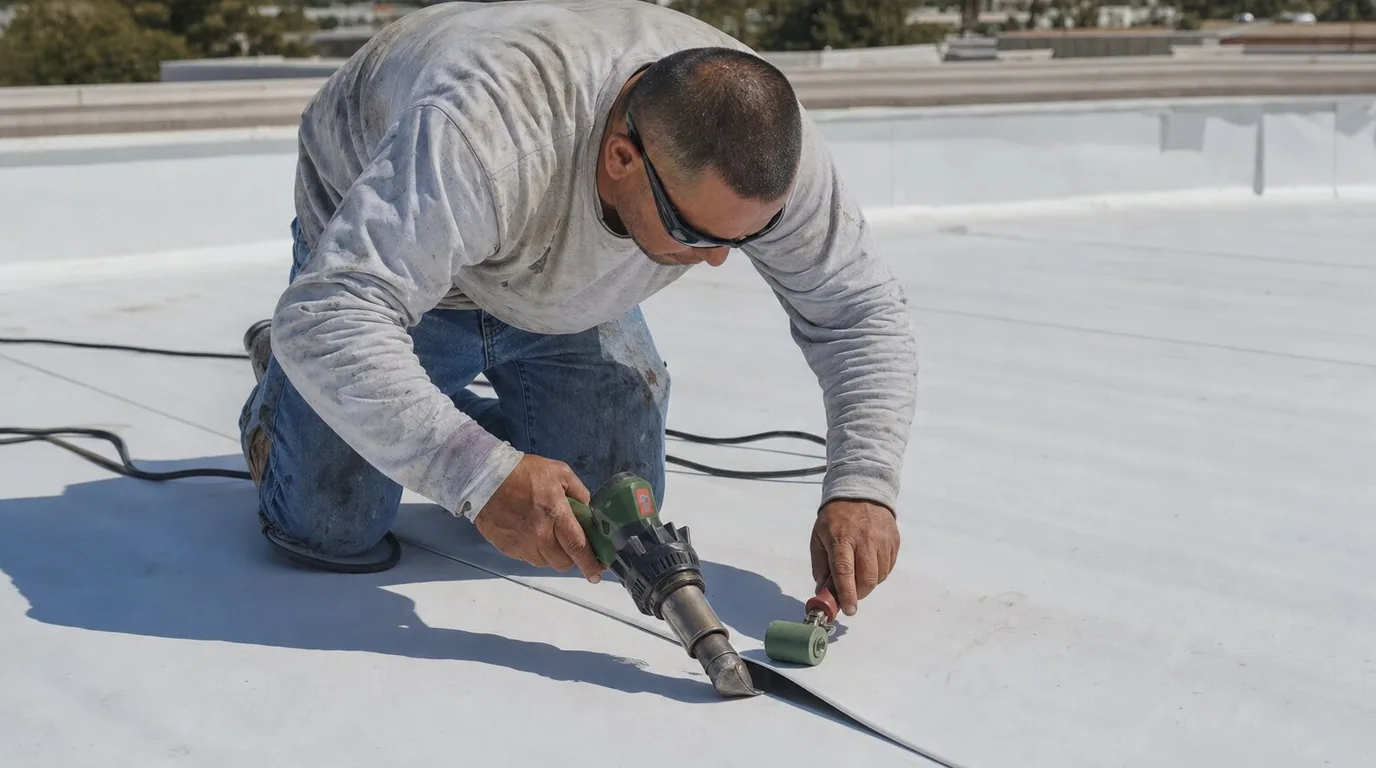
One roof defect can create a large interior disruption while the repair itself stays local. In Frisco, TX, we trace the water path, identify the failed detail, and mark the repair boundary before preparing material. A seam, curb, drain, edge, or puncture calls for a different repair method, so a broad patch is not a diagnosis. The owner receives photographs of the finding, the proposed work, and any nearby condition that could change the scope. DFW spring storms and prolonged summer heat make follow-up timing part of the repair plan, especially when a roof section is already exposed. For an active leak, our leak-tracing response focuses first on water entry and interior protection.
Trace the Failure Before Choosing a Patch
We begin above the leak and inspect the surrounding field rather than treating the ceiling mark as a roof coordinate. Water can travel along insulation, deck flutes, or a curb before it reaches the interior. The walk checks seams, laps, penetrations, flashings, drain bowls, edge metal, and past repair material. We compare the defect with nearby staining and document which conditions are active, which are evidence of prior work, and which need a closer test. If the first opening does not explain the water path, we inspect the next likely transition instead of repeating sealant. That process keeps the repair scope tied to a cause we can describe. It also prevents a local patch from hiding an adjacent split seam or an open counterflashing joint.
Match the Repair to the Roof Detail
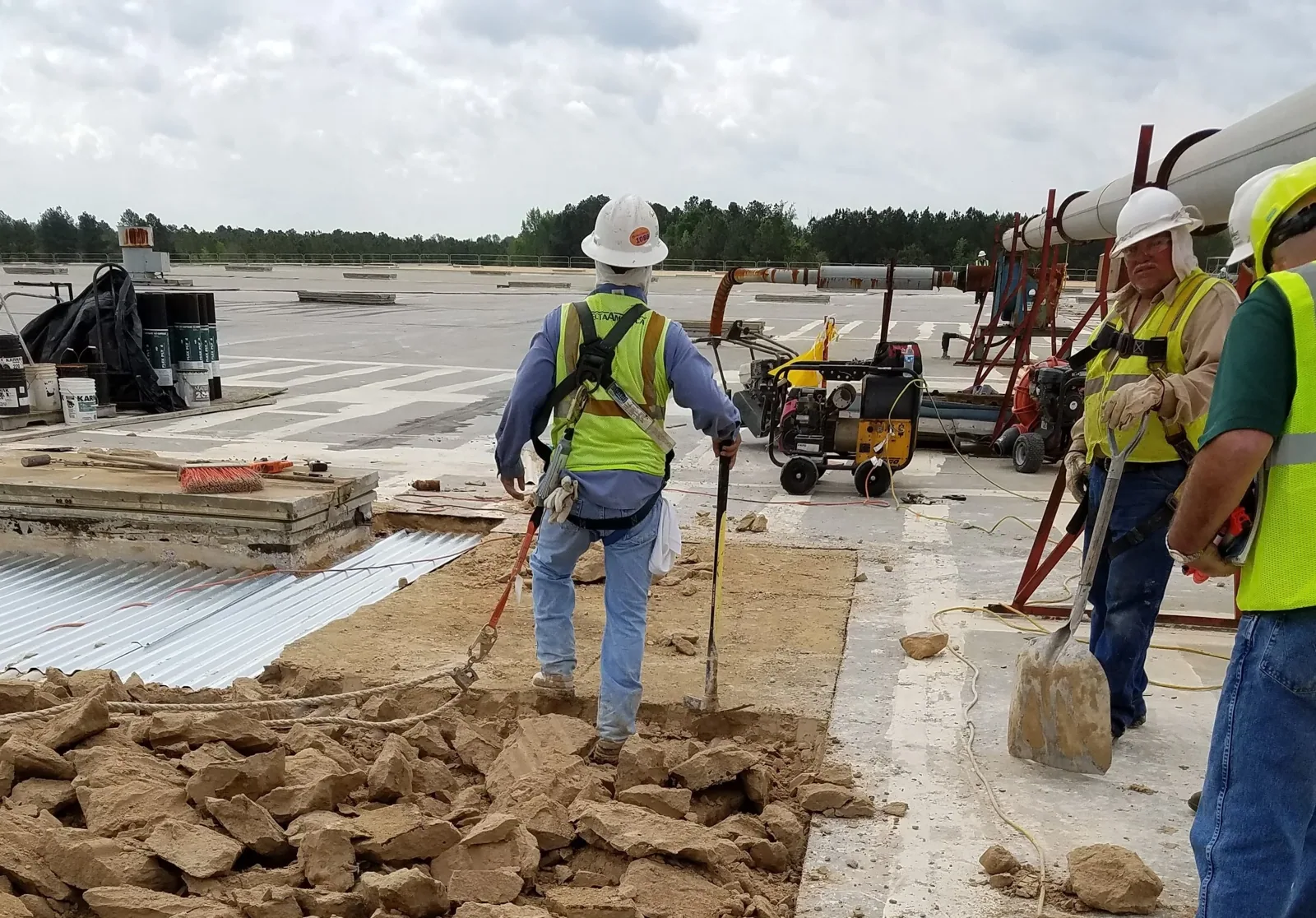
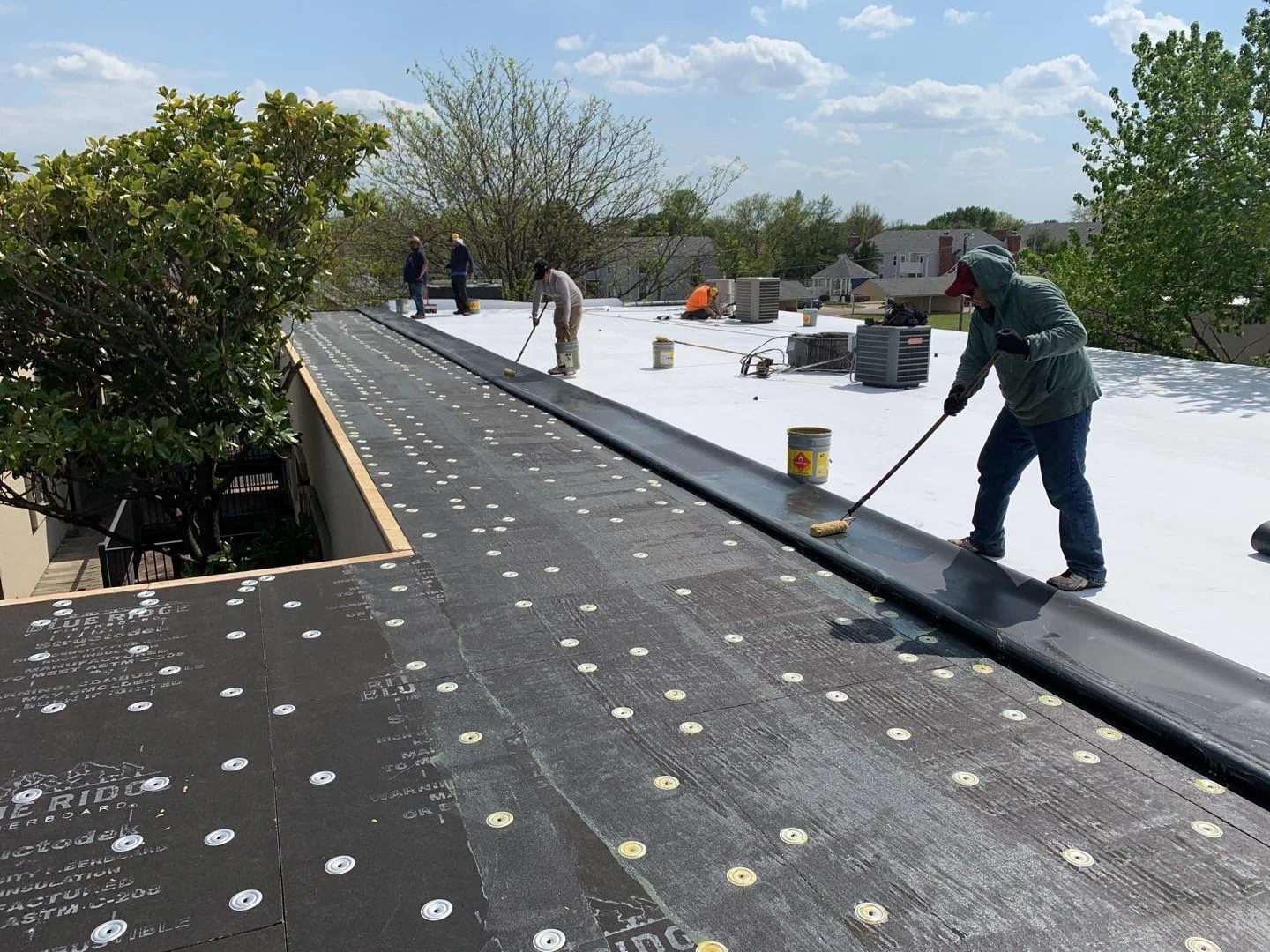
A membrane puncture needs a clean, compatible patch with adequate overlap. A seam separation requires checking the bond or weld beyond the visible opening. Metal edge movement may call for new fasteners, cleats, or a rebuilt termination rather than coating the joint. At a drain, we inspect the bowl, clamping ring, strainer, and membrane connection before deciding whether the repair can stay in place. The work note states surface preparation, materials, and the area closed so the owner can compare the repair with the next inspection. Where a broader repair is the better choice, we map adjacent defects and price them separately. The EPDM assembly and a thermoplastic membrane require different preparation and joining steps, so we confirm the existing system before ordering materials.
Set a Safe Window for the Work
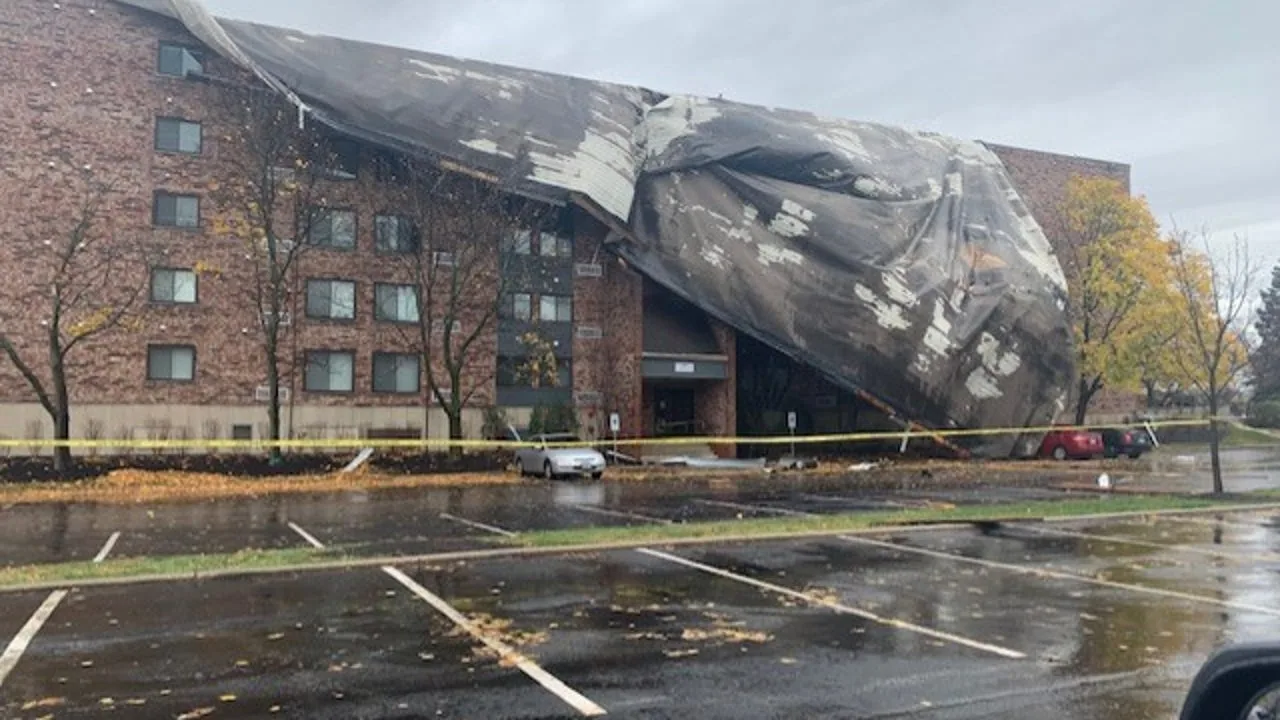
Adhesives, primers, and sealants each have surface and temperature conditions in their product instructions. We check the roof temperature, wind, forecast, and moisture before opening a repair area. DFW's 1991-2020 normals set average daily highs at 95.6°F in July and 95.8°F in August, while spring is the wettest and most active severe-weather season. Those regional records inform scheduling, but the crew still makes a roof-level decision each day. The work sequence keeps the open section small and restores the water-shedding surface before the shift ends. After a storm, we separate fresh impact findings from older wear so the owner has a clear claim or maintenance file. A hail damage inspection can document punctures, displaced edge details, or other visible conditions without treating a regional storm report as proof of impact at this property.
Plan Access Around the Business
Commercial repair often happens while the building remains open. We coordinate roof access, lift placement, material movement, and interior protection with the person responsible for daily operations. A delivery yard may have a narrow window between trucks; a professional office may need notice before work above occupied rooms. Dallas Parkway and US 380 are parts of Frisco's mobility network and development context, so we confirm each property's access route before setting the staging plan. If the roof has mechanical service underway, we mark clearances and keep technicians from crossing a fresh repair. Our crew logs arrival, areas inspected, materials installed, and any condition left outside the approved scope. That record allows the owner to resolve the next decision without repeating the first inspection.
Keep the Repair Boundary Visible
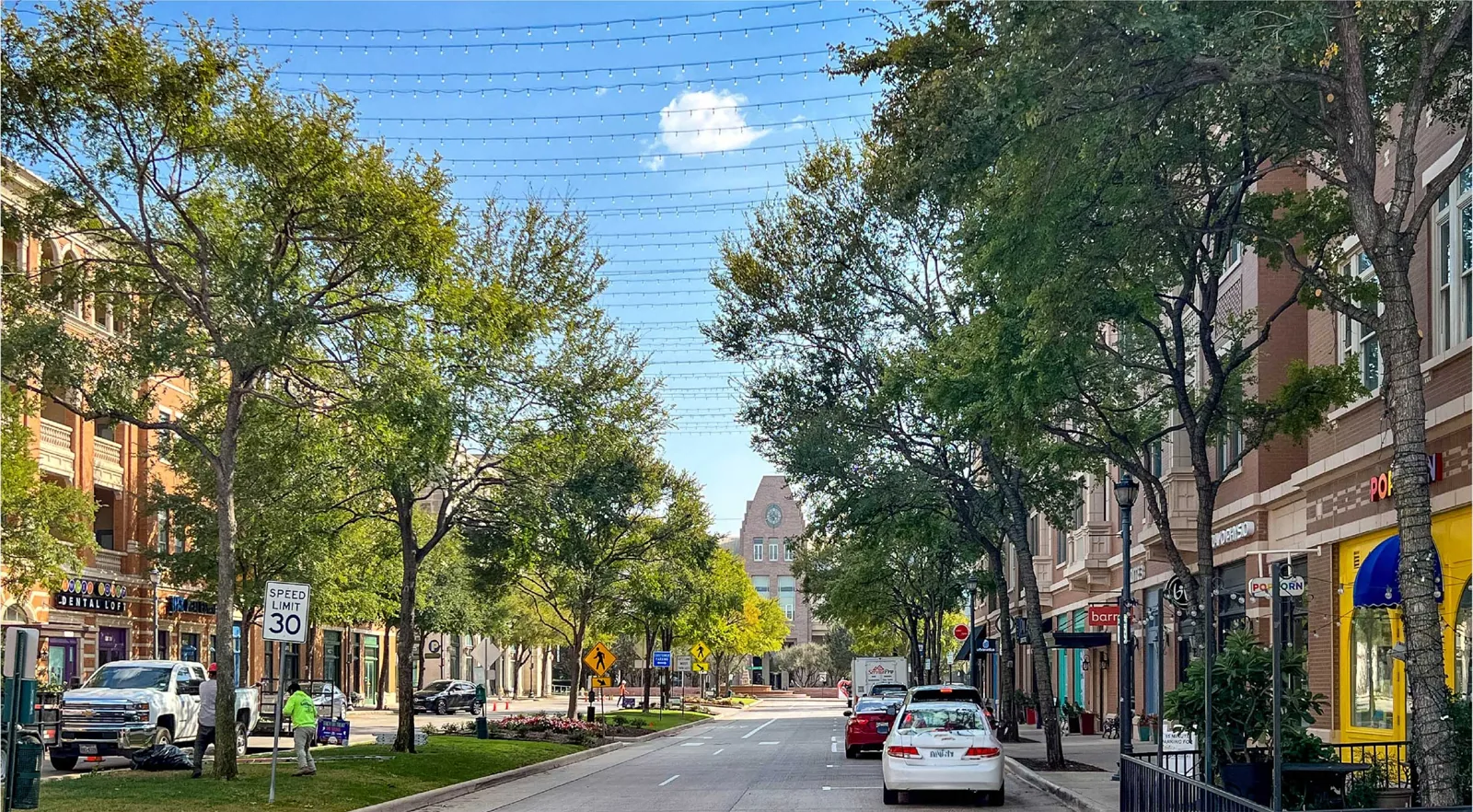
Repair cost changes with roof height, access, membrane type, preparation, replacement material, and how far the defect extends below the visible opening. We identify the confirmed repair separately from optional work nearby. The estimate states whether insulation or deck material will be opened, how the area will be closed, and what inspection follows. If evidence shows wet materials beyond the first boundary, we ask the owner to approve the added investigation before expanding the work. A replacement comparison belongs beside the repair only when repeated failures or widespread deterioration make a larger scope credible. We do not turn every repair into a reroof proposal. Frisco's downtown master-plan materials include Main Street and Fourth Street implementation. Near the Rail District, our field walk measures the material route and storefront protection needs before we price labor time. A warehouse loading area can set a different schedule. We identify the route for material handling, the hours available above occupied space, and any protection needed below the work. The decision record names the factor that changes the number, so an owner can compare the repair allowance with the operating constraint instead of relying on a generic square-foot assumption.
Verify the Repaired Detail
After the repair, we inspect the closed lap or flashing, confirm that debris is clear of drains, and photograph the finished area. The owner receives the location, material type, work date, and follow-up recommendation. Where a larger roof remains under observation, we mark nearby seams and transitions for the next inspection rather than calling the whole system repaired. That distinction matters for a maintenance budget and for future storm documentation. A roof condition report can group findings by section and track whether a repair remains stable. If new water appears, the earlier map gives the next inspection a starting point. It also helps the building team protect ceiling finishes, stock, equipment, and tenant schedules while the source is checked again.
Commercial Roofing Questions
How do you tell whether a leak is still active?
We look for current moisture, fresh paths, wet insulation, and a roof detail that can admit water. A ceiling mark alone does not show when water entered. If conditions are dry, we document the suspected source and arrange a check after the next suitable rain rather than describe an unconfirmed cause as active.
Can you repair a roof while the building stays open?
Most repair work can be staged around occupied hours when access and protection are agreed in advance. We limit the open area, coordinate material movement, and keep entrances and mechanical service paths clear. The building owner tells us about sensitive rooms, deliveries, and any time window that cannot move.
What happens if the repair opens wet insulation?
We stop at the approved boundary, photograph the exposed material, and show the additional area that needs review. The owner can approve removal to dry, sound insulation or keep the original repair limited when the wet condition is outside scope. We close the roof before leaving and record the decision.
Will one repair include nearby seams and penetrations?
Only if they are included in the written scope. We list the confirmed failure and separate nearby defects so the owner can choose whether to add them during the same access window. That keeps the invoice tied to visible work and avoids treating an unrelated seam as part of a small patch.
When should the repaired area be inspected again?
The timing follows the repair method, roof condition, and the next relevant weather event. We state the check in the closeout record and note whether a broader roof walk is due. A new leak, visible seam movement, or standing water deserves a prompt review rather than waiting for the routine maintenance date.