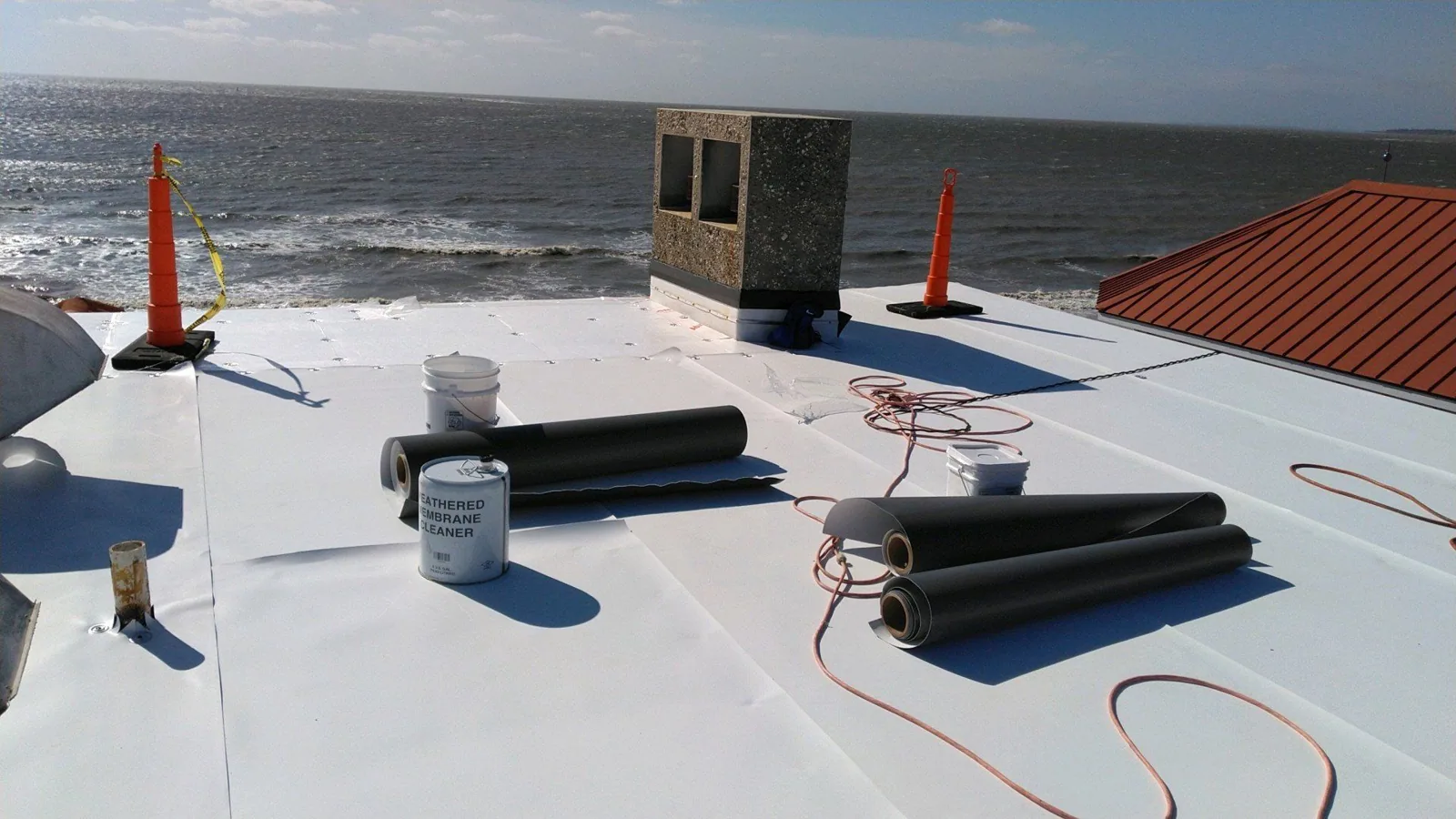
Irving's business districts make access planning part of the roof scope. Las Colinas and Irving's redevelopment districts are major business areas, but district context does not reveal a property's roof assembly or condition. We begin with the reported water path, inspect the affected section, and confirm who controls roof access, tenant notice, and equipment coordination before setting a repair line.
In the DFW region, July and August bring average highs near 96 degrees, and North Texas severe-thunderstorm frequency peaks in spring. We schedule safe roof access around seasonal heat and storm conditions and review visible evidence after a reported event; those patterns do not establish damage at an Irving address. We document visible seams, edge details, penetrations, drains, and prior patches. A project in Grapevine's business districts gets its own condition record, just as a Richardson roof review must start from this building and its operating hours.
Use the District for Context
Las Colinas gives owners a recognizable business-area reference, while redevelopment districts bring their own project timing and property contacts. We use those names to understand the setting, then verify details with the site representative. A district label cannot tell us whether a roof is membrane, metal, coated, or layered from an earlier project. The first walk records what is installed, where water is reported, and which portions can be reached without disrupting tenants or equipment service.
Where several roof sections connect, we mark transitions between different elevations or assemblies and note which edge, wall, or curb could carry water beyond the visible stain. We do not broaden the repair simply because the property sits in a major business area. The report shows the observed boundary and any uncertainty that calls for testing. Owners coordinating a portfolio may compare this scope with commercial roofing in Coppell, but approval, staging, and condition remain specific to the Irving property.
Keep the Work Window Clear
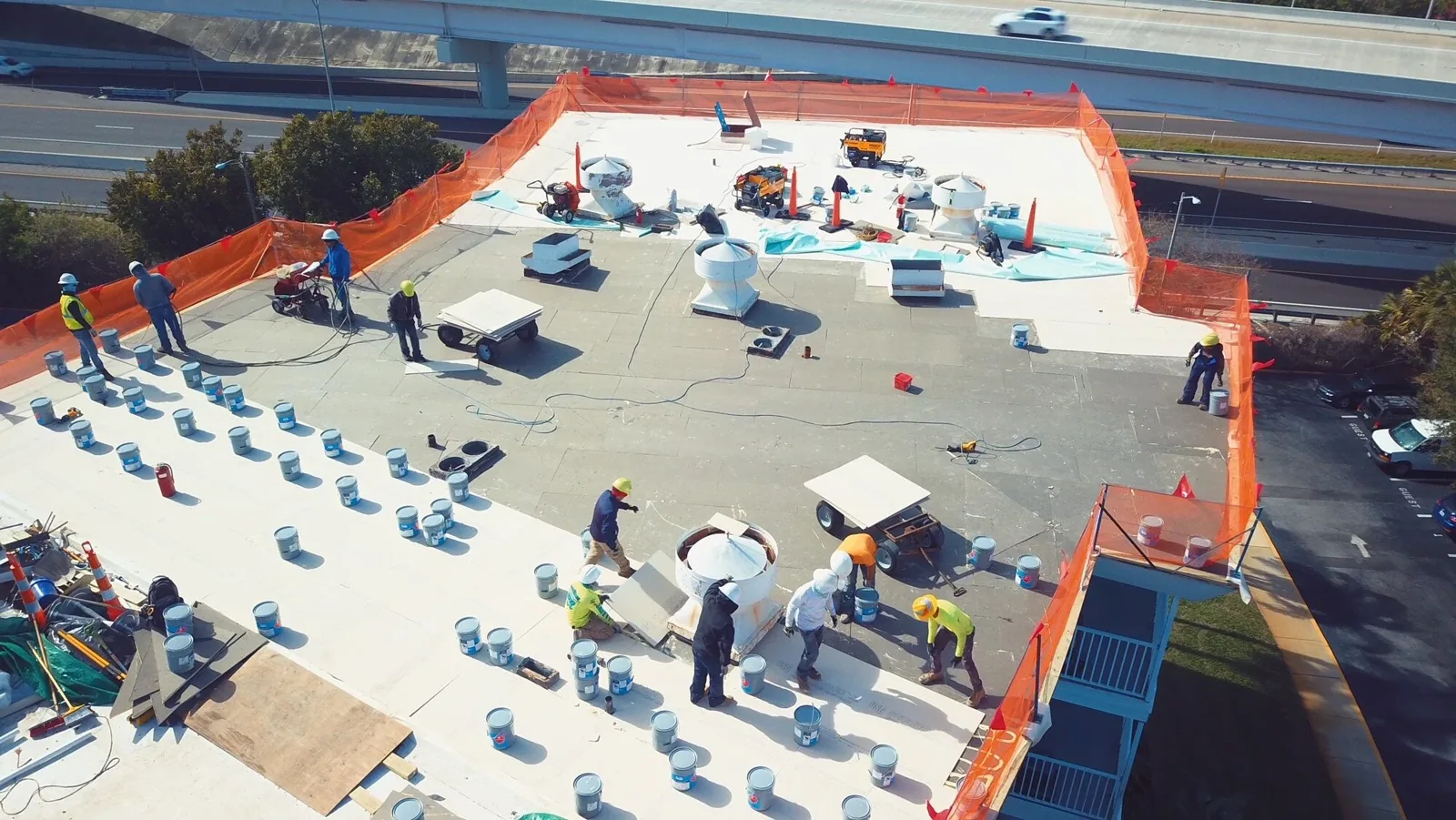
Occupied office and mixed-use properties often have several access relationships to manage. We confirm the roof entry point, loading path, tenant hours, equipment rooms, and person who can approve a temporary shutdown. If work occurs over a customer area, the daily plan sets a protected zone and a route that remains open. A crew needs a safe place to stage material and a defined limit for the roof area left open at the end of a shift.
The inspection records the work and access conditions confirmed at this Irving property. If a lift, equipment move, or test opening requires another trade, we assign that dependency before scheduling permanent work. Our occupied-building work plan explains phasing, weather closure, and communication in relation to the actual roof sections, rather than treating a business district as one job.
Check the Details That Set the Boundary
A sound repair starts with the point where water enters, not simply the place where a ceiling mark appears. We inspect the membrane or metal around penetrations, curb corners, wall transitions, seams, drains, and edge metal. We note whether a patch is bonded, mechanically attached, or layered over earlier work when that can be seen. Concealed conditions stay listed as questions until a test opening or other inspection can confirm them.
Heat can make exposed roof work uncomfortable and influence safe hours. Storm exposure raises the value of a timely review when a leak or visible change follows a warning. Neither condition replaces physical findings. A documented roof inspection records photographs and separates observed defects from maintenance concerns. If a membrane system is present, the repair has to match it; we confirm the actual assembly before selecting materials. For an Irving building with a TPO surface, the TPO repair review addresses weldable membrane details without assuming every property uses that system.
Compare Work by Section
A repair is easier to authorize when its limits are visible. We describe the affected section, repair method, access needs, and any area that may change after opening. If related defects appear on other sections, we list them separately so the owner can choose whether to address them now or keep them in the next budget cycle. Replacement comes into the comparison when evidence shows broad moisture, recurring failure, deteriorated attachment, or another condition extending beyond isolated details.
Price and timing reflect roof height, staging, labor access, protection below, removal layers, drainage work, and how the building remains weather-tight during each phase. We identify the base scope and separate tests or optional repairs that depend on concealed conditions. The owner receives a decision date and the evidence needed for the next spend. A 24-hour emergency response can contain active water, but permanent scope still follows the inspection and approval record.
A separate cost line also helps when several tenants share one property. We identify which room or operating zone requires protection, where the crew can stage, and whether roof work can be divided without leaving a vulnerable edge overnight. If the schedule requires evening or weekend access, that window affects labor coordination and security arrangements. We confirm the contact for each decision before materials arrive. If a second roof section needs work, its scope remains separate until the owner authorizes it, so a limited leak repair does not silently become a building-wide project.
Close with a Record the Owner Can Reuse
At closeout, we label photographs by roof section, show the completed repair boundary, and note any condition left for follow-up. A condition map helps the next visit distinguish a new opening from an old patch. If the owner has a separate property in Lewisville or a planned comparison in Plano, each location should have its own findings, access history, and approval trail.
We will respond around the clock when water is active, then document the permanent work recommended for the building. The scope identifies what is ready to proceed, what requires a test, and which operating constraint may move the schedule. We also record the materials used, the repair date, and any warranty documents supplied for the completed work. Those details give the next reviewer a clear starting point instead of a second guess at the repair history. Share the Irving property's use, leak status, available records, and decision window. We will inspect the affected roof section and return a prioritized repair-versus-replacement scope that keeps cost, timing, and unresolved questions distinct.
Commercial Roofing Questions
Does a Las Colinas location tell you what roof system is installed?
No. The district name is useful context, while the building inspection identifies the actual assembly. We record membrane or metal, visible transitions, prior repairs, and any concealed question before choosing a compatible repair.
How do you schedule roof work at an occupied business property?
We agree on access, staging, tenant notice, and any equipment restriction with the site contact. The work plan limits the open section and states how the crew will leave it weather-tight. A blocked route or unresolved shutdown moves the schedule before mobilization.
Should an Irving roof be inspected after every spring storm?
A weather report alone does not show that a specific property was affected. A new leak or visible roof change is a reason to document the section and compare it with prior records. We report only conditions supported by the inspection.
What makes replacement more appropriate than a repair?
The comparison shifts when conditions extend across multiple sections, recur after repair, or include widespread moisture or attachment concerns. We show the evidence and separate confirmed work from tests that could change the final boundary.