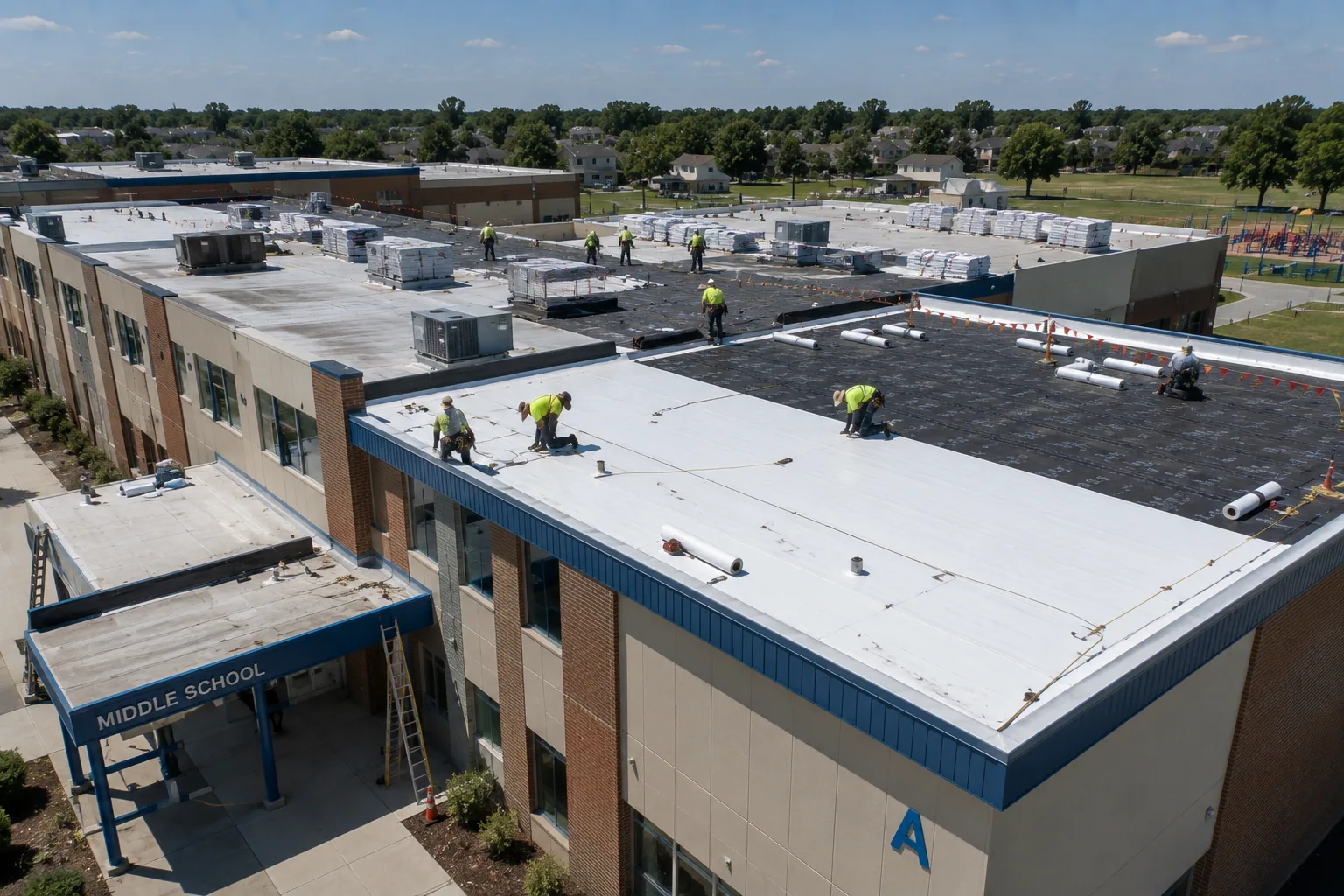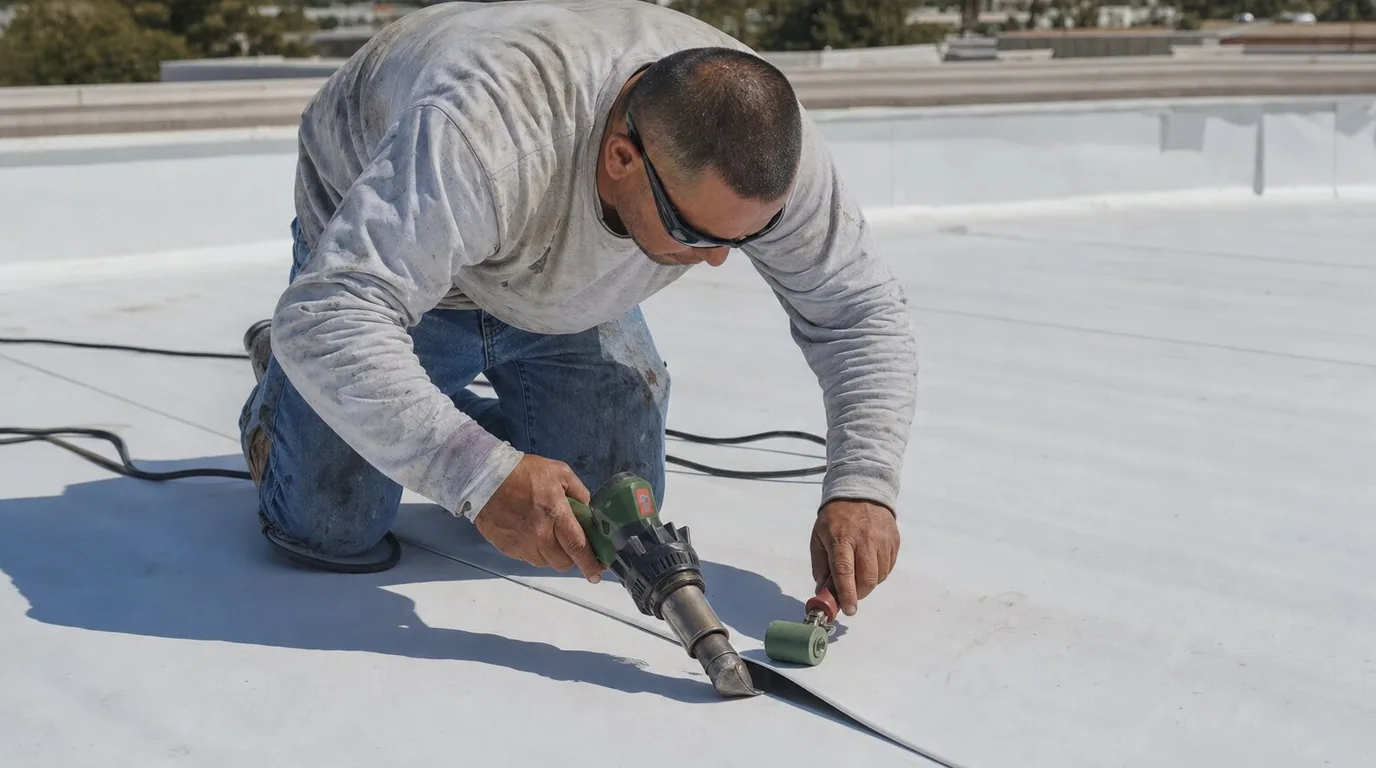
A thermal pattern is a place to investigate, not proof of wet insulation. In Frisco, an infrared moisture survey helps prioritize roof sections for closer verification when the assembly, conditions, and timing support useful readings. We review the roof type, recent weather, known leaks, access limits, and the decision date before setting a survey route. The scan is compared with visual observations and followed by targeted confirmation where needed. DFW averages 37.01 inches of annual precipitation in the 1991-2020 climate normals, but regional rainfall does not establish moisture in an individual roof. The owner receives mapped anomalies, limitations, and proposed confirmation points, not a blanket diagnosis. A commercial roof inspection provides the field context that makes the thermal results usable.
Confirm the Assembly and Survey Question
Before scanning, we identify the roof assembly, membrane, insulation type if known, deck, prior repairs, and any surface coating that could affect interpretation. We ask whether the owner is investigating a leak, comparing recover eligibility, or mapping a capital project. Each question needs a different sampling plan. A scan cannot tell us the depth of moisture or whether an anomaly is caused by wet insulation, stored heat, shadow, equipment, or another temperature difference. We record the conditions that could influence readings and define how findings will be checked. If the roof configuration is unknown, that uncertainty stays in the report. The survey is useful when its limits are clear and when the owner can authorize confirmation at selected points.
Choose a Suitable Survey Window
Thermal contrast changes with sun exposure, cloud cover, wind, ambient temperature, and how the roof has stored heat. We review those conditions when scheduling instead of treating every evening or roof as equally suitable. Recent rain, ponding, wet debris, mechanical equipment, and rooftop exhaust can affect the image. The survey lead records the date, approximate conditions, and any areas that could not be interpreted with confidence. Frisco's hot summer afternoons and spring storm pattern are useful regional context, but conditions at the roof determine whether readings can answer the question. If the window is unsuitable, postponing or using another inspection method may produce a more reliable decision than forcing a scan.
Map Anomalies by Section
We capture the roof in planned passes and align thermal observations with visible roof features, drains, equipment, and section boundaries. Each anomaly receives a location label and an explanation of why it merits a check. We avoid turning color contrast into a moisture claim. The map shows the owner where to place a core, probe, or other approved confirmation, and what comparison area may help interpret the result. A broad warehouse or office roof can contain different exposures and repair histories, so section-by-section labels matter. Images are preserved with the survey notes and interpreted alongside the roof's documented condition, not as a stand-alone verdict about the entire assembly.
Verify Before Drawing a Repair Boundary
After the scan, we select confirmation points that can resolve the owner’s question without opening more roof than necessary. A core or other suitable test can show layer sequence and material condition at that location; it does not automatically define the full extent of a wet area. We compare each result with nearby conditions and expand the boundary only when evidence supports it. Any opening is restored as part of the agreed test. The report separates confirmed material condition, thermal observations, and untested areas. This lets the owner compare isolated removal with a larger repair or replacement scope. A recover review should use confirmed boundaries and assembly limitations before adding a layer.
Keep Drainage and Leak History in View
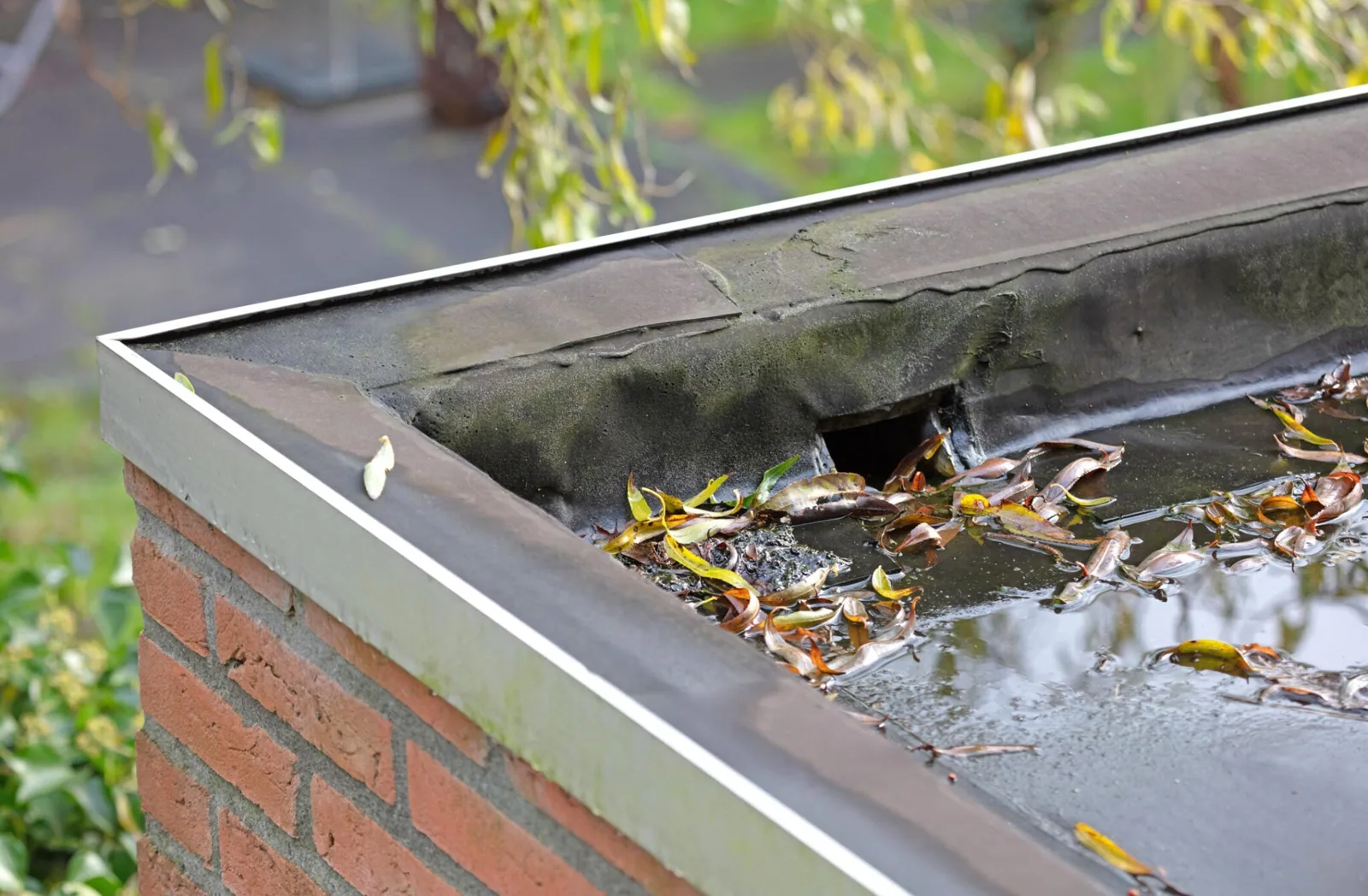
Moisture mapping has to be considered alongside water entry and drainage. We review drain bowls, scuppers, low spots, roof penetrations, and previous repairs against the interior leak history. May is one of DFW's wetter months, but a climate average cannot identify when a particular roof became wet. We use the building's service records and observed water path to frame the test. When drainage is a separate concern, a drain and scupper inspection can document flow routes and detail condition. Keeping these findings distinct helps an owner avoid attributing every anomaly to a current leak or every stain to roof moisture.
Build a Decision-Ready Deliverable
The final report includes survey conditions, section map, labeled thermal and visual images, anomalies selected for confirmation, test results where authorized, and limitations. Recommendations are assigned to repair, additional test, monitor, or capital comparison. We identify the quantity the evidence supports and state where the boundary remains uncertain. A condition report can place the survey beside prior repairs and future budget dates. For an owner managing multiple buildings, consistent section labels help compare findings without implying every property has the same assembly. The record supports a defensible next spend because the reasoning is visible from observation to test to recommendation.
Coordinate Testing and Set the Next Spend
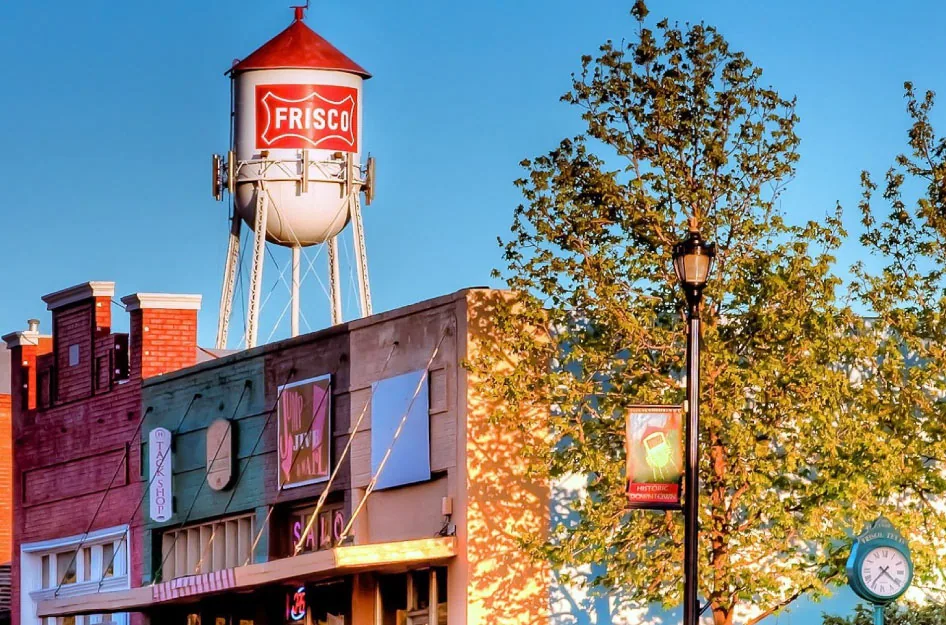
Core locations, roof access, interior protection, and equipment clearances need agreement before work starts. We coordinate the test window with the person responsible for the building and confirm how each opening will be repaired. Occupied office hours, distribution activity, and rooftop maintenance can affect when a section is available. We sequence testing to limit repeat access: start with sections tied to an active leak, compare a control area, then expand to lower-priority zones only when the readings and field conditions support it. At the property, we verify the actual path and schedule for testing. The Diligence Notes identify any area not reached, the test that remains, and the person who can approve it. That prevents a survey from silently extending beyond the agreed investigation. A property in the North Platinum Corridor may have broad roof sections and active operations, so we tie each scan label to the actual building plan and access window. Frisco's Dallas Parkway and US 380 mobility routes provide regional context, while the site's own loading route determines where equipment and test materials can move. A survey should conclude with a clear action and a trigger for the next review. Confirmed wet materials may call for bounded removal; an unverified anomaly may need another test or monitoring after a suitable interval. Dry sections can remain in the maintenance plan with their map retained for comparison. The owner sees which findings affect recover eligibility, which affect a repair price, and which do not change the current scope. Frisco's downtown core includes historic commercial buildings undergoing reinvestment. Near the Original Town commercial district, we check building access and phasing at the property before sequencing work. A dated condition record keeps the next budget discussion tied to evidence rather than a thermal image alone.
Commercial Roofing Questions
Does an infrared roof scan prove that insulation is wet?
No. It identifies temperature patterns that may justify confirmation. Conditions such as sun, wind, equipment, recent rain, and roof assembly can affect the image. We recommend targeted tests and report confirmed results separately from anomalies.
When is the best time to conduct a thermal survey?
Survey timing follows the roof assembly, weather, solar exposure, wind, and recent conditions. We review those factors before scheduling and record them in the report. If contrast is inadequate, a different time or inspection method may be preferable.
How many core samples are needed?
We choose core locations to answer a defined question, based on roof size, assembly, and anomaly pattern. Each result has limits, and a single core does not automatically define moisture across an entire section.
Can the survey determine whether a roof qualifies for recover?
Recover approval requires review of layer count, deck capacity, attachment, drainage, code, and system compatibility. The scan can help select confirmation points, but verified field results and the proposed assembly must support the owner’s decision.
What happens to the roof after a core is taken?
Each approved test opening is restored as part of the agreed scope. The report records its location, the layers observed, the result, and the repair completed. We coordinate interior protection and access before testing begins.