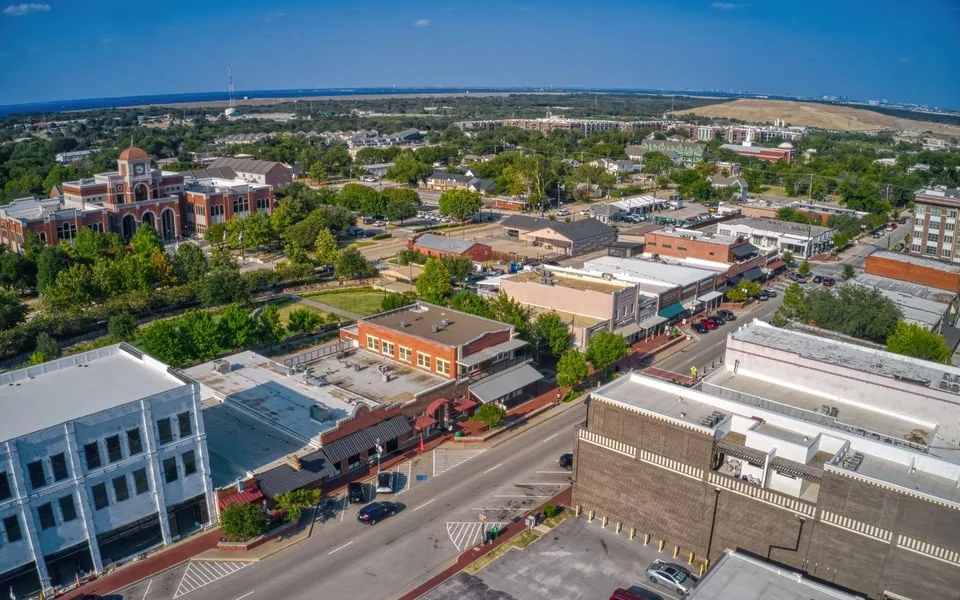
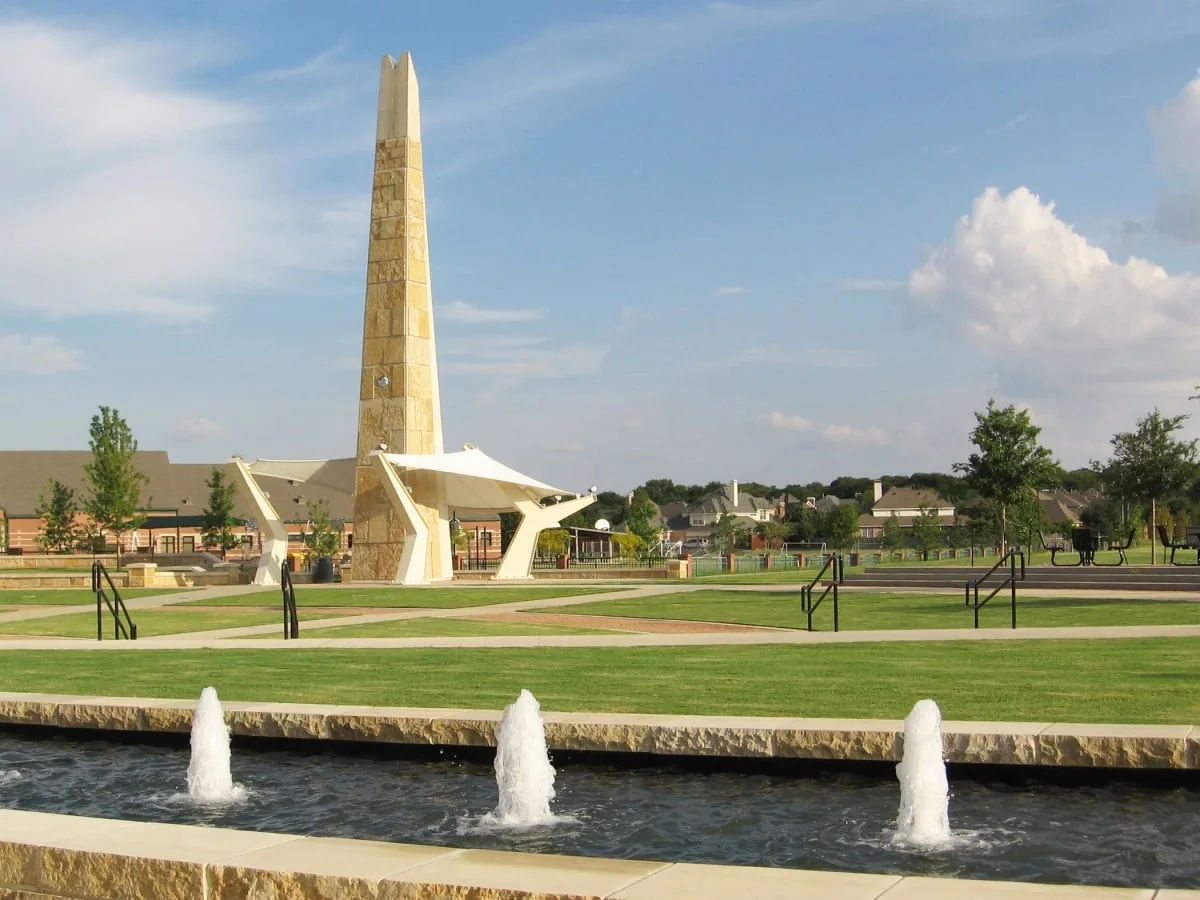
A roof repair in Grapevine starts with the property's use, the reported water path, and a safe inspection window. We mark the section that can be checked before setting a repair or replacement boundary. City zoning includes Business Park, Light Industrial, Planned Industrial Development, and Planned Commerce Development districts with employment-oriented uses. Those categories help frame access questions; the roof inspection records the assembly and observed condition.
The DFW climate adds a scheduling consideration. July and August average daily highs approach 96 degrees, while North Texas sees its highest severe-thunderstorm frequency in spring. These regional records help us plan safe roof access and prompt a review after a reported leak or visible change; they do not diagnose the Grapevine roof. A commercial roof review in Irving or work in Lewisville receives its own report. Here, photographs of seams, drains, edges, curbs, and prior repairs define the actual next step.
Translate Zoning into an Access Plan
Employment districts describe land-use categories, not a directory of roof assemblies. Before mobilization, we ask whether the property is operating during the work period, which deliveries must continue, and how service personnel reach rooftop equipment. A light industrial use may have a different loading pattern from office or commerce activity, but the inspection does not assume a particular tenant or schedule. The site contact provides those details, and we build the work boundary around them.
We mark where materials can be staged, what routes must remain clear, and which entrances require notice. If a repair crosses a fire lane, loading area, or tenant path, the scope shows how the crew will protect the route and close the day's work. A separate Coppell commercial roof project may have different rules, so no schedule transfers from one municipality to another. The Grapevine work plan names its contact, access window, and weather closure point before a section is opened.
Read the Roof Before Pricing
We start from the interior report and compare it with details above. Water may travel along a deck or insulation joint before it shows below, so we inspect nearby seams, wall transitions, drains, penetrations, and edge metal. The report identifies what is visible and what would require a test opening. That distinction matters if an earlier patch hides the original condition or if a roof section has more than one layer.
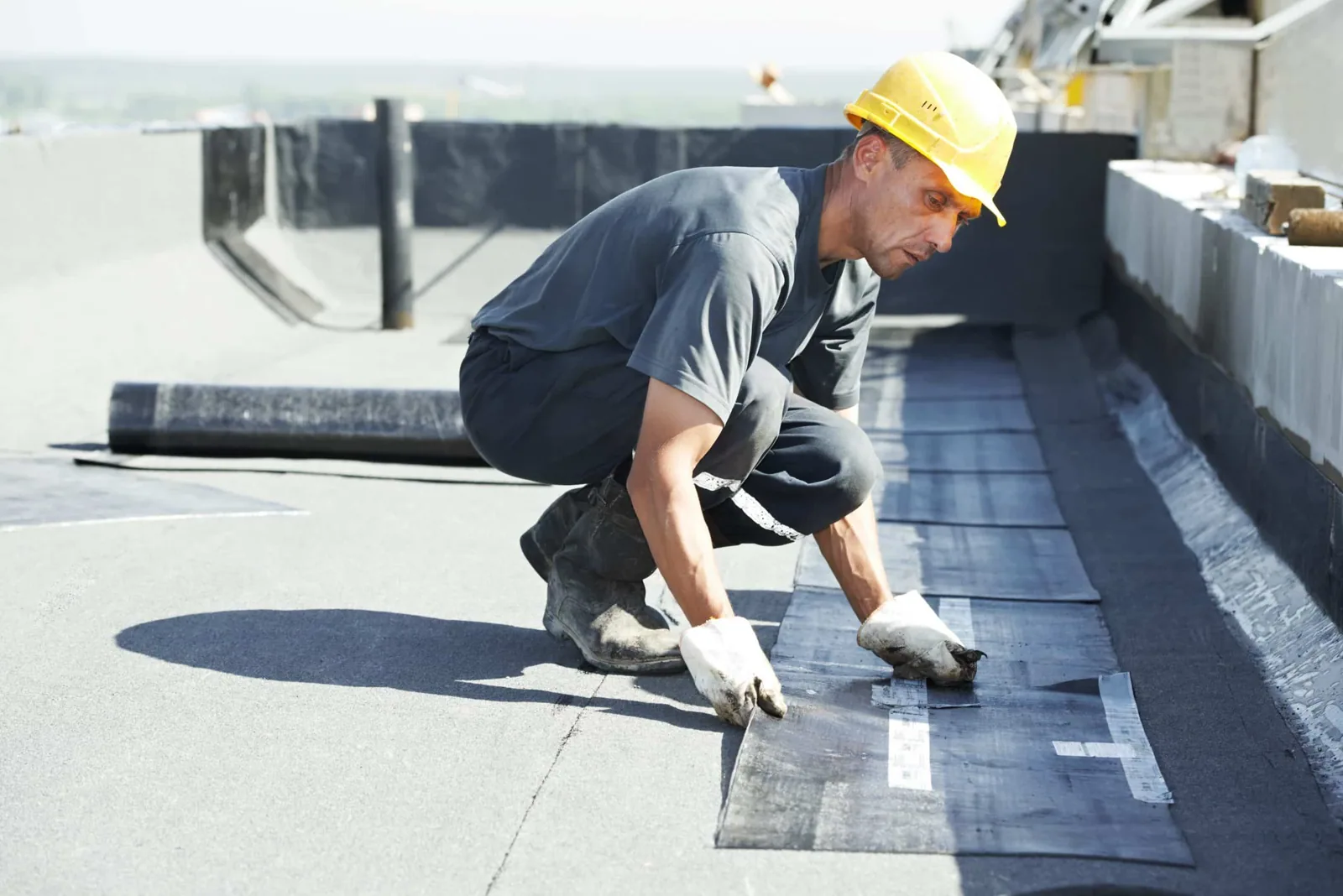
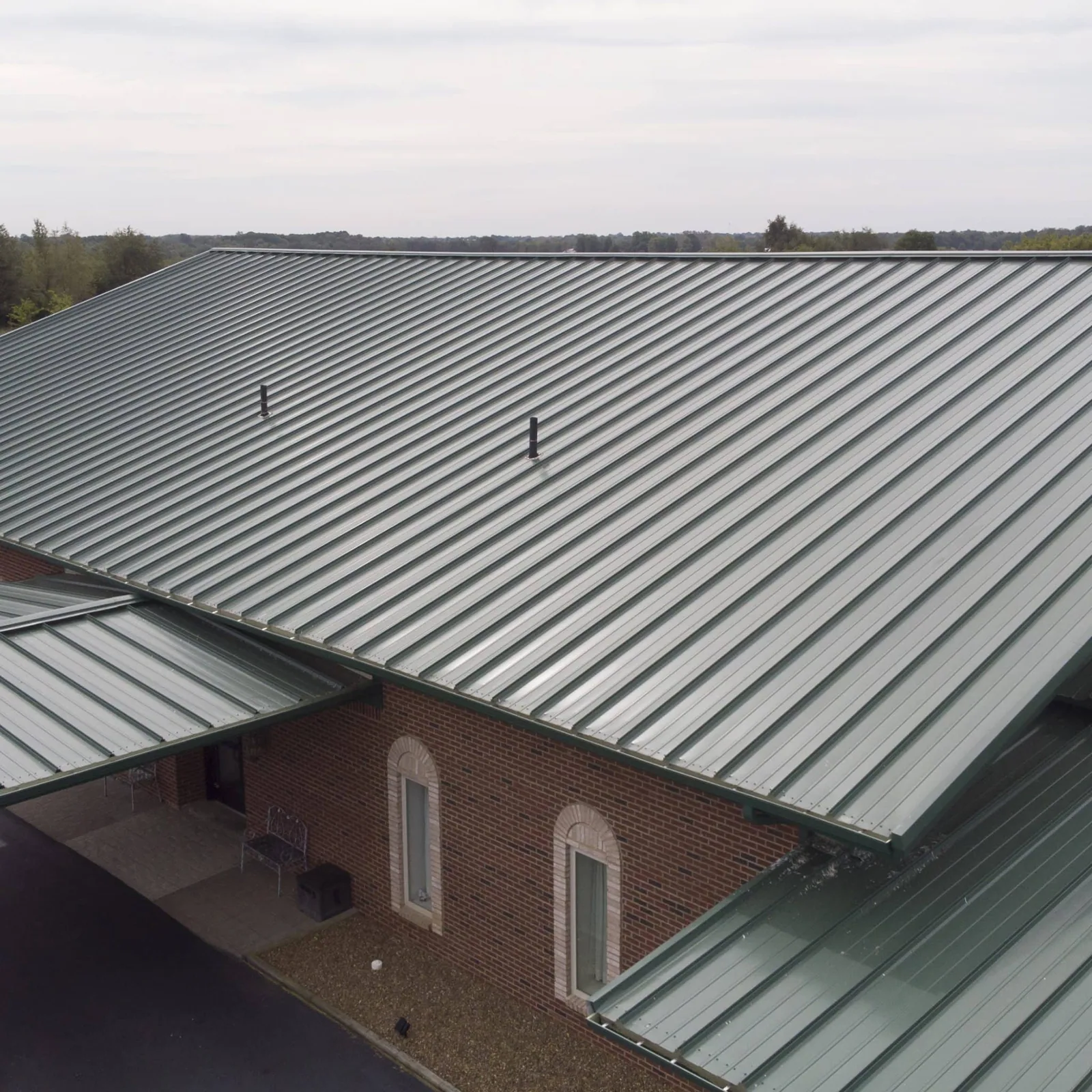
For a metal roof, we check panel seams, fasteners, closures, and flashing around penetrations. For a low-slope membrane, we review laps, terminations, drainage, and compatible repair surfaces. The assembly is confirmed on the building, not inferred from its district. A roof inspection with photographs helps the owner compare conditions over time. Where drainage controls the next scope, we note whether a drain, scupper, or conductor head is clear, damaged, or simply outside the area already inspected.
Time Work for Exposure and Weather
A roof walk in peak summer needs an access period that protects the crew and leaves enough time to secure the day's work. DFW's July and August normal highs approach 96 degrees. We plan around the exposed surface, material handling, and the time needed to close a seam or flashing detail before leaving the roof. The climate record informs the work window; it does not show that a Grapevine property has a defect.
The National Weather Service places the regional severe-thunderstorm peak in spring, when owners may be reviewing new reports or interior leaks. We compare the event account with what the roof shows today and with prior maintenance records. A regional storm report can prompt a closer look, but the roof walk must identify any changed seam, edge or flashing at this property. A condition map can separate a visible opening from an older patch and note what requires testing. That record supports a clear next action without turning a zoning designation or weather summary into a building-level conclusion. A maintenance visit can set a baseline before the next season.
Keep the Scope Proportional
A repair makes sense when the failure has a clear limit and the surrounding roof can still perform. We identify the affected seam, flashing detail, drain, or panel and describe what must be opened and resealed. Replacement enters the comparison if conditions extend across several roof sections, recurring repairs no longer hold, or testing finds broader moisture or attachment concerns. Those recommendations follow evidence from the roof, not the zoning label.
Estimate drivers include roof height, access, equipment protection, staging, removal layers, insulation, and the time needed to keep the building weather-tight. We show the base scope separately from optional work that depends on concealed conditions. If the existing assembly is standing seam metal, the repair needs to respect panel movement and compatible flashing; details differ from membrane work. A standing-seam assessment begins by confirming the installed panel profile and attachment, not by substituting a generic patch. We present the decision date, work sequence, and any owner approval needed to proceed.
Before signing, the owner should be able to point to the roof section included and the conditions excluded. We note whether the price assumes dry insulation, sound deck, and a known assembly, then state what happens if removal reveals a different condition. The crew pauses at that boundary, photographs the finding, and requests authorization before expanding the work. This avoids mixing a visible repair with a concealed replacement decision. If a separate section can wait, it receives its own recommendation and review date rather than being folded into the urgent task.
That separation also helps coordinate other building work. A lift or equipment shutdown may need an owner-approved window, while roof access can be arranged separately from interior work. We keep those dependencies in the schedule so a change in one trade does not erase the weather-protection limit for the roof.
Close with a Section Record
The final record connects each repair to a roof location and the reason it was approved. We mark the section, list materials when known, and distinguish completed work from a condition awaiting access or testing. Grapevine's zoning categories cover several employment-oriented districts, but a property manager needs records for the actual building and assembly. The next condition report can revisit the same seam, penetration, or edge and compare photographs rather than reconstructing the decision from memory.
We respond around the clock when water is active; permanent work follows a safe access plan and a defined scope. Share the building use, reported leak, roof history, and decision window. We will document the affected area and return a prioritized repair or replacement recommendation with the cost and schedule drivers identified before approval.
Commercial Roofing Questions
Does a Grapevine zoning district tell you what kind of roof is on my building?
No. The plan identifies land-use categories and employment-oriented areas, not roof assemblies. We inspect the property to confirm membrane or metal, transitions, drainage, and prior repairs before selecting a method.
How do you handle material staging near an active loading area?
We agree on the delivery route, material location, and daily work boundary with the site contact. The sequence keeps required access open and identifies the weather-tight limit for each shift. If the route cannot be protected, mobilization moves to a workable window.
Does a spring hail report prove my Grapevine roof was damaged?
No. Regional storm activity is a reason to review a reported leak or visible change, not proof about an individual property. We document observed conditions and compare available roof records before recommending repair or additional testing.
When should I budget for replacement instead of another patch?
We compare replacement when repeated failure or test results show conditions beyond a bounded detail. The report identifies the sections included, moisture or attachment findings, and concealed assumptions, so the owner can compare both scopes on the same evidence.