Active water over an occupied building requires a safe first action before a permanent scope. In Frisco, our emergency roof response begins with the affected rooms, the rate of water entry, electrical or ceiling concerns, and the roof access window. We coordinate temporary protection with the building contact, then inspect the likely roof section when conditions permit. A regional severe-weather report can explain why a call arrived, but it cannot establish what happened to one property. DFW spring brings severe-storm exposure and summer heat can restrict some material work windows. We separate immediate containment from repair authorization, record each decision, and give the owner a time for the next update. For a persistent path, the commercial leak-repair visit maps the cause and repair boundary.
Triage the Building First
Before anyone climbs, the site contact identifies where water is entering, who is nearby, and whether a ceiling, light, or electrical system appears unsafe. We ask whether the leak is active, intermittent, or stopped and whether water is affecting stock, equipment, or occupied work areas. The building team controls access below and above the roof, including ladders, locked doors, escorts, and lift zones. If a space must be cleared or isolated, that decision belongs to the responsible facility contact. Our notes distinguish observed conditions from reported concerns. This first record helps keep an emergency call focused on protecting people and property while the crew determines whether a roof-level inspection can proceed safely.
Contain Water Without Hiding the Cause
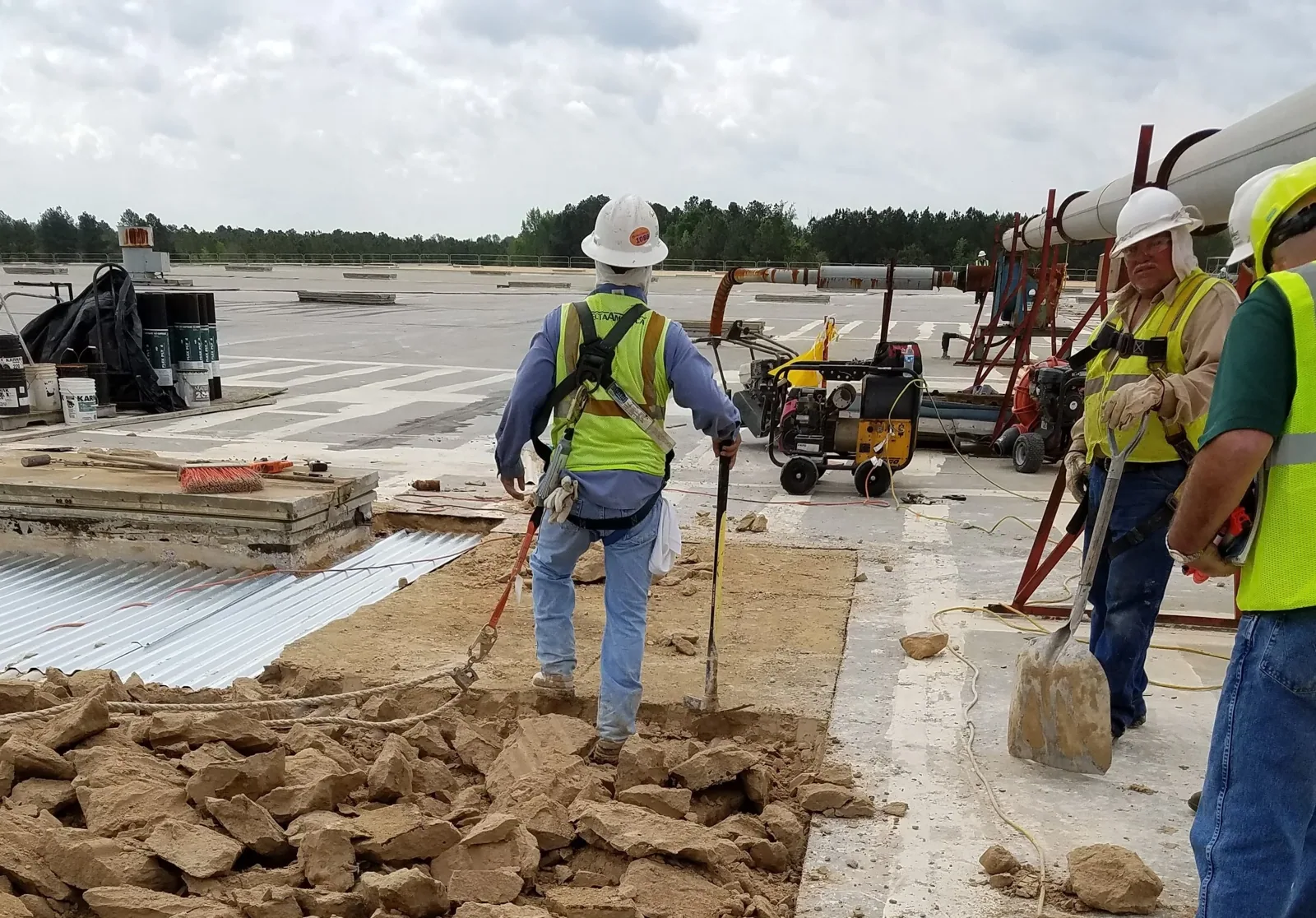
Temporary protection may include a controlled interior catchment, moving vulnerable contents, or a weather-appropriate temporary roof measure. The chosen step depends on active water, wind, surface condition, and whether the crew can reach the affected section safely. We photograph the starting condition and identify the limits of the temporary action. A tarp or temporary patch is not a permanent repair and can change drainage or wind exposure if applied without a plan. The owner receives the next inspection time and the sign that should trigger another call sooner. A roof inspection follows when the surface and access window allow the crew to trace water, test suspect details, and prepare a permanent scope.
Choose the Next Weather Window
Roof work depends on surface moisture, temperature, wind, and the instructions for the selected primer, adhesive, sealant, or membrane. We check current conditions rather than promise that a temporary measure can become permanent on the same visit. DFW climate normals show July and August average daily highs near 96°F; those regional figures make heat planning relevant, but the actual roof temperature and product limits control the work. During spring storms, lightning and wind can also interrupt roof access. The field lead records whether a planned repair is complete, protected pending a dry window, or postponed for safety. The building contact receives a clear status instead of a vague promise to return when weather improves.
Inspect the Detail and Nearby Paths
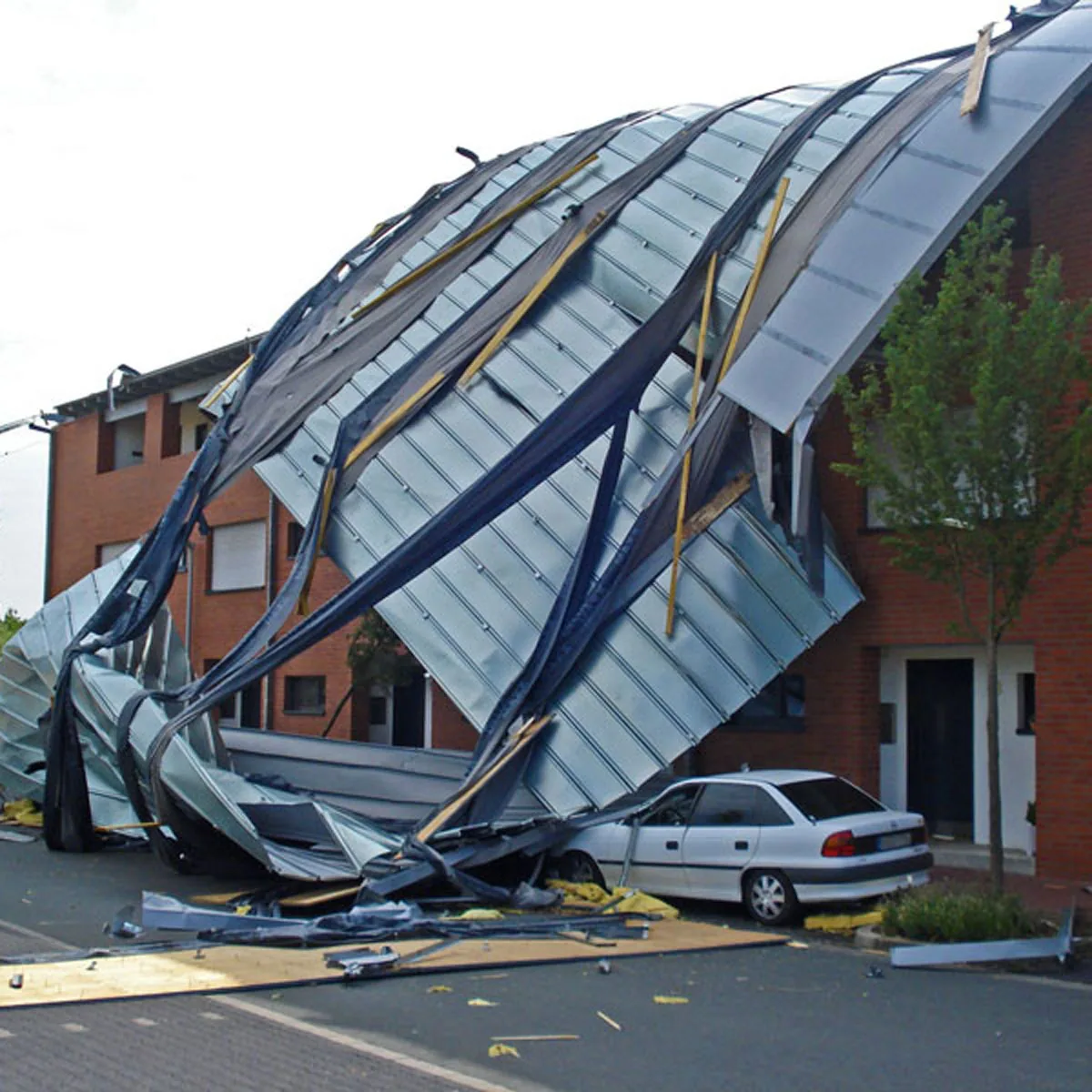
Once roof access is safe, we inspect the suspected section and nearby transitions. A puncture, lifted seam, displaced edge, clogged drain, or failed curb flashing each leaves different evidence. We compare those details with the water location and inspect the surrounding field for a second path. The report labels what was confirmed, what remains a possibility, and whether a test opening is justified. After a hail or wind event, we document visible impact or displacement without assuming every mark is storm-related. A wind-damage assessment can organize displaced metal, lifted edges, and other observed conditions for follow-up. A roof-level inspection establishes visible findings, while regional weather patterns help set timing without proving damage at the property.
Authorize a Repair Line
The emergency estimate identifies the immediate repair, temporary work already completed, and any broader condition requiring a separate decision. Cost drivers include roof height, after-hours access, material compatibility, lift or escort needs, interior protection, and how far damaged material extends beneath the membrane. If a controlled opening reveals wet insulation or a weak deck, we pause to document it and request approval before adding removal or replacement. The owner can compare that repair line with a replacement scope when several sections show repeated failures. We state the evidence for that comparison and keep it separate from the first-hour work, so an urgent leak does not become an unreviewed capital commitment.
Coordinate Work Around Occupied Hours
Emergency service still has to fit the business. We confirm delivery periods, customer entrances, sensitive rooms, mechanical-service routes, and noise or odor restrictions before staging materials. Frisco properties range from office and showroom spaces to office-warehouse and distribution uses, each with different access. Frisco's business-park land use can include office, warehouse, distribution, or showroom forms where zoning and truck-route access permit them. That citywide context does not tell us how an individual building operates; the contact supplies its actual restrictions. The crew documents the access window, protected area, and point of contact for a status update. If the roof is above a tenant space, the owner can use the record to coordinate notice while keeping the work file focused on roof and access details. US 380 provides an important east-west mobility route in Frisco, but the building's own gate, truck route, and staging area set the emergency access plan.
Document Work and Follow-Up
The emergency file includes the call time, reported area, roof section inspected, temporary measure, material used, and any limitation that affected the visit. After permanent work, the closeout adds photographs of the repaired detail, the inspection performed, and any deferred condition. We identify whether the repair addresses the confirmed leak path or only protects an area while another test remains pending. A roof condition report can carry those findings into a broader maintenance review. The document supports a practical handoff between operations, property management, and capital planning without suggesting a warranty or outcome beyond the work actually completed. Every emergency closeout should state when to inspect again and what new evidence changes the plan. The trigger could be renewed interior water, movement at a repaired flashing, a drain that remains slow after debris removal, or a dry-weather window for a deferred permanent detail. We make that trigger specific to the roof section, not a generic instruction to watch the roof. If the condition remains stable, the owner can schedule follow-up with normal access instead of repeating an emergency mobilization. For a property near the Dallas Parkway corridor, traffic and material access may affect the return window; other sites may have different constraints. The record gives the building contact a usable next step and a named scope boundary.
Commercial Roofing Questions
What should staff do before a roofing crew arrives?
Keep people clear of wet ceilings, protect movable contents when safe, and contact the building team about electrical or structural concerns. Share the affected rooms, water status, access instructions, and a site contact. Do not send staff onto the roof unless they are authorized and trained for that work.
Can an emergency crew make a permanent repair during the first visit?
A permanent repair can be completed during the first visit when the source is confirmed and roof conditions permit compatible work. Active storms, wet surfaces, unsafe wind, or material limitations may require temporary protection first. The closeout identifies which action was completed and what remains scheduled.
How do you decide whether the situation is urgent?
We ask whether water is active, whether occupied or sensitive space is affected, and whether safe roof access is possible. The building contact handles evacuation or electrical decisions. We then sequence protection, roof inspection, and repair authorization around the documented condition.
Will a storm report prove that this roof was damaged?
No. Regional weather records give context, while the roof inspection establishes what is visible at the property. We document observed displacement, punctures, or other conditions and distinguish them from age-related wear or unresolved possibilities.
What is included in emergency repair closeout?
The record summarizes the call, inspected roof area, temporary protection, approved repair, photographs, materials, limitations, and follow-up trigger. If hidden conditions or another test remain, they are listed separately for the owner to approve.