A capital request needs a decision date and a roof condition that supports the number. In Frisco, we connect field findings to the owner’s budget cycle, approval path, and time needed to mobilize. Local amendments to the city's 2024 building code took effect on March 1, 2026, so permit review belongs in the schedule when a project requires it. That code date does not decide whether a roof needs replacement. We document the section, the repair alternative, and the open questions before preparing a roof condition report for the funding discussion.
Set the Decision Window
We start with the date the owner needs a scope, not a generic replacement horizon. A board meeting, lease renewal, refinance, or annual budget lock can change when inspection and approval have to happen. We work backward from that date to identify records still needed, roof areas that require access, and any testing that could delay a decision. A roof due-diligence survey can answer a transaction question, while a capital plan looks across condition, timing, and funding for the operating portfolio.
A property in the Rail District may be eligible for reinvestment support for downtown improvements; that opportunity does not replace a roof condition review. At another address, a corporate campus may have its own tenant schedule and staging limits. We capture the actual property's access windows and permitted work hours before assigning a timing allowance. Where a roof has active water, the first-hour protection and permanent project decision stay separate, so immediate work does not obscure the approval required for a larger scope.
Price What the Inspection Supports
The estimate follows visible conditions, confirmed wet materials, repair boundaries, and roof areas that need further investigation. We do not convert a limited walk into a full replacement quantity. If a test opening is needed, the plan states its location, closure method, and approval point. For a field with isolated defects, we price the repair and the next inspection separately. If failures repeat across seams, penetrations, or multiple sections, we explain what evidence supports a broader scope and what remains unconfirmed.
The existing-building and fire-code amendments took effect on the same March 1 date. The project team checks which review applies to its scope instead of assuming a roof repair and a full system replacement receive identical review. A parcel in a nonresidential business-park category still depends on its zoning and truck-route access; the plan category alone does not confirm permitted use. A roof inspection records the roof details and staging limits that affect both the scope and the budget basis.
Compare Repair, Recover, and Replace
A repair keeps cost and disruption focused on a confirmed failure. A recover may preserve a serviceable base when code, drainage, attachment, and existing assembly conditions allow it. Replacement removes more existing material and may address broader deterioration, but it requires more planning for tear-off, disposal, interior protection, and business continuity. We present the options against the same documented roof sections so the owner can see what each choice includes.
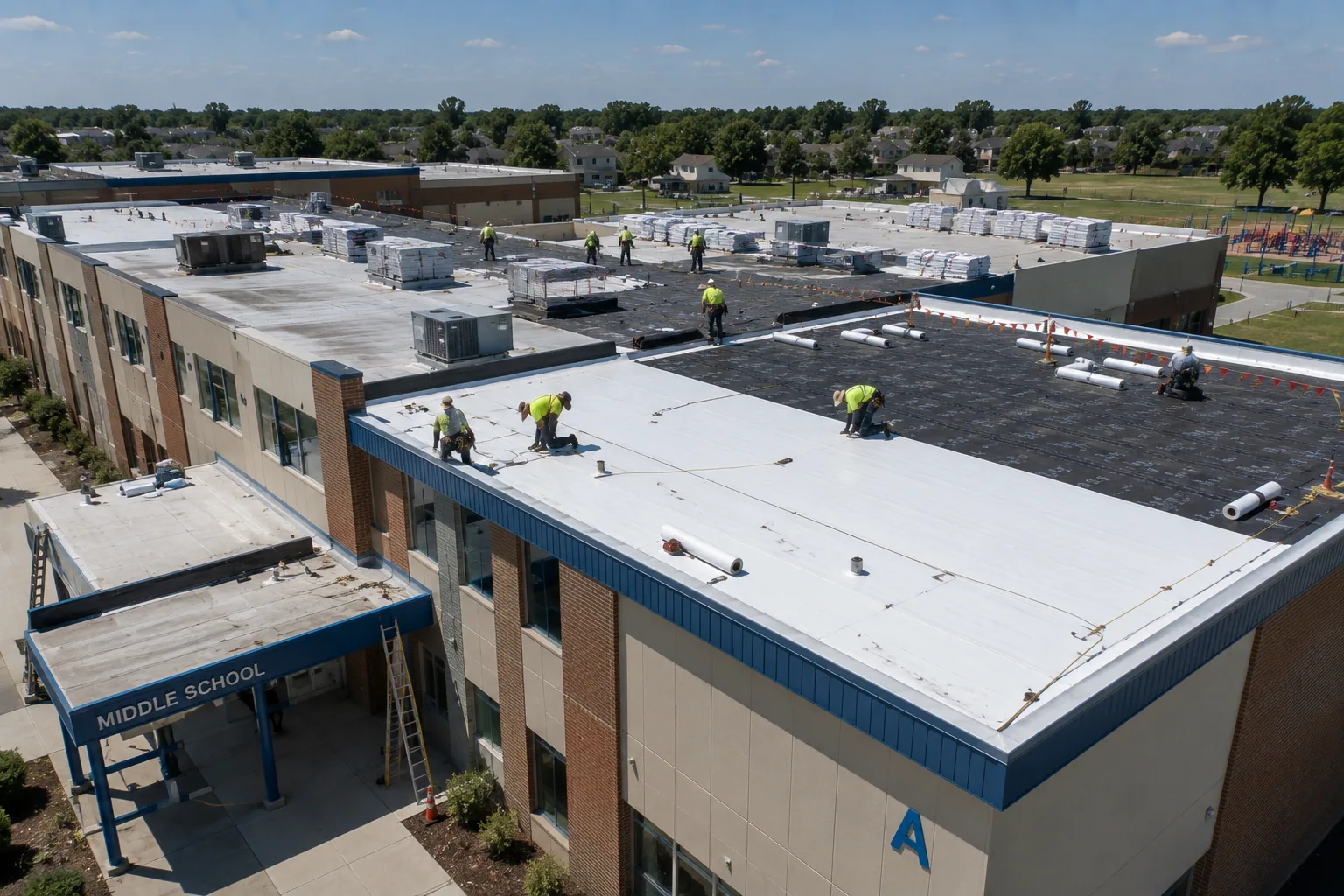
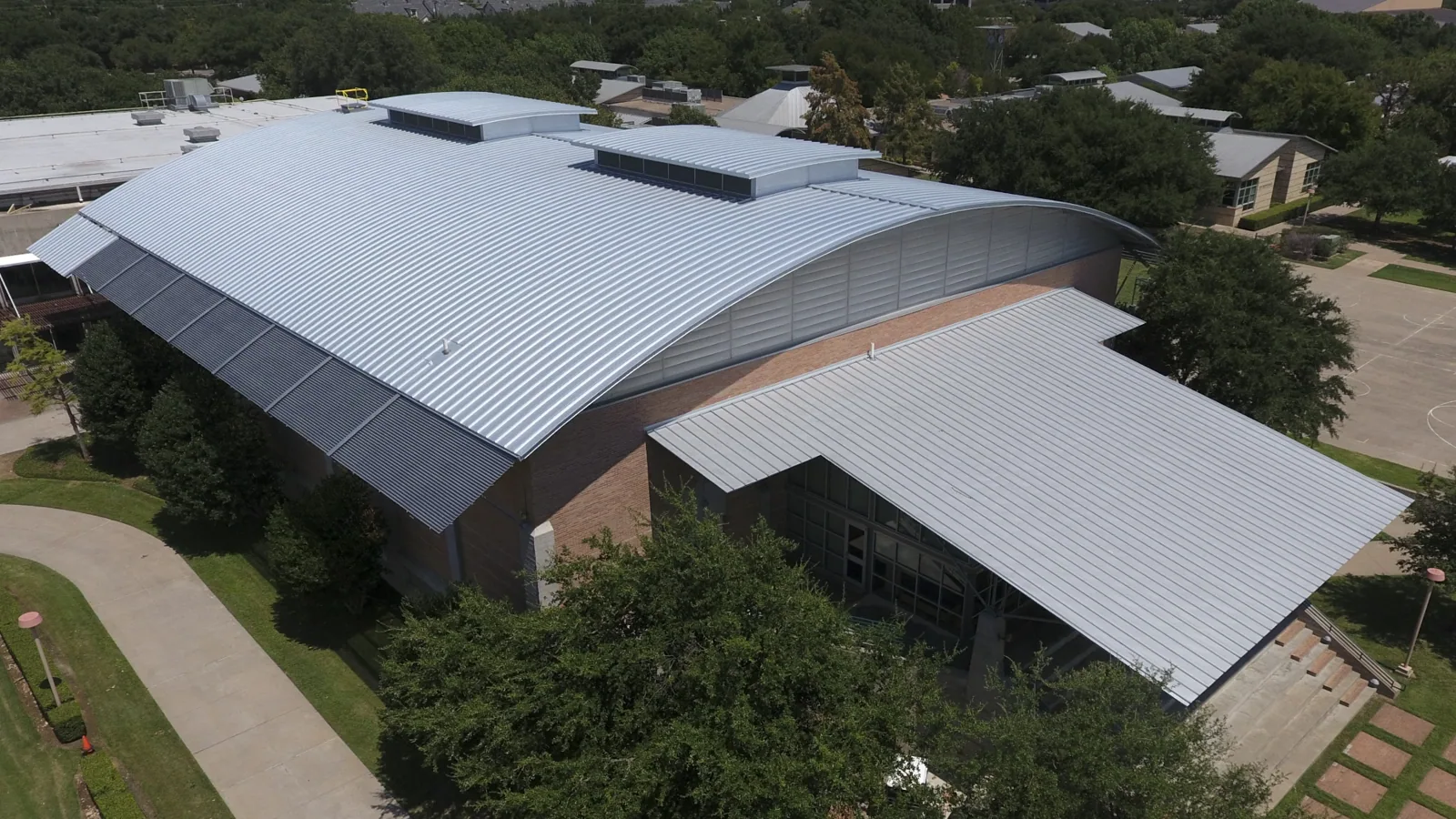
For a thermoplastic membrane, seam condition and substrate readiness influence the repair or recover approach. On metal, panel movement, fasteners, and termination details can change the scope. We confirm what system is present before carrying material or labor assumptions. A recover evaluation can be compared with full replacement when the assembly and approvals support both paths. No option is labeled cheaper or safer without the building-specific findings that justify it.
Protect the Work Window
A budget year can close before a roof work window does. We map approval dates against crew availability, product cure conditions, mobilization lead time, and a safe stopping point for any opened section. When a scope depends on adhesives or coatings, manufacturer limits and measured roof-surface conditions control the day's work; monthly weather averages do not authorize an application. Spring storm periods deserve schedule allowance, but the forecast still has to be checked for the actual work date. If a section cannot be closed safely, we move the start or define temporary protection before mobilizing.
We list material lead time, lift or crane needs, occupied hours, delivery access, and any mechanical shutdown that must be coordinated. The Dallas Parkway frontage road and US 380 form part of Frisco’s mobility network, but delivery time still depends on the building’s gate and loading area. We coordinate the actual route with building operations before estimating duration. A phased occupied-building reroof can keep entrances, work areas, and tenant communication tied to each scheduled section.
Keep the Allowance Explainable
Roof capital budgets are easier to review when each line has a reason. We separate confirmed repairs, testing, temporary protection, access equipment, and replacement work rather than combining them in one allowance. Cost changes with roof height, system type, deck condition, tear-off depth, insulation, edge details, staging, and hours available. The estimate describes which assumptions remain open and how a change in those assumptions would affect the scope.
For an office property near the Dallas Parkway Corridor, lift placement may compete with active entrances or parking operations. An older property near Original Town may require a different material route and interior protection plan. We inspect those limits at the building, not from a district label. A roof asset register can carry the approved scope and future review date into the next cycle, while the current request stays tied to the work being funded.
Leave a Clear Approval Record
The capital file should show who approved the work, which roof sections were included, what was deferred, and when the next inspection is due. We attach photographs, the scope boundary, access requirements, and any permit or submittal item still open. If the owner selects a repair instead of replacement, the record explains the evidence behind that decision and the condition that would trigger another review. That keeps a future budget discussion connected to the work performed rather than a stale estimate.
Where a portfolio includes a downtown storefront and a larger office site, staging and access can differ from one roof to the next. For a property in Original Town, our Original Town commercial district review begins with roof sections, water paths, and access limits at the building. The final handoff gives ownership a dated next step and the records needed to authorize it.
Commercial Roofing Questions
What information belongs in a roof capital request?
We include the inspected sections, photographs, confirmed defects, repair and replacement alternatives, access constraints, open testing, and the approval date. The cost basis states its assumptions so the owner can distinguish a measured scope from an allowance that depends on a future opening or permit review.
When is a repair allowance more useful than replacement funding?
A repair line fits when inspection identifies a bounded failure and surrounding sections remain suitable for continued service, subject to the documented follow-up. We show repeated defects, wet materials, or unresolved scope separately. If a broader project is credible, both choices can be priced against the same roof map.
How do permits affect a Frisco roof schedule?
The applicable code and local amendments depend on the project scope and review path. We identify the permit question, submittals, and approval time that could affect mobilization, then keep that item visible in the schedule. The listed code edition is not a substitute for project-specific confirmation.
Can a recover be included beside replacement in the plan?
We compare a recover only when existing assembly, drainage, attachment, code, and substrate conditions support evaluating it. The inspection records the facts needed to test that path. Replacement remains a separate scope with its own tear-off, disposal, protection, and access assumptions.
What should happen if approval is delayed?
We state whether temporary protection or a bounded repair can reduce near-term exposure, and identify the condition that would require a faster decision. The owner receives a revised schedule and a dated follow-up rather than an assumption that the original estimate remains current indefinitely.