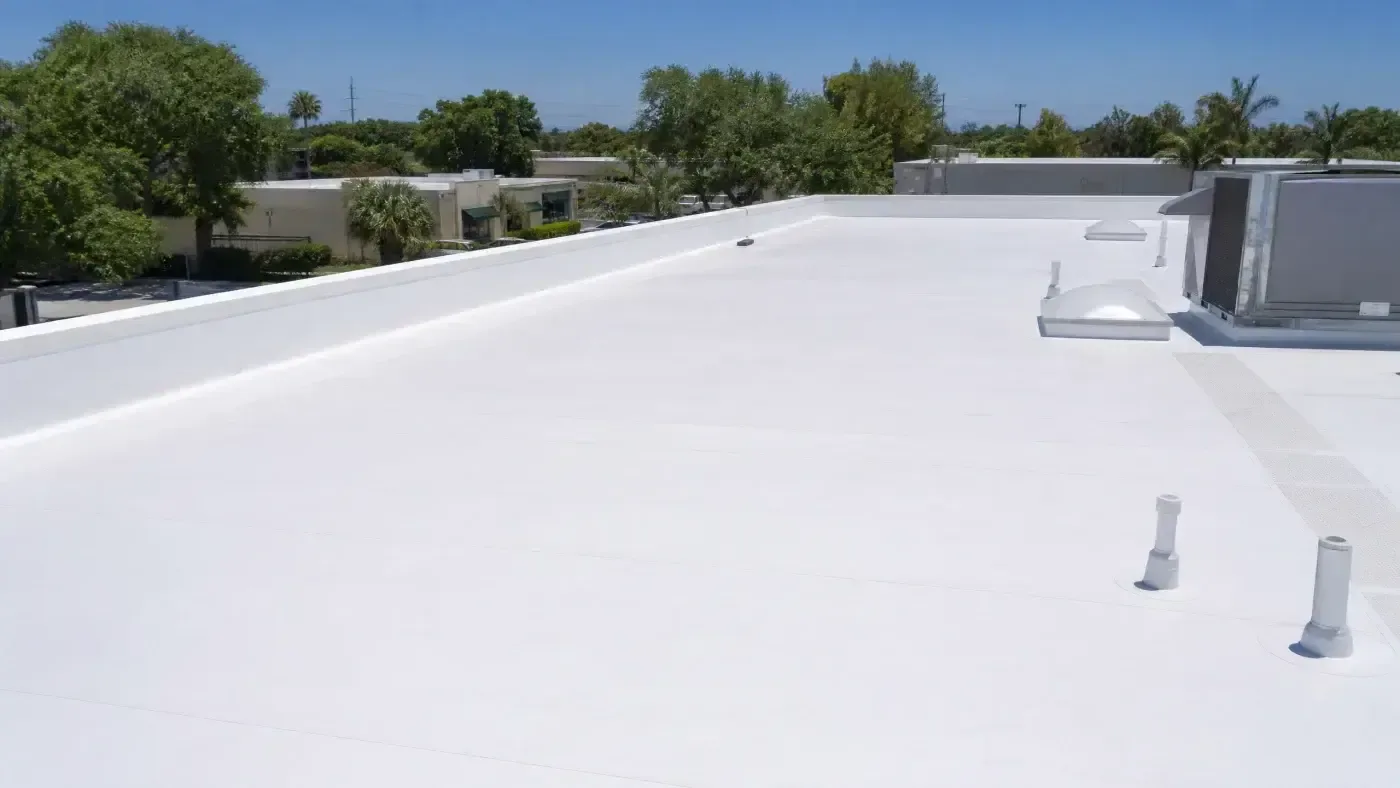
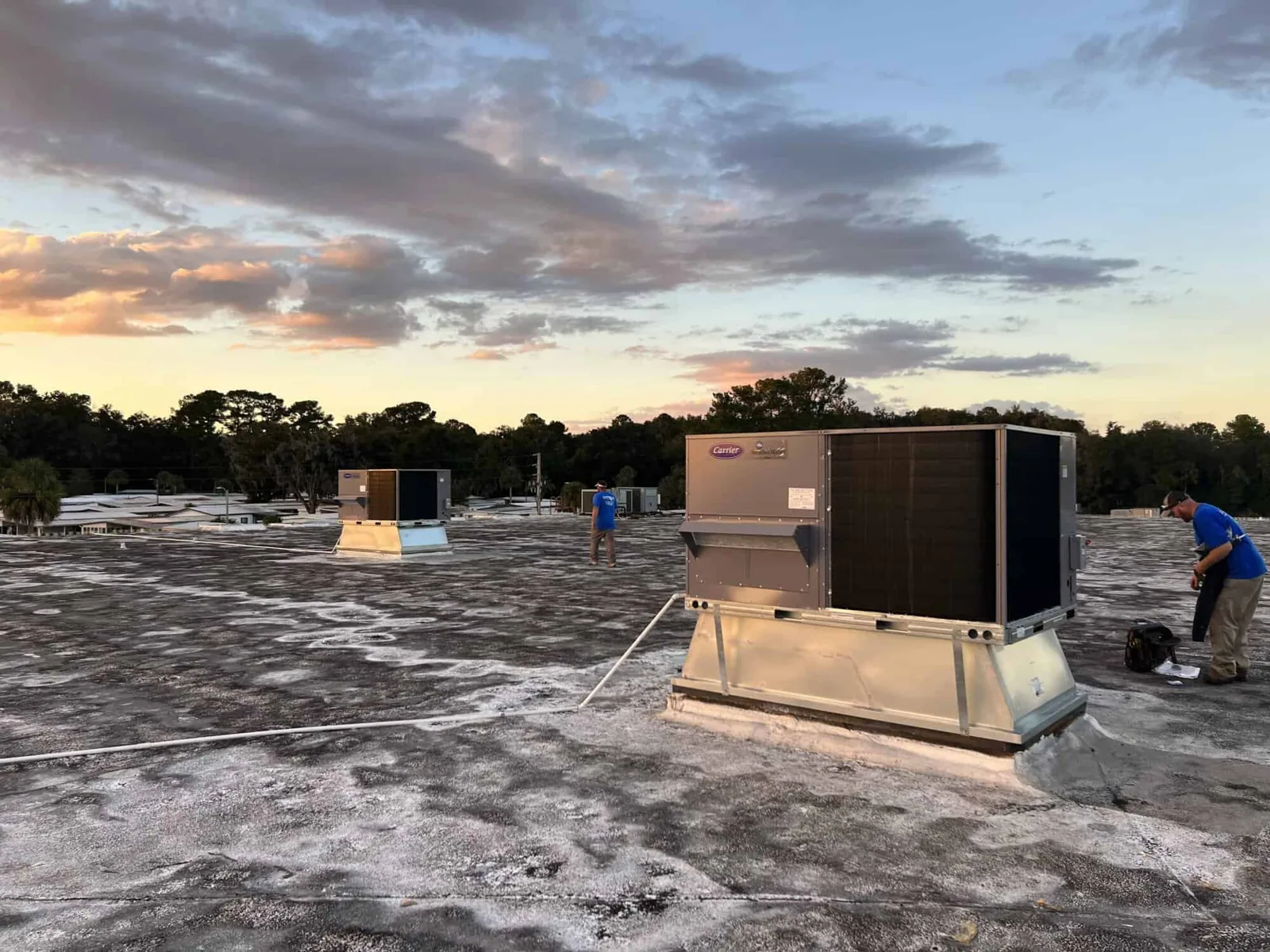
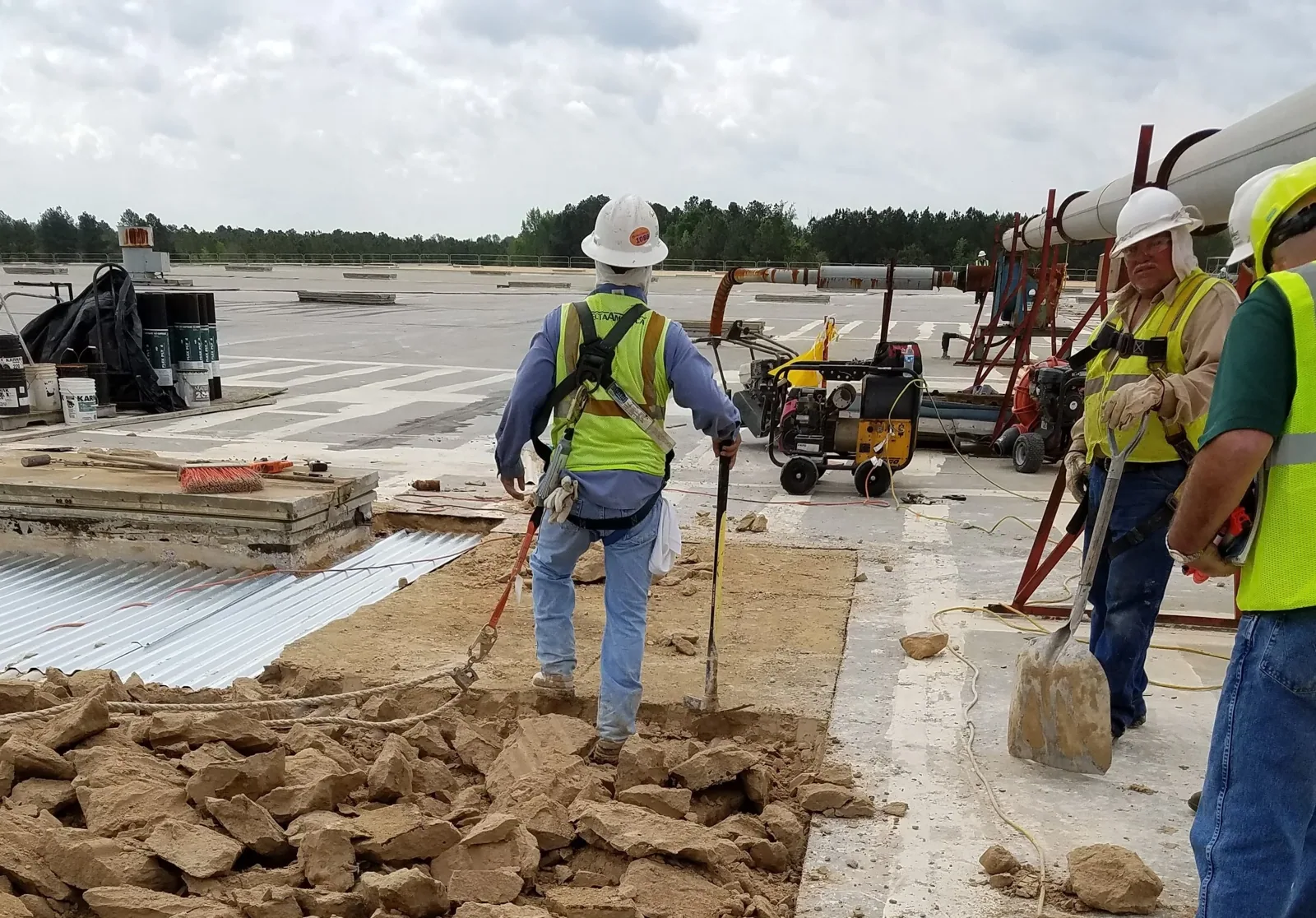
A leak beside a skylight can start at the curb, the flashing, or a separate roof opening nearby. In Frisco, TX, we inspect the frame, curb height, membrane turn-up, counterflashing, fasteners, and adjacent seams before choosing a repair. DFW summer heat and spring storms are regional planning factors, not a diagnosis of the opening. A North Platinum office roof may have more equipment around the skylights; a Rail District building can have tighter access and occupied-hour limits. We map each opening and follow the water path before pricing sealant, flashing replacement, or curb work. The roof inspection separates the skylight detail from nearby penetrations that may need their own scope.
Inspect the Curb Before Resealing the Frame
We check the skylight frame, curb surface, metal counterflashing, membrane flashing, and fastener line as connected parts. A sealant bead can fail while the curb and membrane remain sound, or the curb itself may have movement that a surface bead cannot correct. We note cracks, loose corners, exposed fasteners, water marks, and any interior staining that helps locate the path. If the opening needs removal, we protect the interior and keep the exposed roof area small enough to close within the planned work window.
Frisco's business-park planning includes office and modern-industry categories, with office/warehouse and distribution uses only where zoning and truck access support them. That variety may affect lift placement or interior protection; it does not tell us how a specific skylight was installed. We record the actual frame and roof membrane. Where the curb sits beside a drain, expansion joint, or rooftop unit, the map labels each transition so the repair does not absorb unrelated work. A defined roof repair lists the opening and its perimeter separately.
Group Penetrations by Detail, Not by Roof Count
Pipe boots, conduit supports, exhaust curbs, and equipment supports each create a different flashing condition. We identify the type, size, movement, and membrane connection before ordering material. A boot may need replacement because the rubber has split; a pipe support may need a new base flashing; a curb can require metal work around its corners. The repair note pairs each item with a location and photograph so the owner can see what is included. If more openings are discovered after access begins, we pause for approval before expanding the quantity.
Frisco's corporate, office, and business-park contexts bring different rooftop equipment and access patterns. The North Platinum Corridor is a multi-property corporate and mixed-use area, not a blueprint for any individual roof. We inspect the openings on the building under review and note whether HVAC or electrical trades need access during the work. An equipment-curb and support review can coordinate mechanical bases, while the skylight scope stays focused on daylight openings and their flashing.
Trace Water Beyond the Interior Stain
Water can enter at the uphill edge of a curb and travel along insulation before appearing across the room. We inspect the full perimeter and nearby seams, then compare roof conditions with interior reports. If the visible stain aligns with more than one possible path, a test opening or follow-up during suitable weather can help separate them. We state what is confirmed and what remains to be checked. That keeps a small flashing repair from being priced as a larger replacement without evidence.
Spring is the wettest and most active severe-weather season in DFW. That regional pattern supports timely inspection after reported events, while the opening itself must show the damage being repaired. The Rail District and North Platinum Corridor are useful area references, not evidence about a specific roof. A leak-tracing visit can extend the inspection when the water path reaches beyond the skylight perimeter.
Match the Flashing to the Existing Assembly
Repair material must be compatible with the roof membrane, curb, and frame. We confirm whether the surrounding roof is thermoplastic, EPDM, modified bitumen, metal, or another assembly before selecting primers, patches, or flashing components. Preparation, overlap, termination, and cure time follow the system instructions. If the existing frame is damaged or the curb height is too low for the required flashing, we identify that condition before a surface repair is approved. The owner receives a scope that distinguishes materials from any carpentry or metal work.
Access also shapes the sequence. A lift or ladder route, interior protection, equipment shutdown, tenant notice, and the weather window can change how many openings are handled in one visit. Frisco's Dallas Parkway and US 380 routes are part of the city's mobility network, but the property entrance and delivery path still need site confirmation. We list that route, the work area, and any sensitive interior below the opening. A TPO assembly review may help when that membrane is confirmed; the actual roof determines the repair method.
Photograph the Curb and Set the Next Check
After the flashing is closed, we photograph the curb corners, membrane turn-up, counterflashing, and nearby seams. The closeout states which opening was repaired, the material used, and any adjacent item left outside the scope. We clear packaging and debris from the roof, then note whether the owner should inspect the interior after the next suitable rain. If another leak appears, the location map gives the next visit a starting point instead of assuming the skylight was responsible. The owner can use the photos to compare the repaired edge with its condition before work and route any added finding for review.
A condition report can keep skylight and penetration records with the broader roof map. In a Frisco office park, several units may share access but still have different curbs and details; the record keeps their locations separate. If repeated failures appear across roof sections, the owner may compare repair with a recover option or a wider replacement study. We leave that decision tied to documented conditions rather than the presence of one leaking opening.
Commercial Roofing Questions
Why can a skylight leak after its frame was resealed?
The water path may run through the curb flashing, a corner, nearby membrane seam, or another opening. We inspect the perimeter and surrounding roof section before choosing another sealant application. The report identifies the confirmed entry detail and any area that needs a separate test.
Can you replace flashing without replacing the skylight?
Often the frame can remain when it is sound and the curb allows a reliable membrane connection. We check fasteners, frame movement, curb condition, and flashing height before setting the boundary. If the frame itself is damaged, that condition appears as a separate approval item.
What should happen if water is active around a curb?
We protect the interior where practical, locate the likely entry, and make temporary closure suited to the weather window. The work note records what was visible before the permanent repair. We then map the curb and adjacent details so the owner can approve a defined scope.
How do nearby rooftop units affect skylight repairs?
Units may limit access, require trade coordination, or create a second flashing detail near the opening. We identify the equipment path and keep the skylight boundary distinct. If a curb or pipe support also needs work, we price and photograph that detail separately.
What goes into the skylight repair closeout?
We provide dated photographs of the curb, flashing, membrane connection, and surrounding seams, plus the material and location. The record notes what was repaired and any condition outside the approved scope. A follow-up date can be set when the owner wants to check the interior after rainfall.