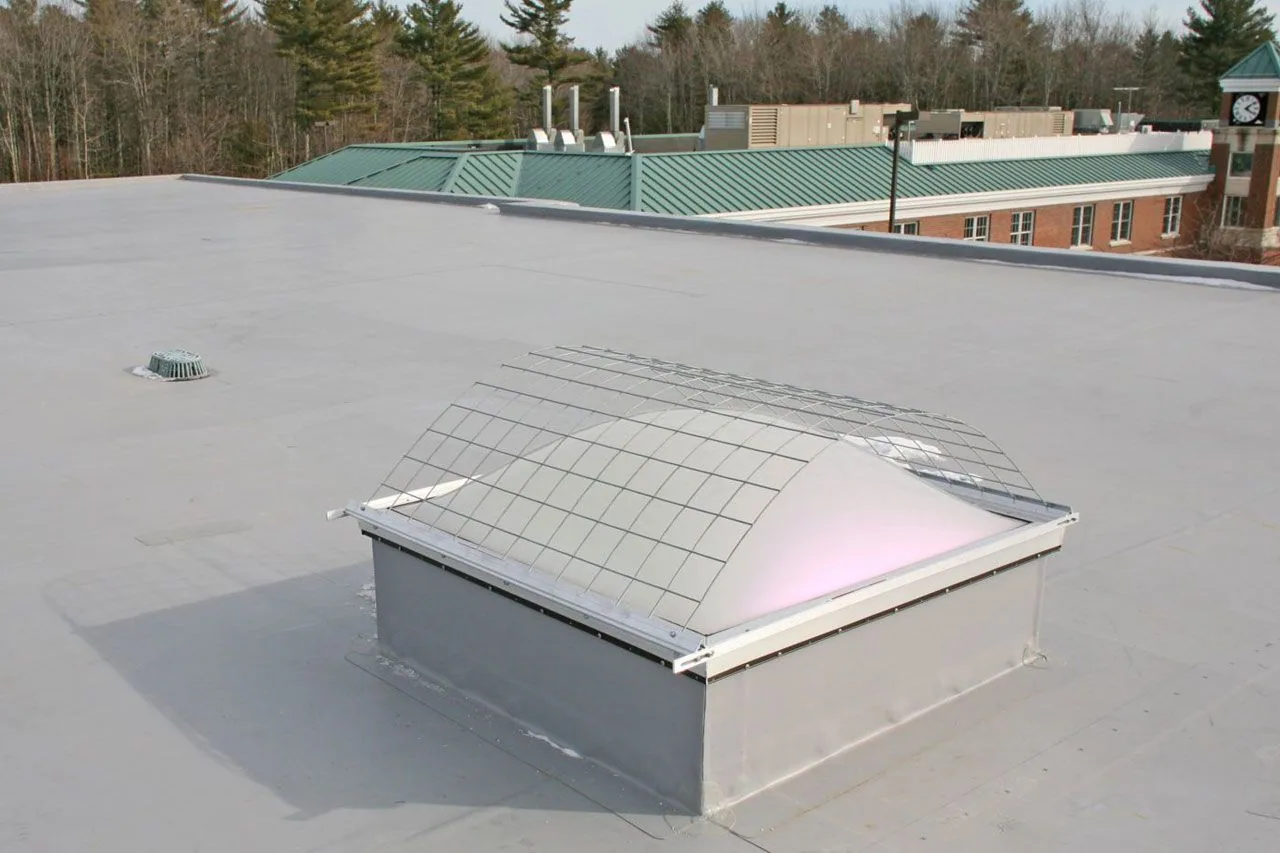
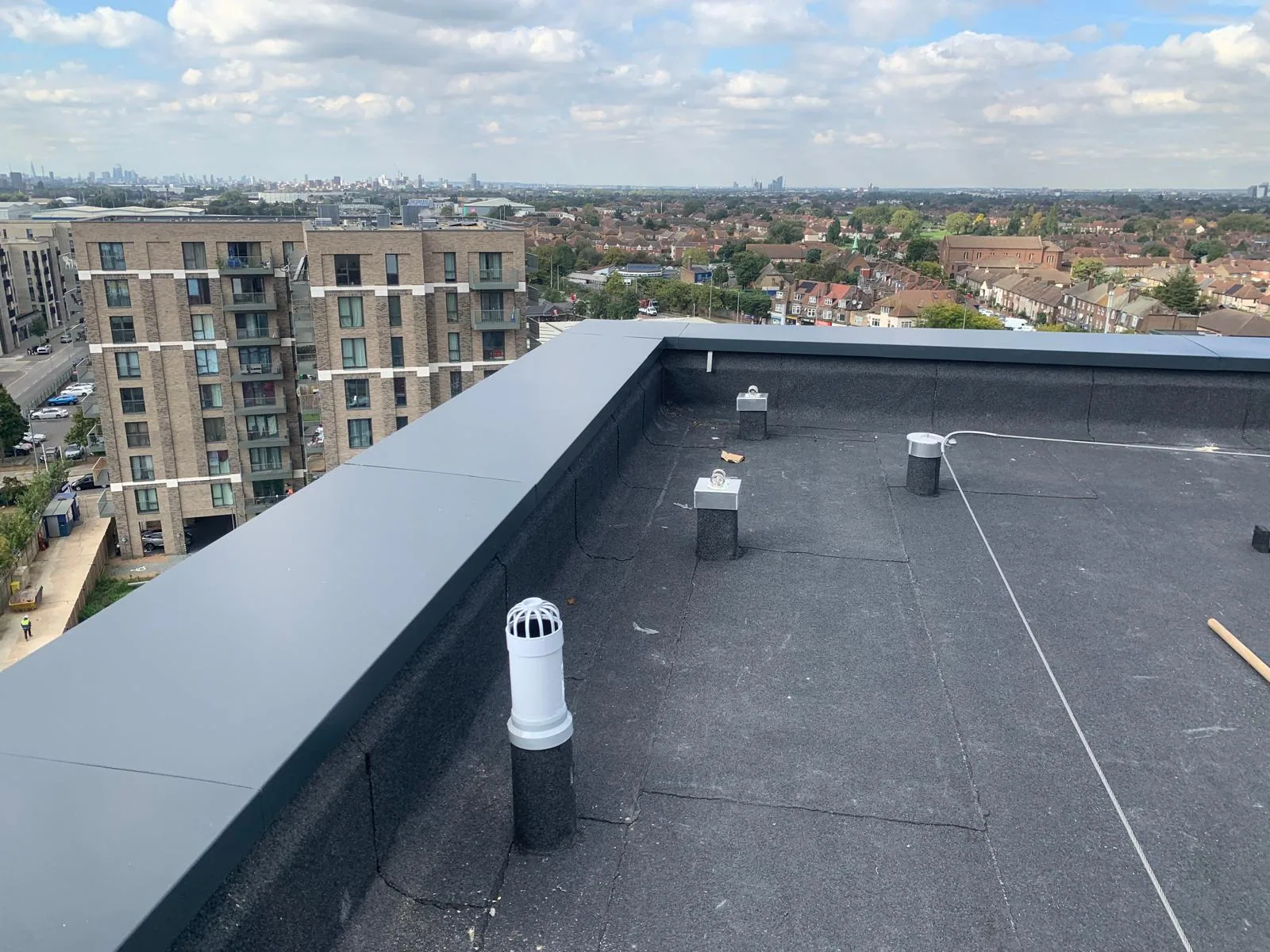
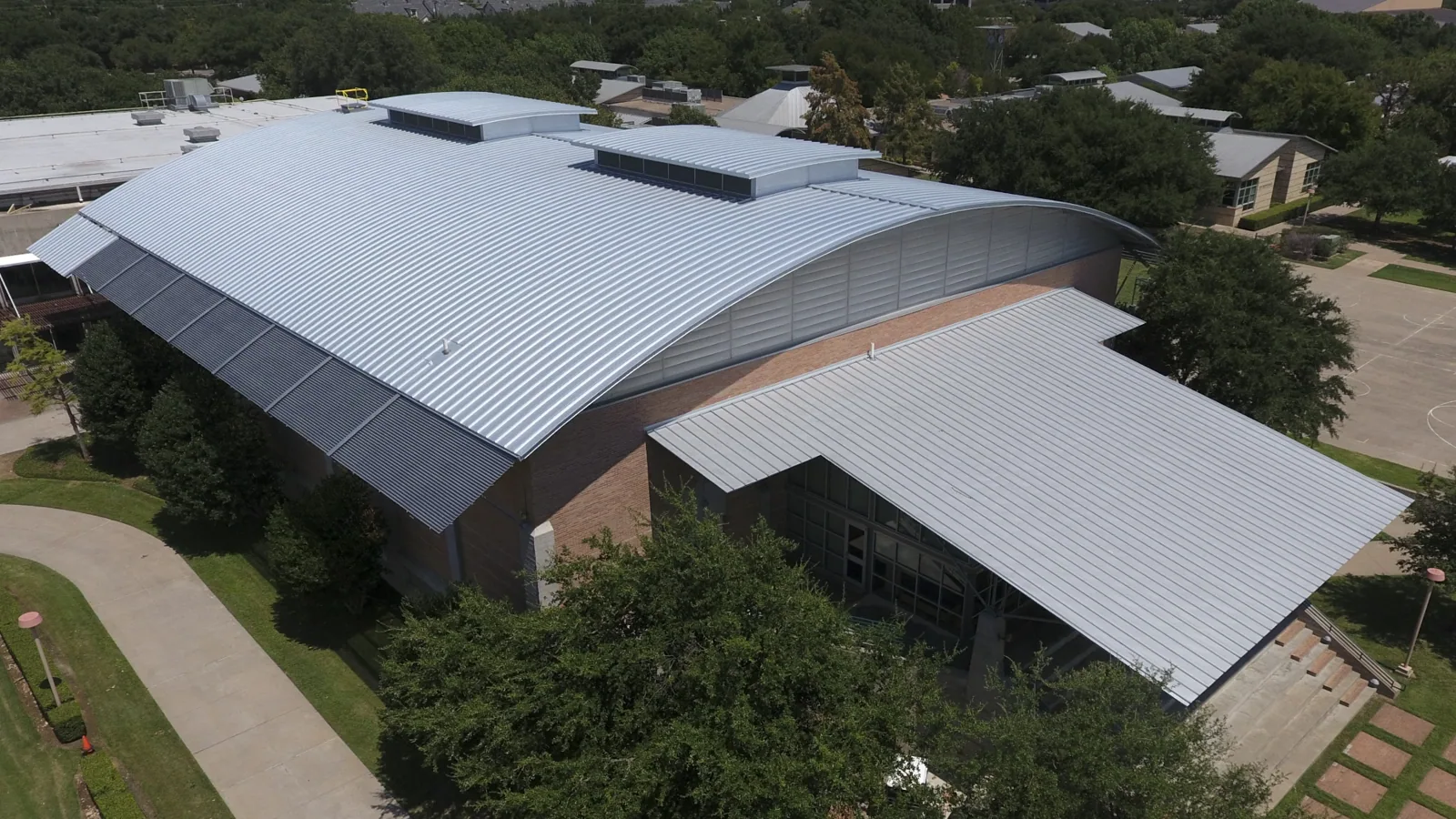
The curb around a rooftop unit has to carry equipment, keep water outside, and leave a service route for technicians. In Frisco, TX, we inspect the curb base, flashing, fasteners, support rails, pipe stands, and nearby membrane before setting a repair boundary. DFW heat and spring storms affect the work window, but the actual roof detail determines whether the curb needs new flashing, reinforcement, or a larger rebuild. A North Platinum Corridor office may have a dense equipment field; a Rail District property may have tighter access and different hours. We map each unit and identify where mechanical work meets the roof. A commercial roof inspection records the existing condition before a mechanical change or leak repair begins.
Check the Curb, Rail, and Support Base
A curb repair starts by checking what supports the unit and where that load reaches the deck. We note corrosion, loose fasteners, movement, split welds, and separation between curb and flashing. If the equipment rocks or a support rail has shifted, roofing work alone may not resolve the movement. We coordinate with the mechanical team to confirm which parts can be unloaded or moved and when. The scope distinguishes metal fabrication, attachment, membrane work, and any structural review needed before the unit is reset.
Frisco's economic-development materials describe distinct corporate offices, mixed-use employment destinations, and business parks. That range can mean different rooftop equipment access and occupied hours, but it does not establish a particular building's mechanical layout. We inventory the units on the roof and pair each with a location and condition note. A commercial office roof plan can account for occupied spaces below while the curb work remains tied to the actual unit base.
Keep Water Outside the Curb Assembly
Water can enter at a curb corner, an unsealed fastener, a cracked membrane turn-up, or a service opening that was not closed after equipment work. We inspect the full perimeter and compare the flashing with the roof membrane type. A surface bead may cover a split without restoring the connection below it. Where flashing has failed, we remove material to a sound edge, prepare the surface, and rebuild the detail with compatible components. The repair note identifies which corners, sides, and penetrations are included.
The North Platinum Corridor includes broad corporate and mixed-use properties, while Frisco's downtown planning recognizes the Rail District as historic commercial area. Those are useful service-area contexts, not evidence about a specific curb. We confirm membrane and curb construction on site before ordering material. A penetration flashing review can include nearby openings, while an edge-metal repair addresses the adjacent parapet or termination when those details are part of the same water path.
Give Pipe Supports Their Own Flashing Detail
Small lines and conduit often use a different support than the main unit curb. We inspect pipe boots, stands, clamps, and the membrane at each penetration, then note whether vibration or movement is stressing the flashing. A line resting directly on the roof can abrade the membrane or hold water against a patch. We do not move active mechanical, electrical, or plumbing lines without the responsible trade. Instead, the scope names the support adjustment and the access window needed for that handoff.
DFW's spring severe-weather season and summer heat make a roof walk useful after a reported event or before planned equipment changes. Regional weather does not show whether a pipe boot has failed; the site inspection does. We photograph the base and nearby seams and leave a clear repair line. If an owner is planning a unit replacement, a roof replacement plan can coordinate curb elevations with the new assembly. For an isolated problem, a targeted repair can stay within the affected support zone.
Plan the Mechanical Handoff Before Opening Roof
Some curb work requires a technician to disconnect, lift, or reset equipment. We confirm the responsible trade, shutdown window, lifting method, and roof protection before opening the flashing. A unit cannot be left unsecured while a curb is rebuilt. The daily sequence states which roof sections will be open, how they will be dried in, and when the equipment may return to service. The property contact sees any change in operations or access before it affects a tenant or production schedule.
Frisco's Rail District reinvestment area may require pedestrian protection and careful staging; a business park may have truck-route or loading constraints. We verify those details at the property and record the approved route. The Dallas Parkway and US 380 network forms part of the city's mobility context, but the entrance and delivery path for each building still need confirmation. A work sequence for an occupied building helps align roof access and tenant notice when curb repairs take place during normal operations.
Leave a Service Map for the Next Visit
After the repair, we check the curb corners, flashing transitions, fasteners, support bases, and nearby membrane, then photograph each completed detail. The closeout identifies what the roofing crew changed and which mechanical items remain under another trade's scope. If a support still needs follow-up, it stays on the map with the owner approval needed. That separation helps the next technician work without mistaking a roof repair for a full equipment inspection. We also note which access panel or unit side must stay clear for future service visits.
A condition map can track curbs by roof section, unit label, or location without exposing tenant or building details in public copy. A roof condition report preserves the photographs and service history for budget review. If a later leak develops, the earlier record shows which penetration was repaired and what was left in place. We set the next check around the actual curb and membrane condition, not a blanket date for every piece of rooftop equipment.
Commercial Roofing Questions
Can a leaking curb be repaired without moving the rooftop unit?
Often, when the curb and flashing remain accessible and the equipment is stable. We inspect the perimeter and confirm whether a mechanical trade must lift or disconnect the unit. If the base is damaged or movement is present, we state that condition before pricing a flashing-only repair.
Who handles a curb that has shifted under the equipment?
The roofing crew can document the flashing and attachment, while a mechanical or structural professional may need to review the equipment support. We coordinate the handoff and keep roof, curb, and unit work as separate scope lines. The owner can then approve each responsibility before a lift or shutdown is scheduled.
How do pipe supports affect roof leaks?
A loose stand, unflashed penetration, or line rubbing on the membrane can create a water path or damage the surface. We photograph the base, boot, and nearby seams, then identify whether flashing repair or support adjustment is needed. Active lines remain with their responsible trade during that work.
What should be ready before a curb repair begins?
The owner should confirm equipment shutdown authority, technician availability, access, lift placement, and the work window. We identify whether the unit must move and how each opening will be protected. That coordination keeps the approved roof section from remaining exposed while a trade handoff is unresolved.
What belongs in a curb repair closeout?
We provide photographs of the curb sides, corners, flashing, support base, and nearby roof material, plus a list of completed and excluded work. The record notes any follow-up the owner or mechanical team still needs to complete. It gives later service a location-specific starting point.