A soft area, open lap, or recurring ceiling mark on a Johns Manville roof needs an assembly check before the owner commits to another patch. We identify the membrane and related layers, inspect the water path, and map the area that can be repaired safely. In Frisco, TX, business parks may combine office, warehouse, distribution, or showroom uses, while downtown commercial buildings bring a different access pattern. Hot summer conditions and spring storms shape the work window, not the diagnosis. Our first-hour plan protects active interior exposure, records the roof section, and sets the next decision. A commercial inspection gives the owner a condition map before the repair line is approved.
Identify the Layers in Place
Johns Manville commercial roofing includes membrane, insulation, and related building-envelope materials, but the installed combination must be verified at the property. We compare submittals and prior work records with visible labels, seam patterns, flashing, cover board, and insulation edges. A repair may have introduced another material, or an addition may use a different assembly. We note those differences before specifying adhesive, weld, patch, or coating work. An owner should know which roof section the finding belongs to and whether the field evidence supports the proposed repair method.
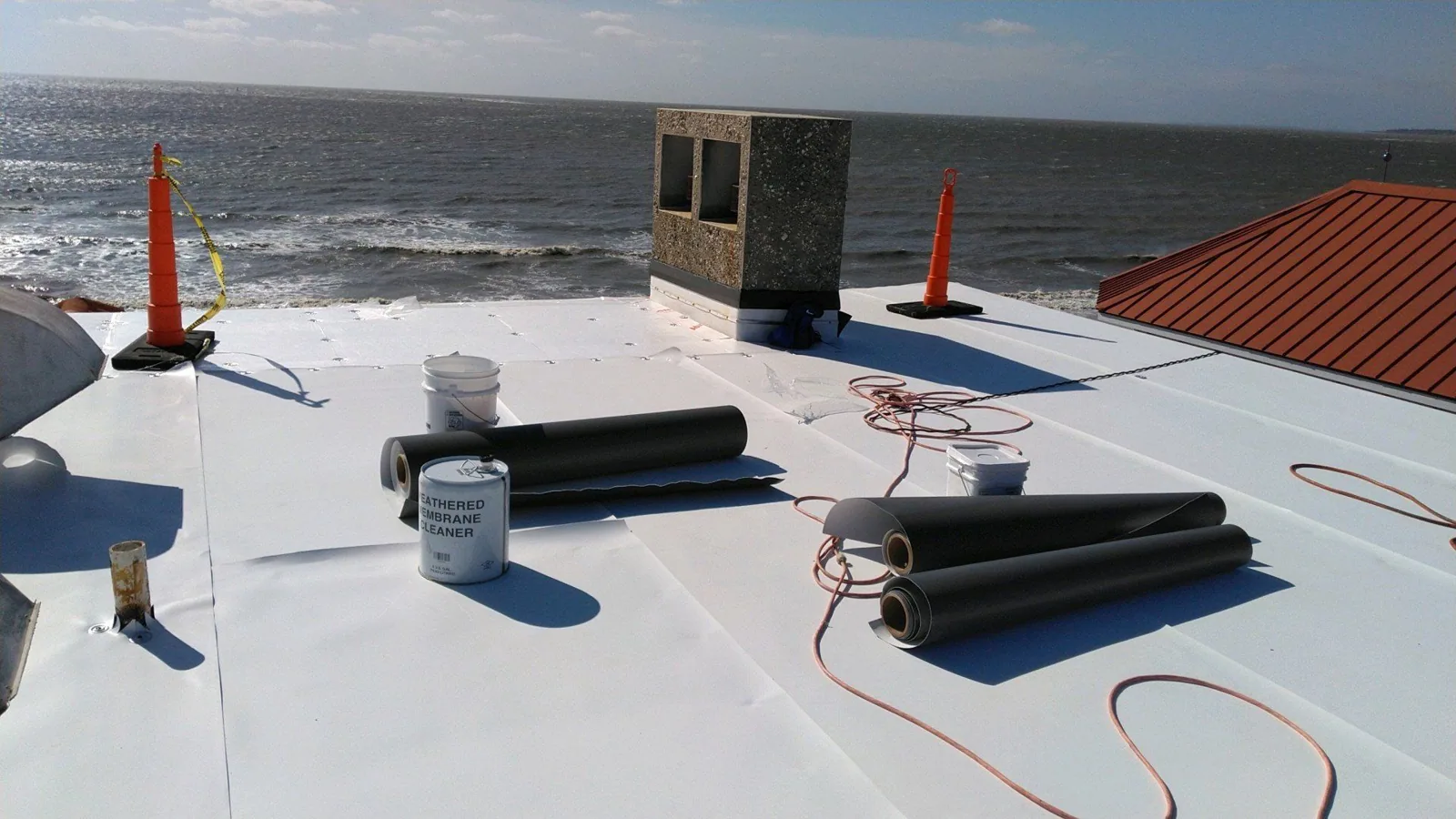
When the surface looks sound but moisture is suspected below it, we choose a focused test based on the roof construction and the decision it needs to answer. A broad opening can add cost and expose occupied space without resolving the right question. We record test areas, results, and limitations on the same map used for repair pricing. A modified-bitumen roof and a single-ply TPO assembly have different seams and repair steps; we confirm which one is present rather than infer it from a brand name.
Trace Moisture Before It Spreads
A leak report gives us a location to start, not a complete map of concealed moisture. We connect the interior mark with roof drains, field seams, wall transitions, curbs, and penetrations that could carry water. Where staining extends across rooms or tenant spaces, the manager can identify which areas are occupied and which require protection first. We document active water, temporary measures, and permanent work separately so an emergency response does not get mistaken for a final repair.
National Weather Service summaries identify spring as the DFW area’s primary severe-weather period, with hail and damaging wind reported across the Metroplex in many years. A regional pattern directs the inspection; only roof evidence establishes a property condition. That regional pattern makes post-storm inspection useful, but it does not show that a particular Johns Manville roof was struck. We record visible punctures, displaced edge conditions, loose flashing, or drainage obstruction only when found. The hail review can distinguish observed impact from an event report, while a moisture survey may help define the next test when conditions are suitable.
Make Repairs Match the Assembly
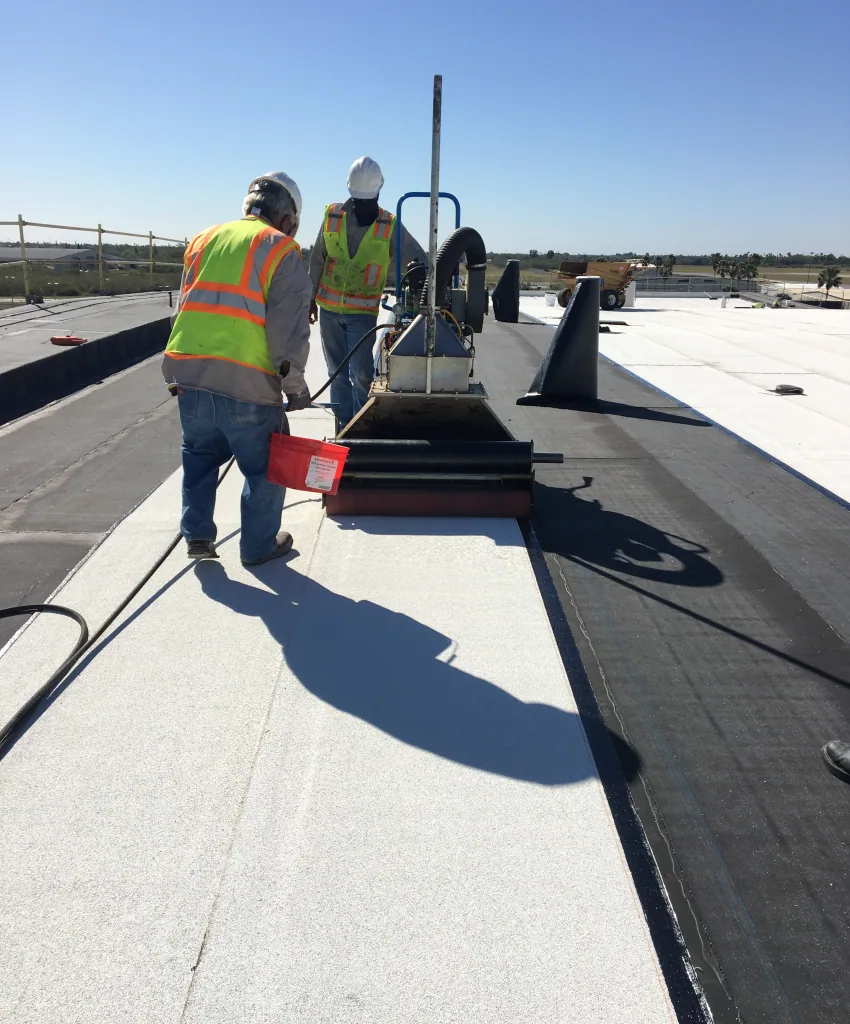
A repair scope starts with sound material around the defect, compatible products, and a transition that will stay inspectable. We prepare the surface, remove material that cannot support a bond or weld, and restore the membrane or flashing detail with the appropriate method. The scope identifies how far the repair extends and whether adjacent seams or penetrations need separate work. Where the roof is dry and stable around one opening, a contained correction may be enough. Where evidence spans several sections, repeated patches may create more mobilizations without resolving the underlying condition.
We price preparation, access, occupied hours, staging, and any testing as separate drivers. That lets the owner compare a direct repair with a larger correction list or replacement allowance. A commercial repair scope states what is included, what remains uncertain, and the next observation that could change the recommendation. If layers need broader work, a replacement plan sets an alternate scope without hiding it inside the repair. The decision stays with the owner and the condition record remains clear.
Plan Around Frisco Operations
The city's business-park land-use category describes office and modern industry, with office-warehouse, distribution, and showroom forms allowed where zoning and truck access support them. Those planned uses are not proof of any particular property layout. We confirm delivery limits, loading route, roof access, lift location, and tenant notification for the building in front of us. The Dallas Parkway and US 380 mobility network supports regional movement, yet each job still needs a permitted truck approach and a safe place to stage material.
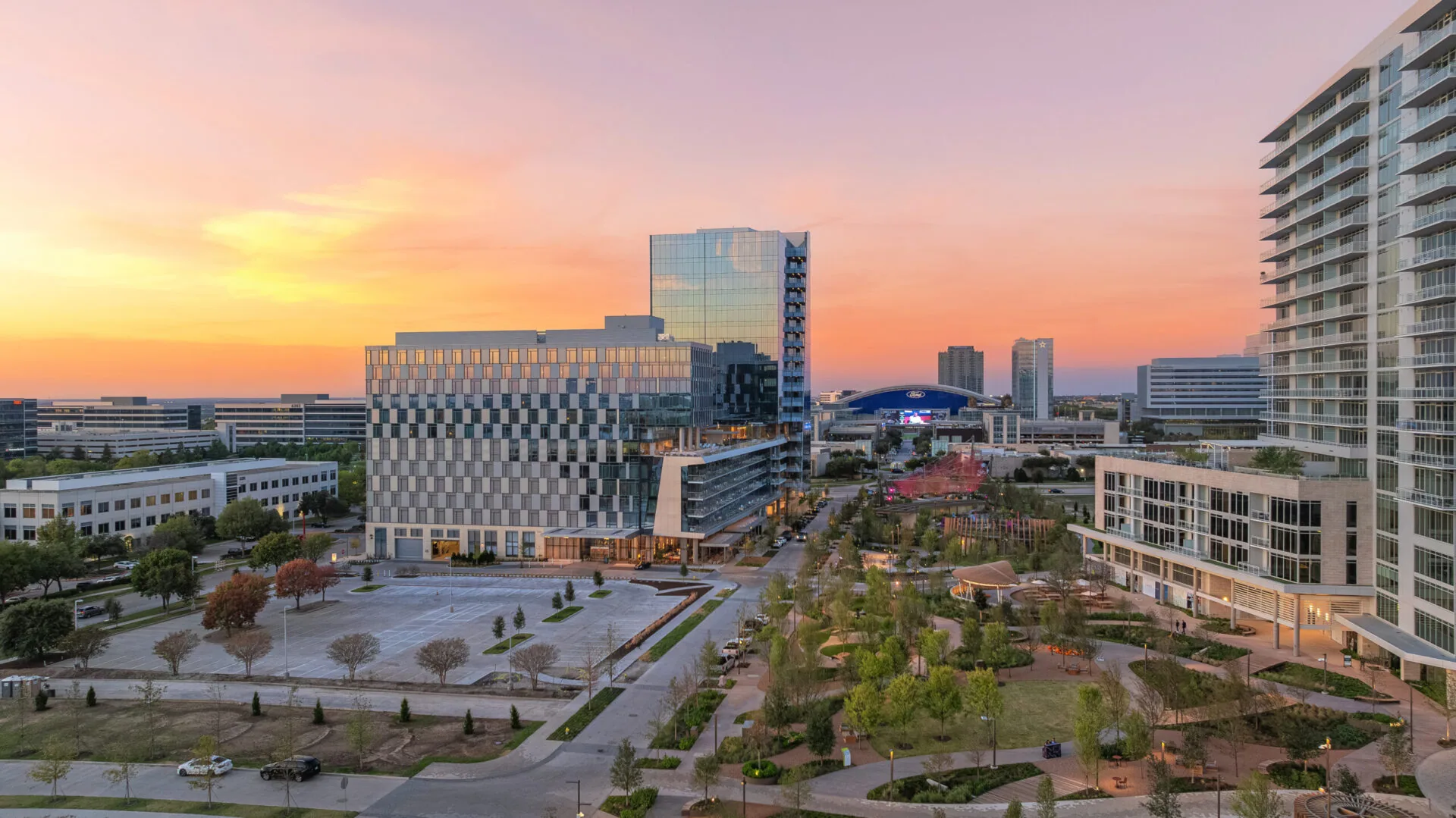
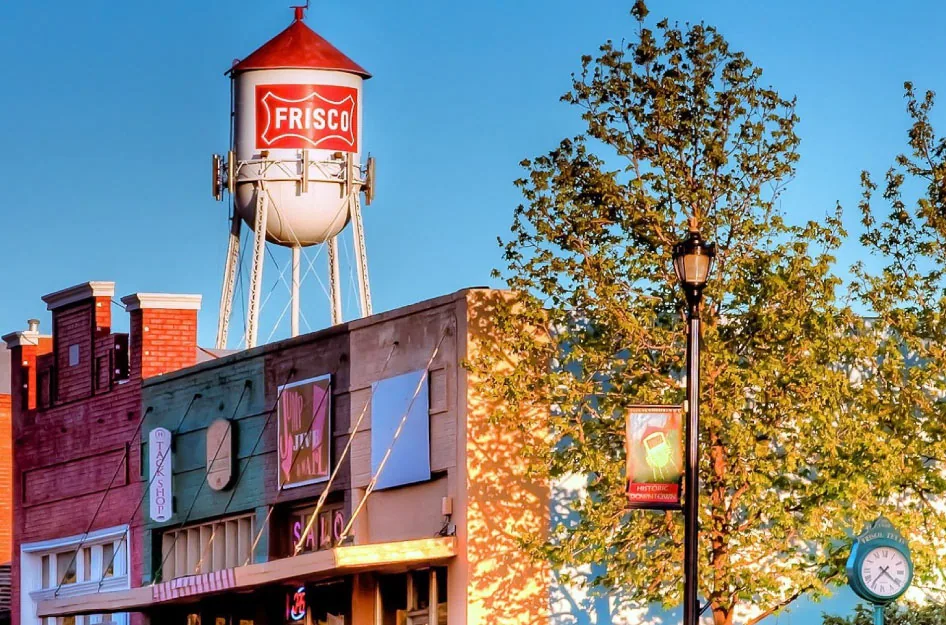
For context, the city identifies historic commercial properties in the Rail District and larger corporate or mixed-use projects along North Platinum. Those are area-level descriptions; the building manager still confirms occupancy and access at the job. Roof access and occupied hours can differ between those broad contexts. July and August DFW average daily highs exceed 95 degrees in the climate normals, so summer scheduling considers material handling, shade, and worker exposure. The Dallas Parkway Corridor and Original Town commercial area are useful geographic references, but the work plan follows the property's own entrances, tenants, and roof details.
Set the Next Spend and Date
Repair, restoration, or replacement each carries a different timing and capital consequence. We lay out active leaks, confirmed defects, moisture concerns, and deferred items by roof section. The owner can see what needs immediate protection, which repair can be scheduled with other work, and what condition deserves a replacement comparison. We avoid assigning a remaining service life from appearance alone. If a test is needed before selecting a path, the report states the question and cost driver.
Project files may include material submittals, prior repair photos, maintenance records, and warranty documents. We compare those records with what is visible without inferring coverage or approval. A written condition report gives ownership a usable set of photos and priorities. A material comparison may include GAF roof assemblies or Carlisle SynTec products, but only after the existing Johns Manville section is documented and warranty terms are checked in the owner’s records. Each recommendation ties work, access, and the budget date together.
Commercial Roofing Questions
How do you identify the Johns Manville materials on a roof?
We review project records and visible labels, then compare them with seams, flashing details, insulation edges, and any previous patches. A name in an old invoice does not confirm what is installed across every section. We state what the field evidence supports and identify any test needed before choosing a repair method. That keeps a material mismatch from becoming a hidden change in scope.
Can moisture testing avoid a full roof replacement?
Testing can help define wet areas and support a repair boundary when the assembly and conditions allow a useful reading. It cannot confirm that every concealed area is dry. We select the method to answer a specific decision question, record the test limits, and compare results with visible conditions. The owner then sees whether localized work remains defensible or a broader scope should be priced.
Does a spring storm mean a membrane needs replacement?
A storm report is a reason to inspect, not a replacement decision. We document visible punctures, seam changes, flashing movement, and interior reports by roof section. If no relevant damage is found, the condition record should say that plainly. If repairs are supported, the owner receives a line for confirmed work and a separate path for conditions that need testing.
What controls the schedule for repair work in Frisco?
Material requirements, weather, roof access, staging, occupant hours, and delivery limits all affect the date. DFW summer heat can shorten practical roof shifts, while spring storm activity can change access priorities. We confirm actual site conditions and coordinate the work window with building operations. A district label or regional forecast does not replace that property-level review.
When should the owner compare repair and replacement?
Repeated failures, moisture across several sections, or a repair list that keeps reopening can support a replacement comparison. We map what is confirmed, state what remains unknown, and price the alternatives separately. That gives ownership a decision tied to operating disruption and budget timing. If the evidence still favors a contained repair, we explain why that line remains reasonable.