A blistered cap sheet or loose flashing on a Soprema roof changes the owner’s next spend only after the assembly and moisture extent are clear. We inspect the surface, laps, transitions, drains, and nearby insulation, then map each finding to a roof section. In Frisco, TX, a business-park office or distribution property has different access needs from a smaller commercial building in the Rail District. Hot summers and spring storms influence the work window, but do not establish a specific roof condition. Our first-hour plan protects any active interior exposure, records the water path, and sets the repair boundary. A commercial roof inspection helps ownership decide whether a contained repair, a broader restoration, or replacement deserves pricing.
Check the Surface and Underlayers
Soprema offers commercial roofing materials across multiple assembly types. The roof in place may include modified bitumen, liquid-applied components, insulation, or a later coating, and each layer affects the available repair path. We compare project records with field labels, surface texture, laps, seams, flashing, and previous patches. Where a roof section has been altered, the material at the repair point may differ from the original installation. Our notes identify that condition before selecting heat, adhesive, resin, or compatible patch materials.
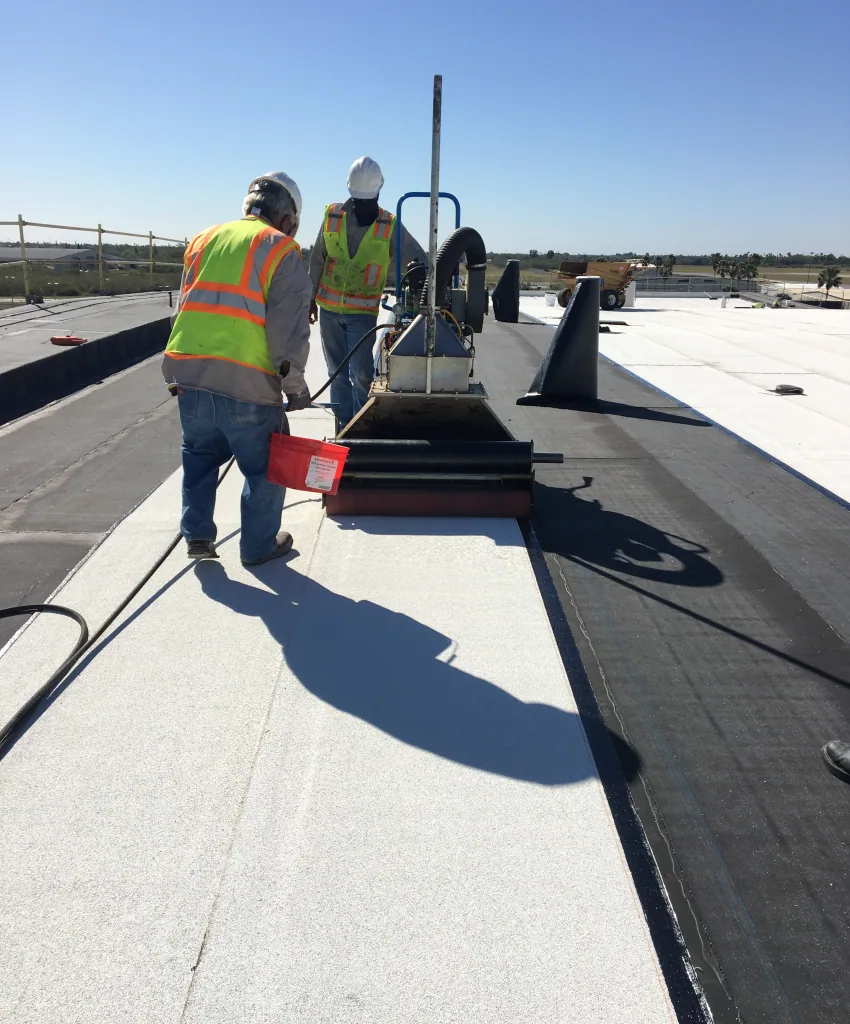
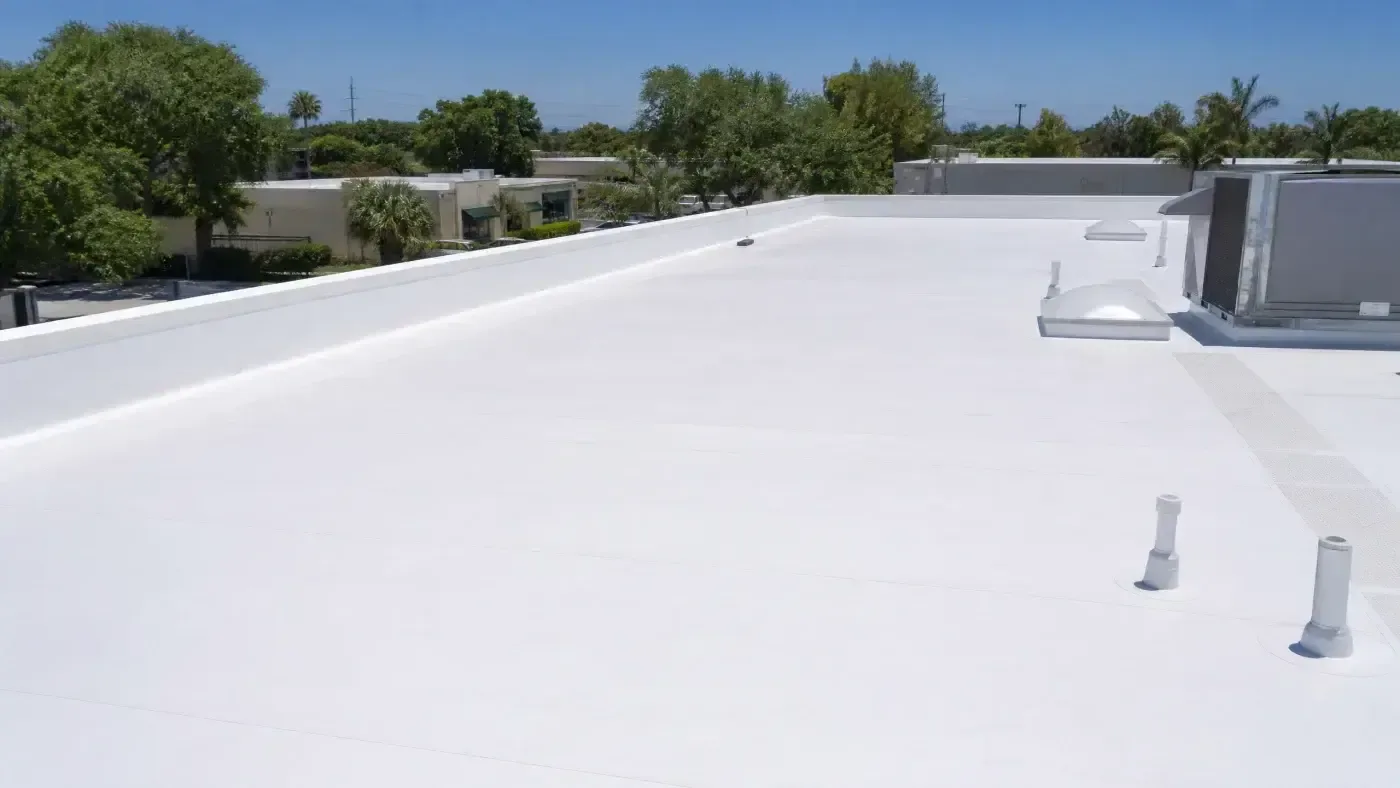
On a modified-bitumen surface, we inspect the cap sheet, laps, end joints, flashing transitions, and signs of movement. A small lifted edge can be distinct from a broad moisture problem beneath the assembly. If a liquid-applied flashing or coating is present, we check its bond and termination before applying more material. A modified-bitumen roof and a silicone coating system need different preparation and compatibility checks. We record what the visible condition supports rather than assume that a named manufacturer identifies the entire roof.
Locate the Water Path
Water can enter at a transition and travel before it appears in a room. We ask when the stain appeared, which space is affected, and whether water is still active. Then we inspect nearby wall edges, penetrations, seams, drains, and roof slope changes. The map links interior reports with roof observations but does not turn proximity into proof. If the entry remains uncertain, we outline a focused test or opening and explain what result would change the repair decision.
DFW climate normals report May as the wettest month on average, while the region's severe-weather activity peaks in spring. Those conditions make water-path inspection and post-storm review useful, but they do not prove that a particular Soprema assembly took damage. We record visible punctures, displaced flashing, open laps, and ponding only where observed. For a report after hail or wind, a wind condition review can be scoped to actual roof details. A separate drainage check evaluates whether discharge needs maintenance or correction.
Match Preparation to the System
Repair success depends on preparation as much as material selection. We define the area to be cleaned, dried, or removed, then restore the seam or flashing with components compatible with the field assembly. The completed transition is checked and photographed. We list adjacent defects separately so the owner can authorize the first repair without accepting a vague roof-wide allowance. If the surface is wet or unstable, the work window may need to shift while temporary protection remains in place.
Cost drivers include access, staging, preparation, the amount of material opened, and whether insulation or decking needs replacement. Occupied hours and material cure conditions can affect sequencing. Our repair scope shows immediate work, optional follow-up, and test work as separate lines. When repeated defects or broad moisture change the economics, a restoration option or replacement comparison can be priced from the same condition map. The owner sees the next spend and what observation would move the recommendation.
Plan Work for Frisco Properties
The Frisco plan frames business parks around office and modern-industry uses; any warehouse, distribution, or showroom proposal depends on the applicable zoning and truck access. That planning context does not identify any particular building or roof. We check the site's approved delivery path, loading limits, lift placement, access hatch, and occupied schedule before staging materials. The Dallas Parkway and US 380 network connects the market, but the property entrance and truck approach still need direct confirmation.
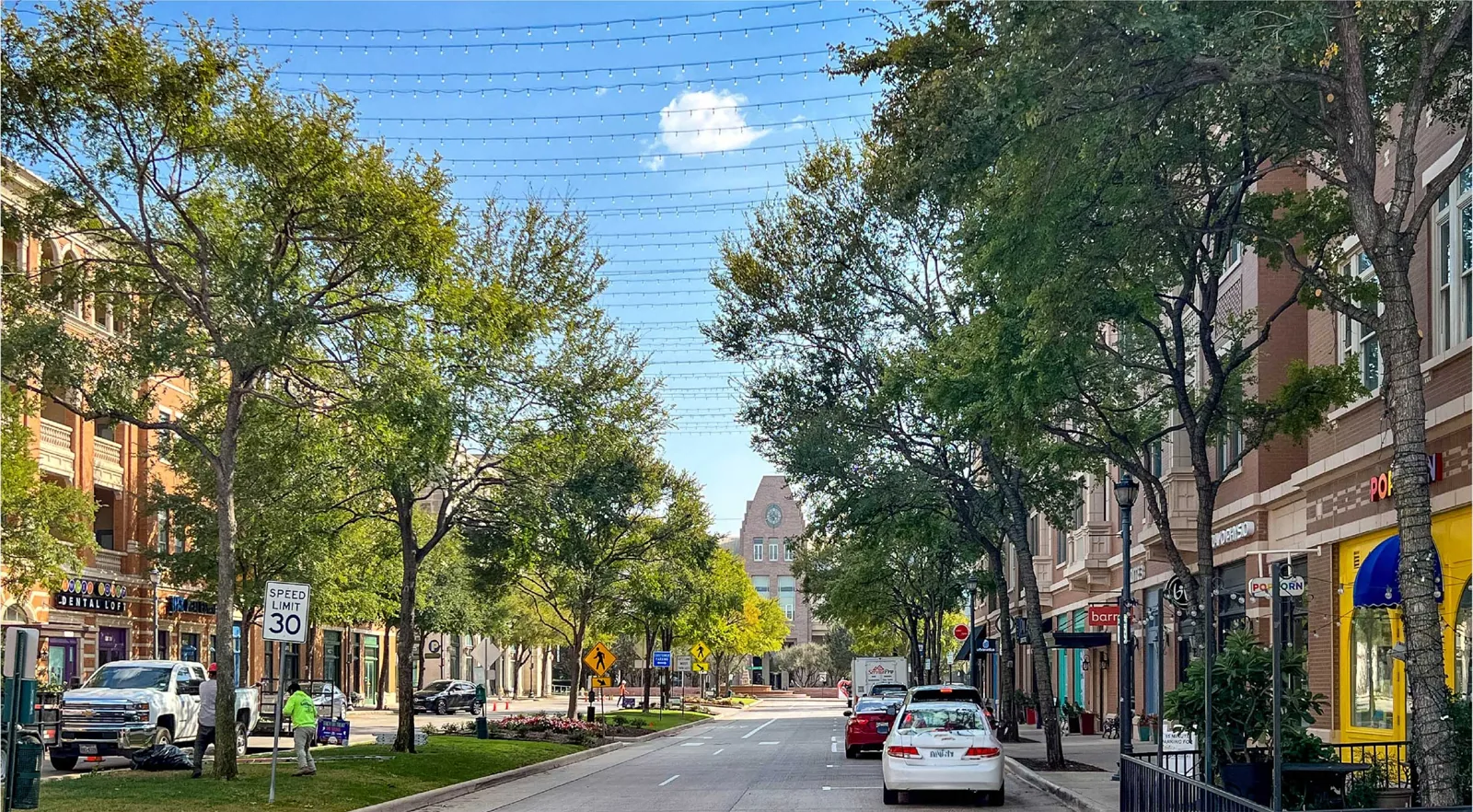
Frisco’s Rail District is its historic downtown, with reinvestment focused on the district’s built environment. North Platinum has larger corporate and mixed-use development, creating different potential access conditions without determining any one property’s needs. These real district contexts can affect staging and tenant coordination without revealing the conditions on an individual roof. DFW July and August climate normals show average highs above 95 degrees, making work timing important for material handling and crew exposure. We confirm actual conditions and schedule the work to the owner's access window. A Rail District building or North Platinum property gets a specific access map, not a generalized district plan.
Keep the Capital Choice Open
A repair can be the right choice when damage stays localized and adjacent surfaces remain stable. Restoration or replacement may deserve comparison when repeated repairs, wet insulation, or multiple roof sections change the risk. We document confirmed issues, note concealed conditions, and give each option a clear boundary. If more information is needed, we state the test, access, and cost consequences before opening the roof.
Owner records may include past repairs, system submittals, and warranty documents. We review those against current field evidence without inferring coverage or manufacturer approval. A capital review file links location-tagged photographs with the next decision. For owners comparing material systems, Sika Sarnafil membrane work and Versico system scopes can be considered after the existing assembly and building requirements are known. The recommendation ties work area, occupied hours, remaining uncertainty, and budget date together.
Commercial Roofing Questions
Which Soprema materials are on my commercial roof?
We begin with submittals, labels, and prior work records, then compare them with the roof surface, laps, flashing, and patches. Soprema materials can appear in different assembly types, so the brand name alone does not settle what is installed at every section. We identify the visible layers and explain what needs a test before proposing a repair product.
Can a modified-bitumen lap be repaired without recoating the whole roof?
A contained lap repair can fit when nearby material is stable and the moisture concern remains local. We inspect adjacent end joints, flashing, and substrate, then prepare and restore the area with compatible materials. If multiple laps or broad moisture are present, we list those findings separately and compare a wider restoration or replacement scope. The owner sees the boundary before approving work.
Does a coating hide an existing Soprema roof problem?
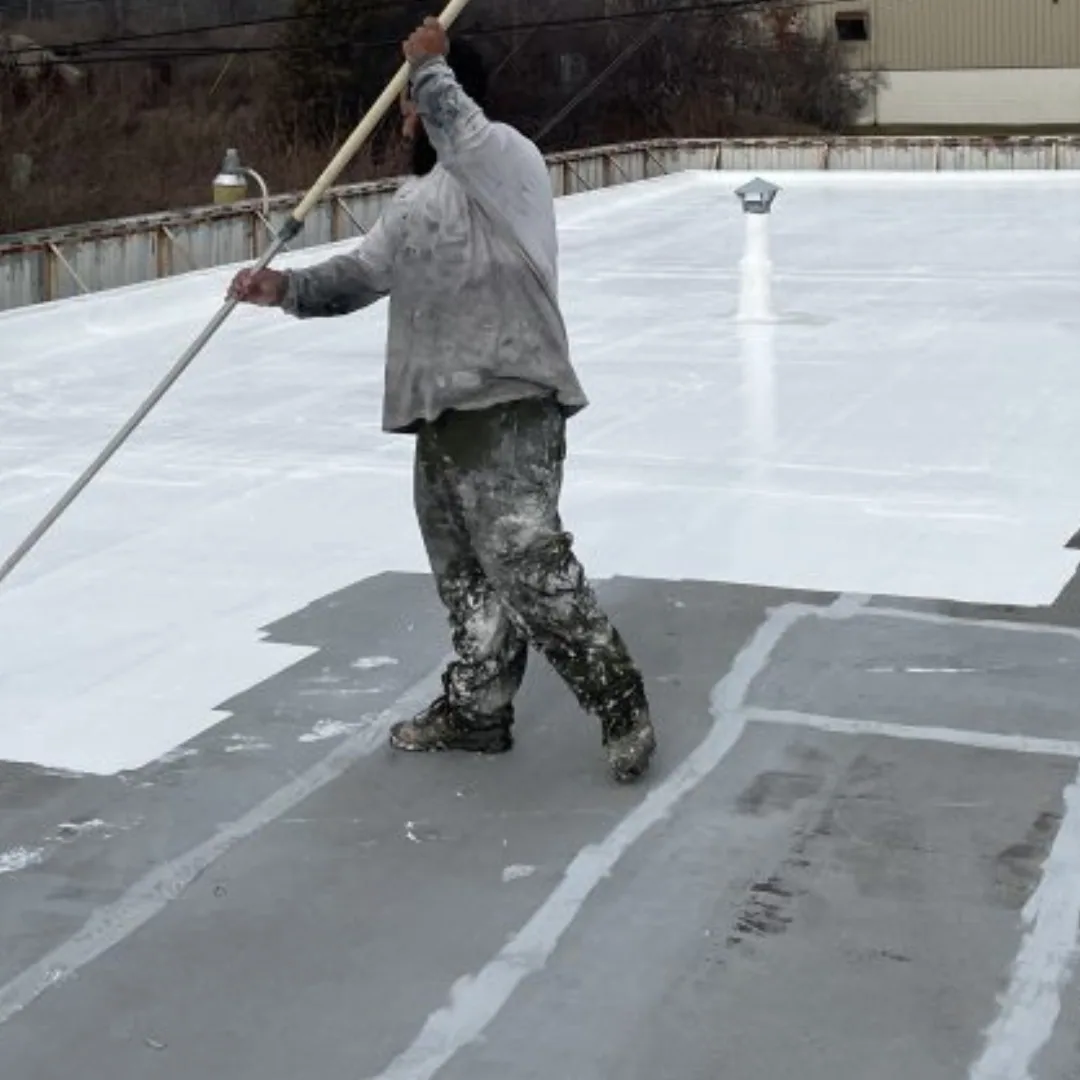
A coating can change how a surface looks, so we inspect bond, terminations, seams, and underlying details before recommending another layer. If moisture or failed flashing remains unresolved, additional coating may conceal the repair question rather than answer it. We define any testing first and state what preparation the proposed system needs. That keeps restoration separate from structural or membrane repair.
How does a Frisco storm report change the roof inspection?
The report helps set timing and directs attention to observable details such as open laps, punctures, edge movement, and drains. Regional spring storms do not establish damage at a particular building. We connect each finding to a roof section and separate confirmed repairs from conditions that need testing. This gives ownership usable documentation without assuming a cause from the weather alone.
What determines whether repair or replacement is the next spend?
The number and spread of defects, moisture findings, repair history, access limits, and the owner's capital timing all matter. We map active conditions and state what remains uncertain. A contained repair is priced separately from restoration or replacement where more than one path is supportable. The report identifies the next decision date and what evidence could change it.