A leak over a Prosper suite needs an immediate water plan and a roof section before the owner commits to broader work. We protect the interior, identify the likely path, and record the surface conditions around the reported area. The 2024 Census Gazetteer identifies Prosper as an incorporated Texas place about six straight-line miles from Frisco. That geographic context places it within the nearby service area; it does not establish what types of commercial roofs are present or what condition a building is in. We confirm the actual assembly and access rules at the property.
The first check covers the room, leak timing, roof entrance, nearby penetrations, drains, edges, and prior repairs. For an active leak, the first dispatch stabilizes the affected area; the written scope then identifies where permanent work begins and ends. A water-path inspection records the likely entry and the test still needed, if any. A North Platinum roof review or a Celina property inspection gets a separate map. The owner receives a recommendation tied to the roof, not a city label.
Make the Reported Area the First Boundary
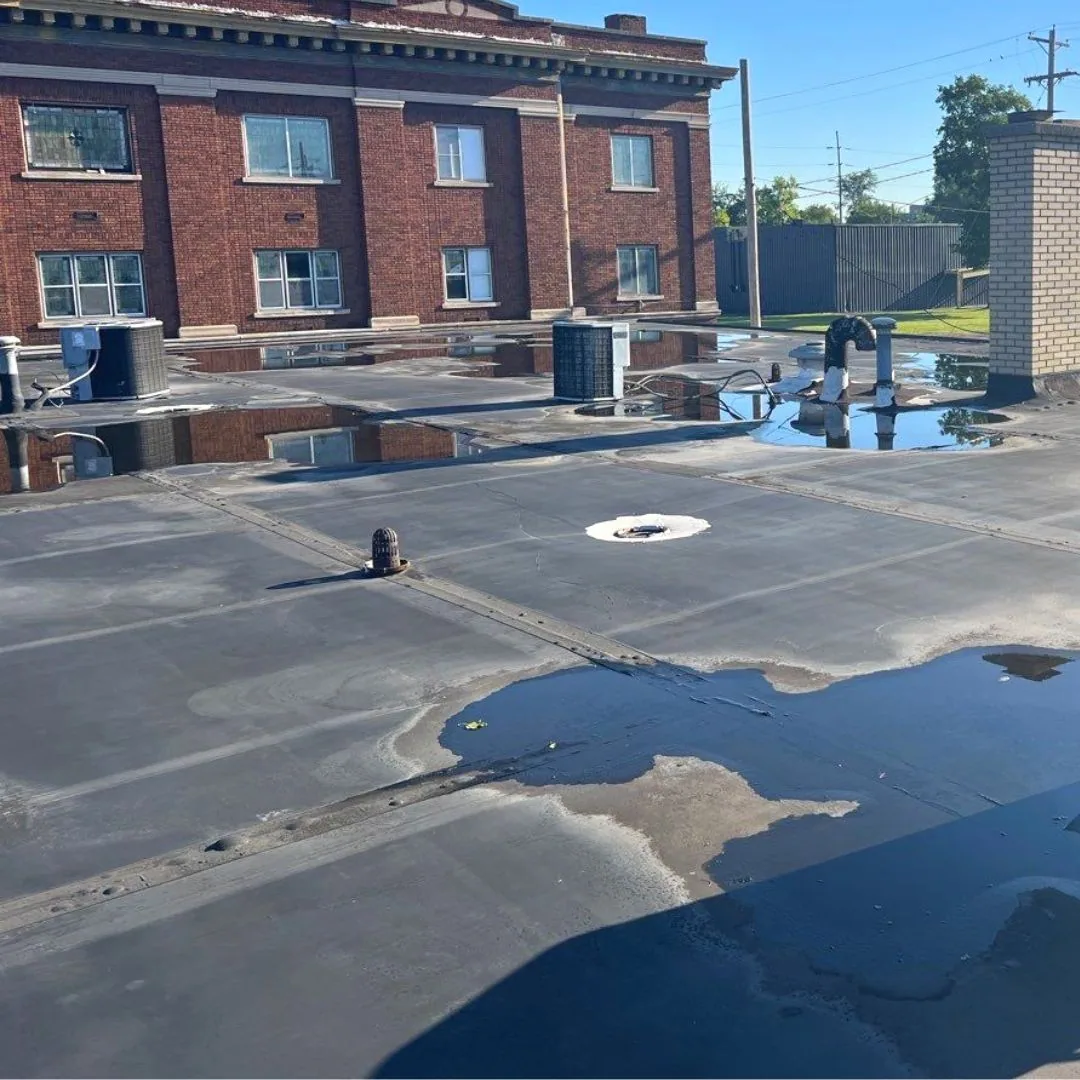
A ceiling stain can be separated from its entry point by a deck flute, insulation joint, or framing member. We ask when it appeared and how it changed, then compare the interior report with roof details above it. We look at seams, wall flashings, curbs, pipe supports, drains, and metal edges before proposing permanent work. The record labels visible conditions and concealed questions separately. If a test opening is needed, it appears as an approval item rather than an assumed quantity.
Prosper's incorporation and proximity to Frisco establish location, not building inventory. We ask the owner about the actual use, operating hours, equipment, and any route that has to stay open. Frisco's 2025 business-park category emphasizes office and modern industry, with office/warehouse, distribution, and showroom forms depending on zoning and city truck-route access. That Frisco planning context does not identify any Prosper property. A commercial roof inspection documents the assembly we find. A moisture survey may be considered only if the assembly and field conditions suit that method.
Protect the Interior While Scope Is Pending
Temporary protection controls immediate water entry but does not settle the permanent repair decision. We identify the affected room, protect equipment or contents, and state what roof area the temporary measure covers. The report names its limits and the next inspection or weather check that may change the plan. If a ceiling or wall needs a separate trade, we note the coordination point without blending it into the roof price.
That separation is useful when an owner has an active leak and a capital decision coming up. We can place emergency work first, then inspect and price a lasting repair or replacement after the surface is safe. A temporary-response visit can address active water at any hour. If the roof history is incomplete, we compare records with visible seams, edges, and repair patches instead of assuming a system. An EPDM repair review applies only when the assembly is identified as EPDM and the material is compatible with the repair.
Set a Weather-Safe Work Window
May's DFW precipitation average is 4.78 inches within a 37.01-inch annual normal for the 1991-2020 period. That regional volume makes runoff planning worth attention, but the roof visit must still test each drain, overflow, and low point on the property. We state the daily area that can be opened, prepared, and secured before the crew leaves, especially when the forecast may change that sequence.
Spring concentrates severe-weather activity across North Texas. Hail or damaging wind has occurred somewhere in the Metroplex in nearly every annual record, but a Prosper roof still needs its own inspection. That area-wide history is not evidence of impact on a particular Prosper building. We inspect for visible evidence before assigning storm work. A wet May window makes drainage and the end-of-day dry-in boundary practical checks. A hail-condition review can be separated from a drainage scope. Each line follows a roof observation rather than the weather calendar alone.
Compare the Known Repair with the Next Spend
One localized defect with serviceable adjoining material may support a contained repair. The proposal names preparation, materials, measured area, and its stopping point. Recurring leaks or test results that point beyond one detail may justify pricing replacement alongside repair. We set the limits of each path in writing and leave concealed quantities provisional until a test or removal confirms them. Added scope has a written approval point.
For a building that shares access with an active tenant or loading area, the sequence names the work zone, material drop, and daily dry-in point. We confirm whether the existing roof can accept staged material and whether other trades have lines or equipment crossing the work area. If not, we adjust the route and section size before mobilization. That information keeps the estimate aligned with occupied hours and prevents a repair boundary from crossing an unauthorized zone.
Crew pricing reflects the building elevation, existing roof layers, safe staging plan, perimeter-metal work, drainage route, tear-off volume, and the hours tenants can accommodate. A defined repair proposal should show its boundary, while a replacement alternative lists tear-off, insulation, attachment, flashing, and disposal as distinct items. Frisco's North Platinum corporate and mixed-use sites differ from its older downtown commercial buildings, so even regional portfolio planning needs property-level records. A capital review can carry those assumptions to the owner's budget date.
Leave the Next Reviewer a Clear Record
Before mobilization, we confirm roof access, staging, occupied hours, delivery routes, equipment shutdowns, and who can authorize a scope change. The work sequence sets the area the crew can secure at the end of each shift. Closeout includes dated photographs, installed materials, repair locations, approved changes, and any condition still requiring a test or another visit. Each item ties back to a labeled roof section.
A separate property map helps a manager compare future leaks with the completed work without assuming the source is unchanged. Prosper and Frisco share a regional climate context, while each building has its own assembly and access rules. For a portfolio, a photo-linked condition report retains the findings and approvals for the next budget review. Share the affected room, leak status, roof history, and available access window. We will identify the first check, protect active conditions, and return a prioritized repair-versus-replacement scope with its limits visible.
Commercial Roofing Questions
Does Prosper's proximity to Frisco tell you what roofs are in town?
No. The distance establishes geographic context, not a commercial building inventory. We verify each property's use and roof assembly from its records and an inspection before recommending repair, restoration, or replacement.
What can be done before a permanent repair is approved?
We can set temporary protection for active water and record what that measure covers. The inspection then identifies the likely entry, accessible roof details, and any test needed. Permanent work stays separate until the owner approves its boundary.
How do regional storms affect the inspection?
They can help the owner decide when to request a review, but they do not prove damage at a specific address. We photograph visible conditions, note access limits, and keep storm-related work within what the roof evidence supports.
What changes the price or schedule of a roof repair?
Height, roof layers, access, staging, edge details, drains, insulation, disposal, and occupied hours can change labor and material needs. We list the known repair boundary and identify a separate approval point for any concealed condition that changes it.