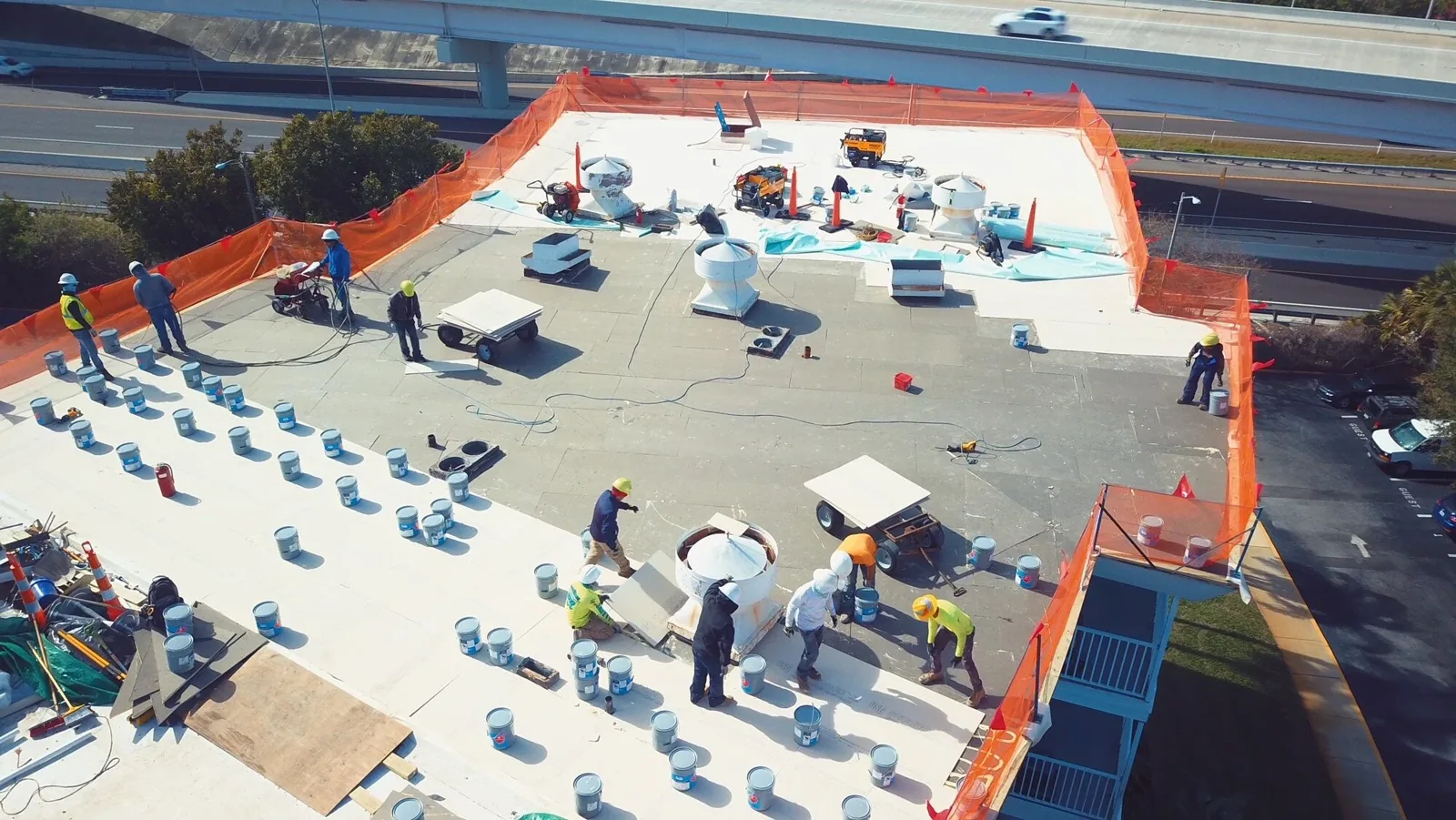
A wall or curb leak is a transition problem until inspection identifies the entry point. We protect the room below, compare the reported stain with the roof detail, and record whether metal, membrane, masonry, or equipment meets the joint. North Platinum Corridor's broad corporate sites and Frisco Rail District's older commercial buildings call for different access questions, but not different assumptions about concealed work. We document the actual termination and prior repair before selecting material. For a Rail District roof inspection, the first-hour record ties the interior report to the flashing detail above it.
Protect the Interior and Find the Entry Detail
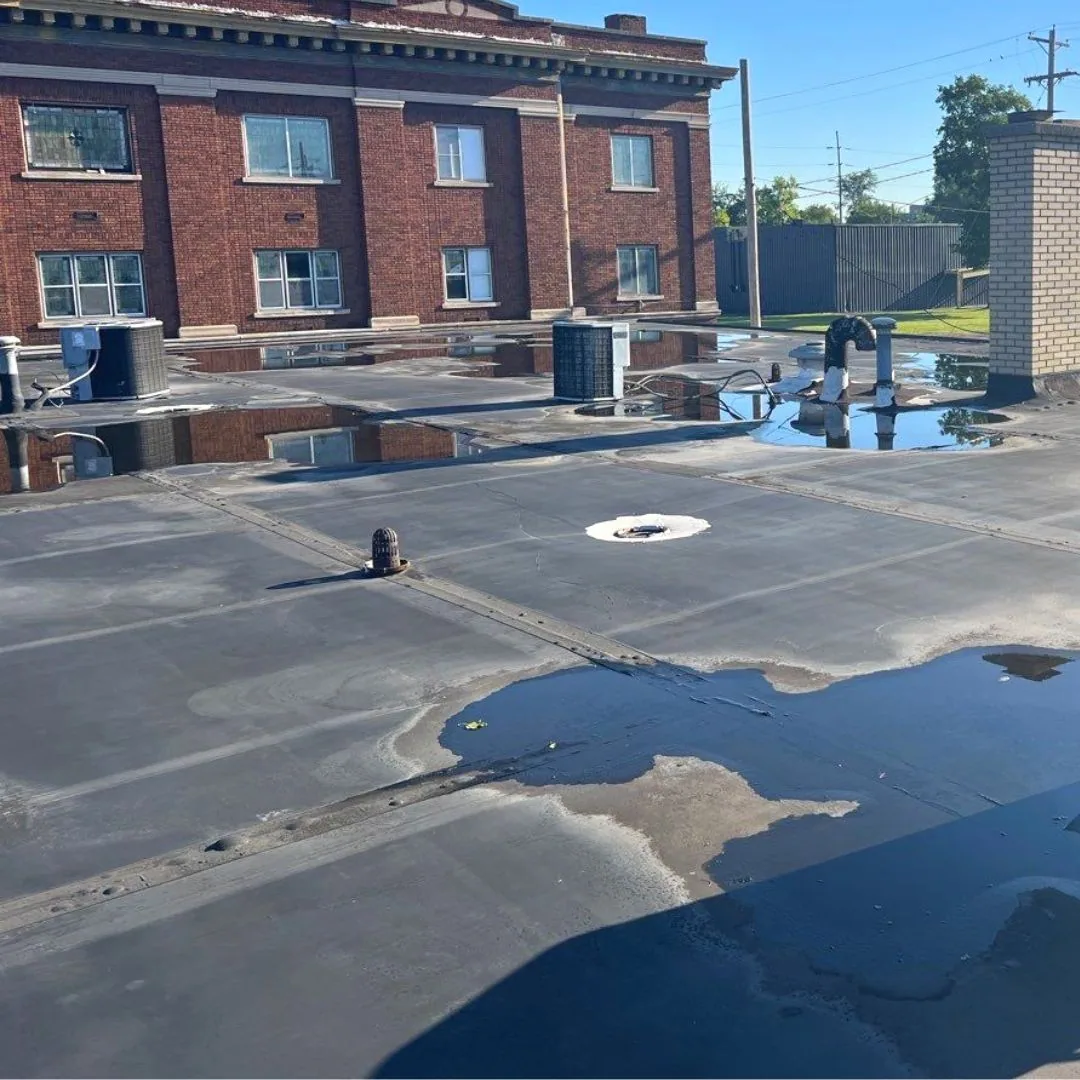
If water is active, we cover the area below and set a temporary protection boundary before opening the roof. At a parapet, we note coping joints, counterflashing height, and whether water could pass behind the vertical membrane. At a curb, we check corners and where support meets flashing. We extend the inspection to the next sound termination so the repair does not stop at a visible crack while an adjacent transition remains open. The crew records the room, stain, time, and nearby equipment, then checks the roof above and along the likely water path. A parapet corner or curb can leak while the visible ceiling mark sits several feet away. Photographs show the location and condition, not just a close-up of sealant. Our around-the-clock response can stop active water while the permanent flashing repair is measured.
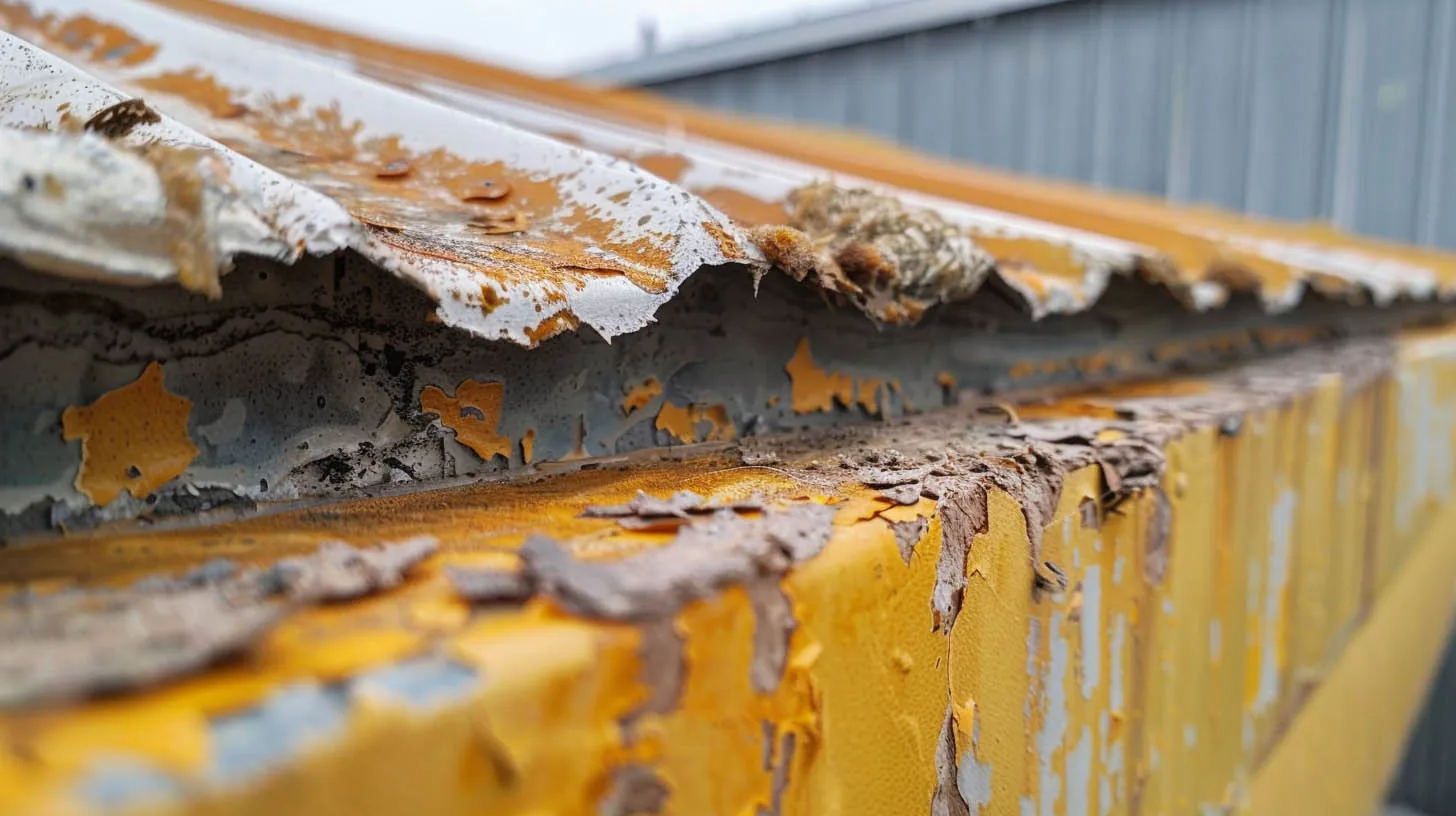
We identify whether flashing has pulled from a wall, opened at a lap, cracked at a corner, or lost a secure termination. The report names the transition and the work area that can be isolated. If substrate or concealed membrane condition cannot be seen, we list a test as a separate approval. A leak repair visit then distinguishes temporary cover from the final water-shedding detail.
Inspect the Full Transition, Not Just the Sealant
Flashing is part of a roof assembly, so a bead of sealant may hide a loose termination or incompatible repair. We inspect the vertical surface, membrane turn-up, counterflashing, curb, fasteners, corner conditions, and nearby seam. If the metal has moved, we check attachment and whether the surrounding substrate can hold a new fastening pattern. A replacement flashing detail should tie into sound membrane and shed water beyond the repaired point.
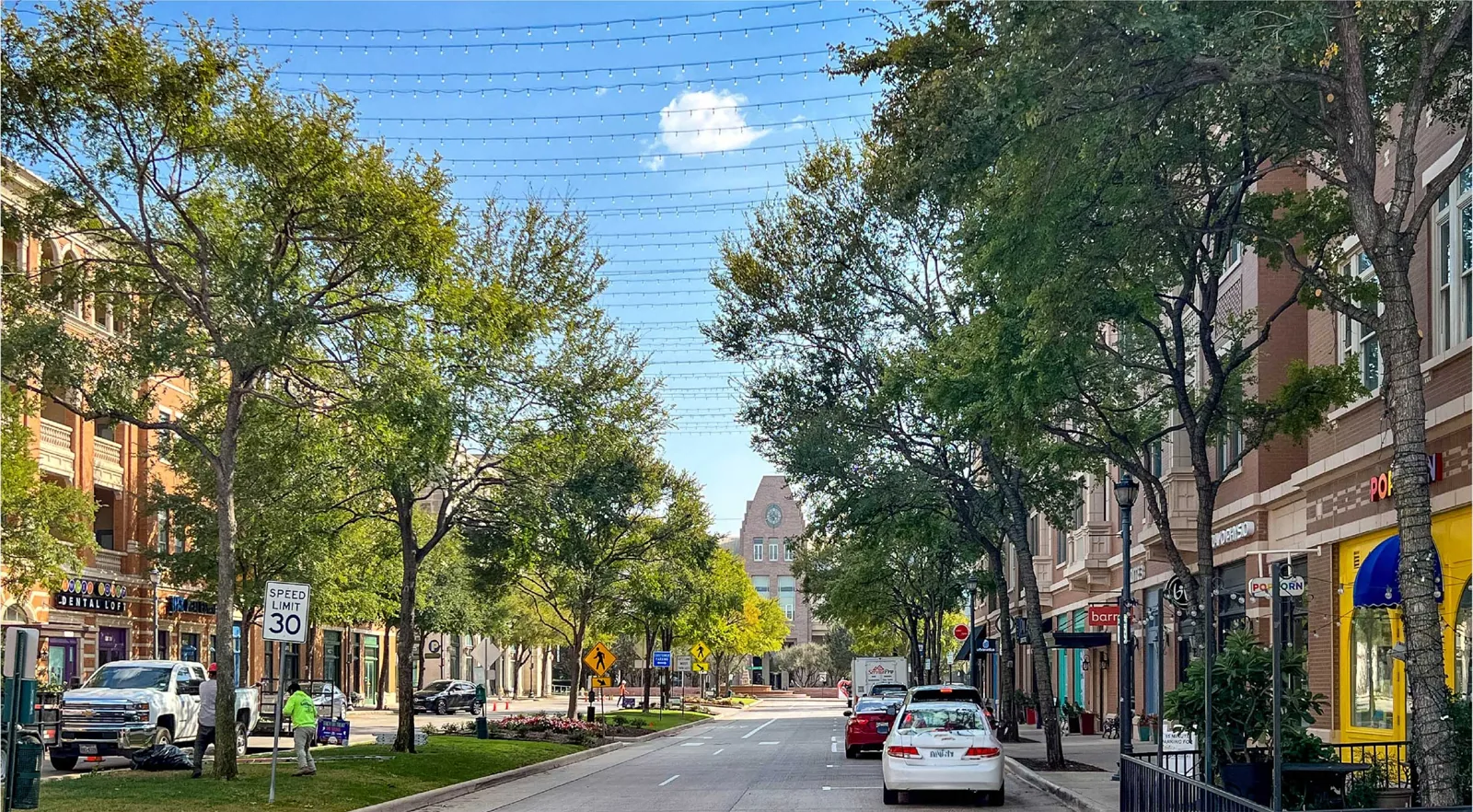
Frisco's business-park land-use plan permits several nonresidential forms where zoning and truck routes allow, including office, warehouse, distribution, and showroom uses. The allowance helps frame delivery questions, not diagnose the curb. We identify the actual roof and wall materials, then photograph each termination before proposing a repair. A roof inspection record distinguishes observed conditions from concealed areas; a seam review stays separate if the adjacent lap has also opened.
Follow the Water Path after a Frisco Storm
NWS DFW describes spring as a wet and active severe-weather period. Large hail and damaging wind are reported somewhere in the Metroplex in nearly every year, yet that regional frequency cannot locate damage at one Frisco roof. We compare the reported event date with lifted metal, an open seal, moisture, or impact around the transition. DFW July and August normal daily highs are 95.6°F and 95.8°F, which can affect material preparation without explaining a particular gap. The condition at the joint determines whether the next action is refastening, a membrane tie-in, or replacement of the flashing section.
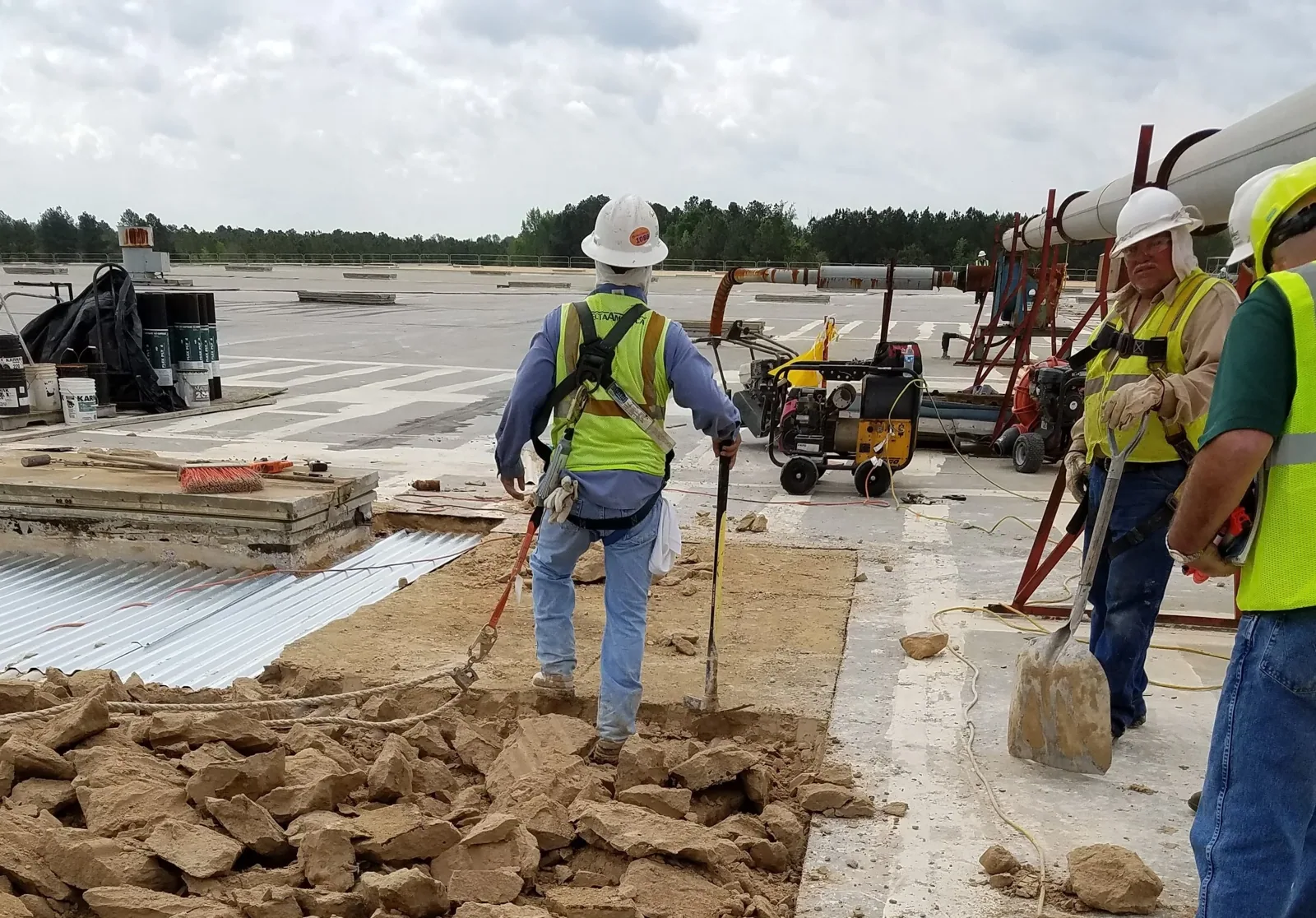
Before a lift arrives, the building contact confirms the gate, roof hatch, delivery route, and any loading activity below. A work window can keep material handling away from tenant access while the interior beneath the transition is protected. The phased access plan records the staging limit and identifies the wall or curb section that remains closed until the repair has been checked.
Choose a Repair Method that Matches the Assembly
We prepare the transition according to its materials and condition. That may require removing loose sealant, fastening metal, replacing a flashing section, tying compatible membrane into the wall, or correcting a nearby curb. The estimate names the surface preparation, materials, attachment, laps, and water path tested at closeout. If water or soft substrate continues below the visible detail, we stop and document the condition before extending removal.
A targeted repair can be compared with replacement when deterioration crosses several roof sections. A coating is not a substitute for loose metal or an unresolved wall termination. A commercial repair scope separates the flashing detail from any membrane or drainage work. If the owner also reports pooling, a ponding water review can establish whether the outlet or slope is a second issue.
Leave a Record for the Next Roof Walk
Closeout includes photographs before and after work, transition location, materials installed, any exposed substrate, and the next recommended check. The property team can compare later movement with the repaired detail instead of repeating the full diagnosis. If the repair was made above an occupied suite, the record can also note the access route and protection removed. A roof condition report keeps the detail map beside other maintenance items.
North Platinum and the Rail District supply geographic context for Frisco, but access and assembly are specific to each roof. We identify what was repaired, what remains open, and which approval governed any added work. The owner receives the repair boundary, the photographs supporting it, and a date for follow-up when movement or water path remains a concern. We can name the property contact who will reopen the roof hatch and the section label the next crew should use. That small handoff keeps later work tied to the repaired detail. A future inspection can then start with the same curb, corner, or wall transition. We photograph the complete detail from both directions so the next reviewer can compare its edge and termination without reopening an unrelated roof area.
Commercial Roofing Questions
How do you find a flashing leak above a ceiling stain?
We protect the interior, note the stain and active-water timing, then inspect the roof above and around the likely path. Water can travel along framing or a deck before appearing indoors. Photographs and a section map show the transition inspected, what was found, and whether the final scope needs a test opening.
Can failed sealant be replaced without changing the flashing?
Sometimes a sealant repair is suitable, but only if the metal, termination, substrate, and adjacent membrane remain secure. We inspect those components before choosing a repair material. If the flashing itself has pulled away or lost attachment, a new bead will not restore the detail, so that work is priced separately.
Does wind or heat cause a flashing failure?
Wind, heat, age, movement, prior work, or water exposure can be relevant, but a reported event does not prove a cause. We document the condition and the assembly at the transition. The repair scope focuses on what is open or loose and leaves an unsupported cause out of the recommendation.
Can flashing repair happen while the building is occupied?
A small repair can often be isolated if roof access, noise, odors, and interior protection are planned. We coordinate the room below, equipment route, and work window with the property contact. If access or removal will affect an occupied area, the proposal identifies the brief restriction before the crew starts.
What should the closeout show after a flashing repair?
Keep the transition location, before-and-after photographs, materials, attachment detail, any concealed condition approved, and the next review date. We identify whether the nearby membrane or drain remains an open item. That gives the next inspector a precise point to compare instead of relying on a general note that the roof was repaired.