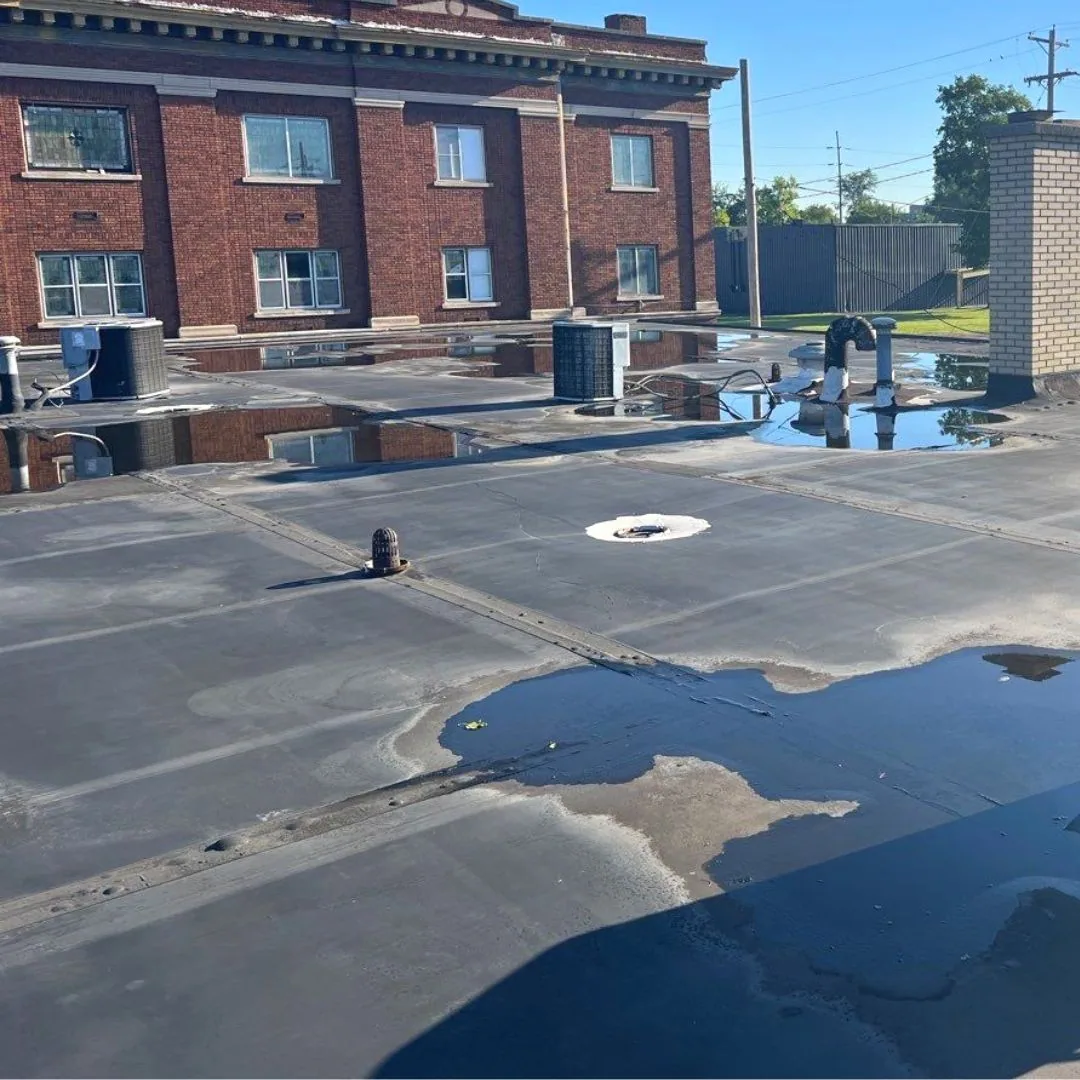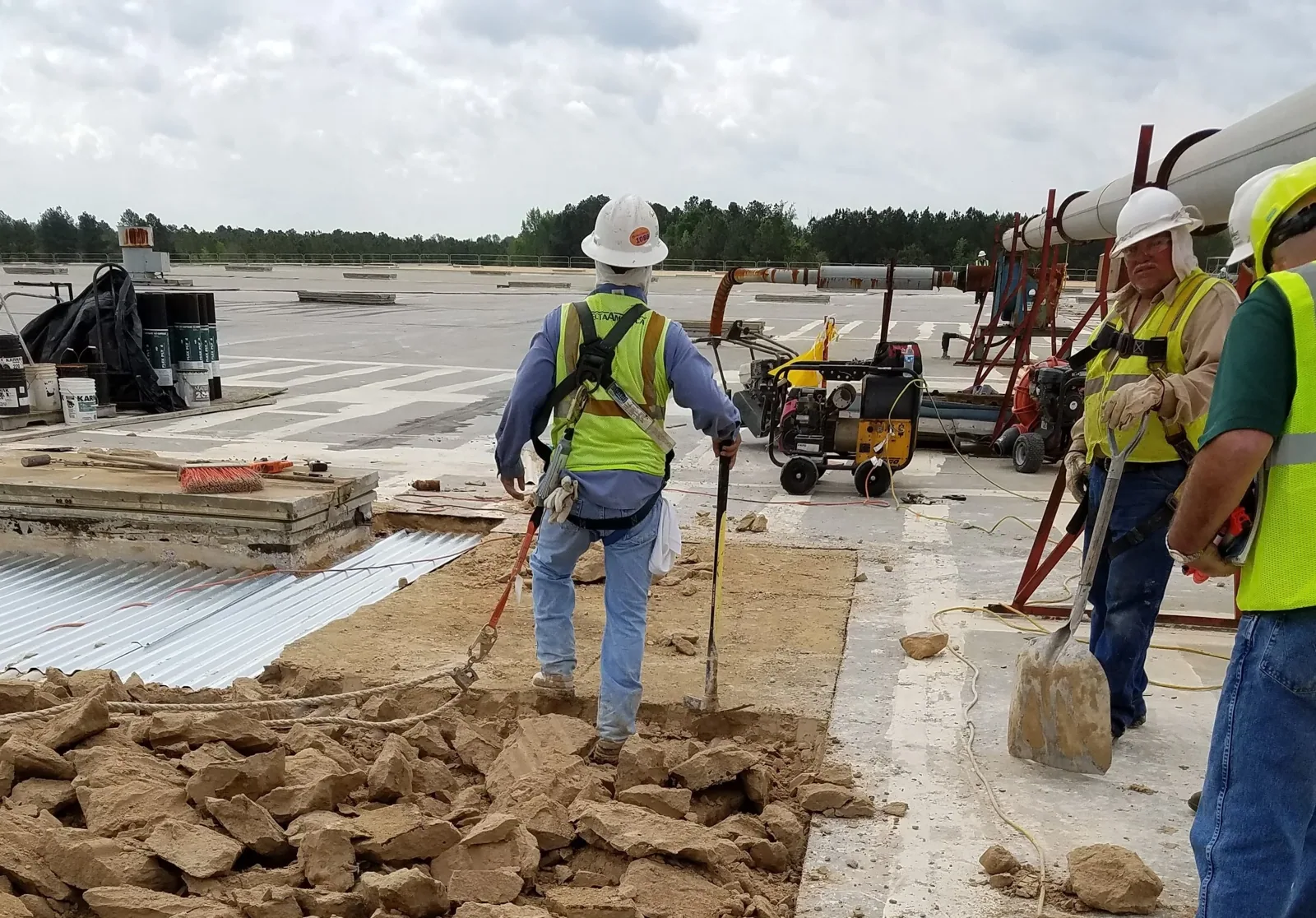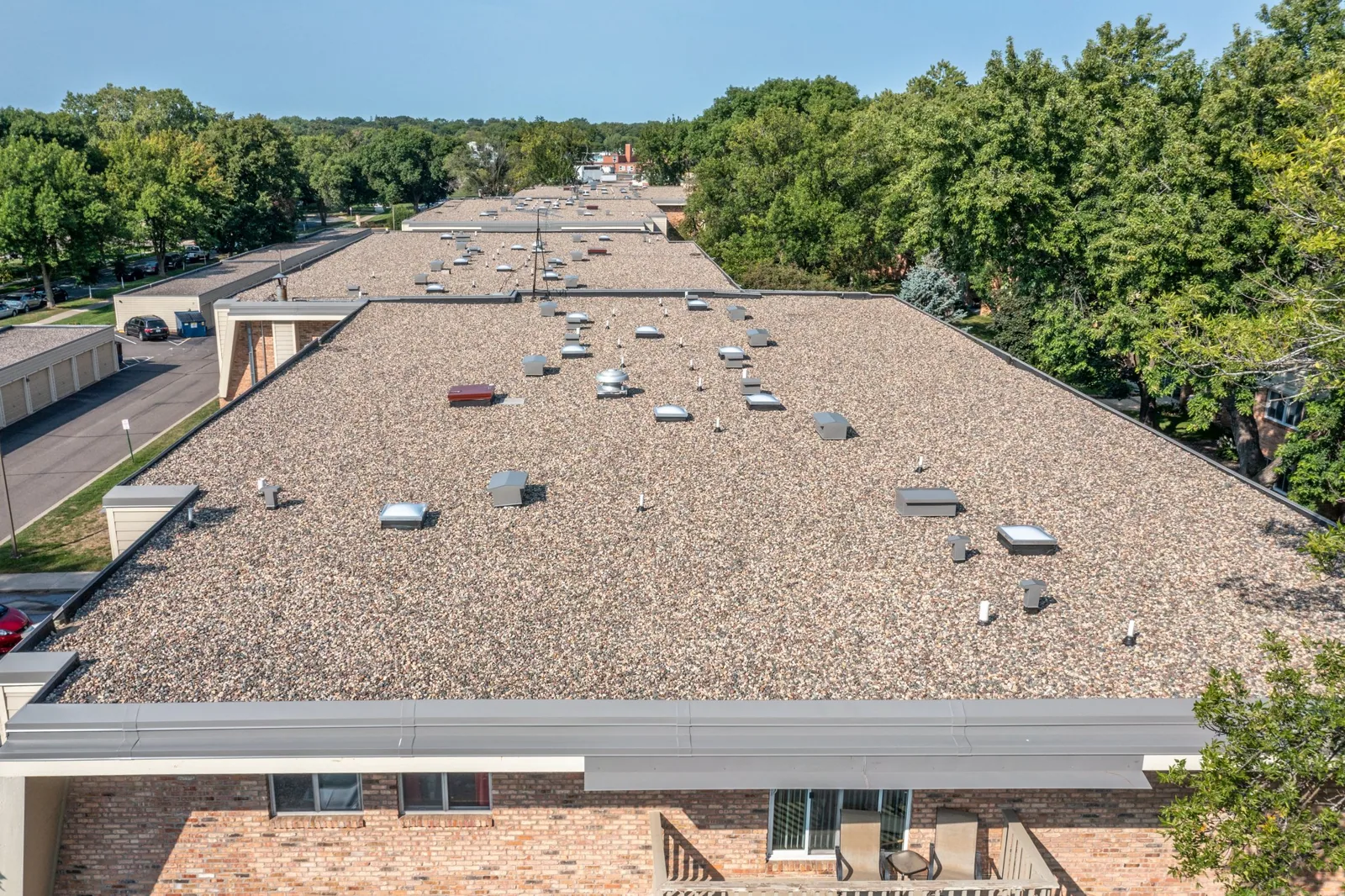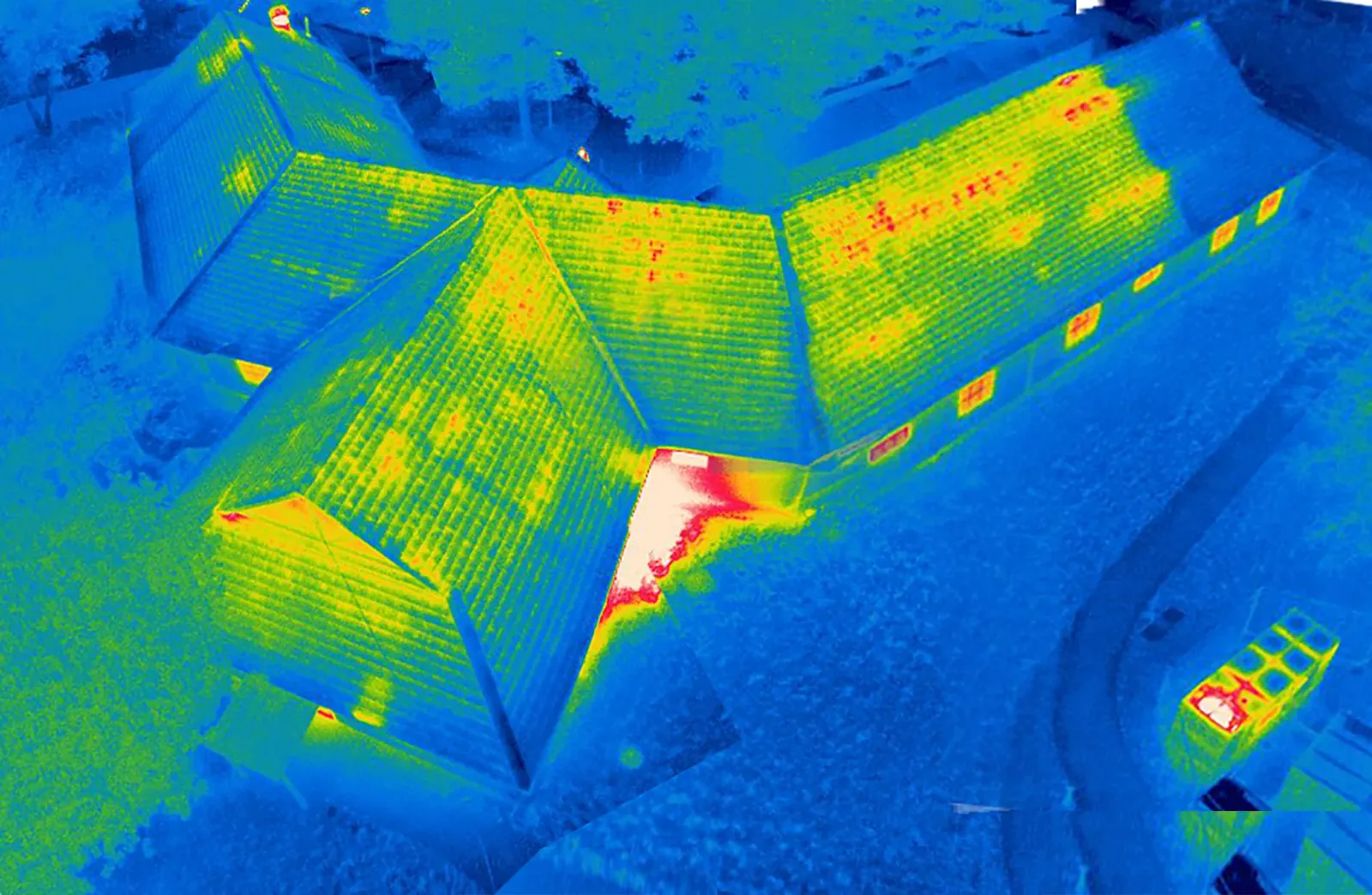
A separated lap changes the repair question: identify what held the seam together, then find out whether water reached the assembly below. We trace any ceiling report to a roof section and examine adjacent flashing, patches, and fasteners before choosing a bond or weld method. North Platinum Corridor's corporate sites and Frisco Rail District's older buildings may have different access rules, but each membrane is verified on site. We document the seam length and the next safe work window. A North Platinum seam inspection focuses on the actual opening rather than a presumed membrane type.
Stop Active Water before Restoring the Lap
If water is entering, we protect the interior and set a temporary boundary while the roof section is inspected. The crew photographs the seam, nearby punctures, flashing, fasteners, and any patch that may overlap the opening. The reported stain can sit away from the lap, so we follow the path rather than matching the repair to the nearest visible drip. Our around-the-clock response can address active water while the owner decides whether a permanent repair can proceed immediately.
A temporary cover does not restore the membrane bond or attachment. We identify the seam length, lap direction, substrate, and whether wet insulation may extend beyond the visible split. If the opening must be dried or tested first, that step is listed before final material work. A commercial leak repair can keep protection, permanent seam restoration, and added removal on distinct approval lines.
Identify the Membrane and the Failed Bond
Seam repair depends on knowing the assembly. We check membrane type, lap width, weld or adhesive condition, fasteners where present, surface contamination, and evidence of prior work. A thermoplastic weld, EPDM adhesive lap, and metal panel seam need different preparation and materials. We clean the repair area as required for the system and test the bond or weld before extending the permanent correction. If the substrate or membrane cannot be identified confidently, we recommend a test or manufacturer-compatible evaluation before pricing a broad scope. For a heat-welded thermoplastic lap, we look for continuous fusion and a clean weld margin. An adhesive seam needs a dry contact area and even pressure. We select a method after system identification, test the repair area, and verify the bond before extending the work along the full opening.
Frisco's business-park plan allows office, warehouse, distribution, and showroom activity where zoning and truck routes permit. That land-use framework does not identify what is installed at an individual building. We test the actual seam surface and record the opening on an inspection map. If a curb or wall termination has also pulled free, a transition repair review keeps that work separate from the lap closure.
Check the Insulation below the Open Seam
A split lap may allow water beneath the membrane even when the visible gap is small. We inspect interior staining and any accessible roof-side condition, then identify whether moisture survey or test opening is needed. If insulation is wet, a surface patch alone may not restore the assembly. We map affected material and ask for approval before removal extends beyond the signed boundary. A moisture survey can help locate areas for follow-up when site conditions support that method.
May averages 4.78 inches in the 1991-2020 DFW precipitation series, against a full-year normal of 37.01 inches. That regional context makes water-path review useful after rain but does not identify which seam allowed water inside. A ponding-water review may be relevant if a low area holds water near the lap. We keep the moisture finding separate from a drainage correction until each scope is supported by inspection.
Schedule the Weld or Adhesive Work Safely
The DFW climate series puts the average August high at 95.8°F after 95.6°F in July. Adhesive and weld work still follows the actual membrane surface temperature. A weather station does not measure membrane temperature at a Frisco property, so we check the surface before preparation. The seam must be clean and dry, and the repair method must match the roof system. Hot-air welding and adhesive work use different preparation steps. We define the area exposed during the shift, the point where temporary cover can be secured, and the return condition if weather interrupts the work. Before the crew leaves that section, the installer checks the bond or weld along the closure and records any finding outside the approved scope. A seam beside a curb is photographed as its own transition, not folded into the lap measurement. The closeout keeps the roof coordinates so a later inspection can revisit the same joint.
The building contact supplies the roof entry, lift path, and any restrictions on deliveries. In the Rail District, a storefront may need a work period that avoids customer access; a larger North Platinum facility may control entry differently. The phased repair plan identifies the section closed during work, who receives notice, and when the repaired area can return to service.
Close the Seam with a Measurable Record
At completion, we record the seam location, repair length, preparation, material, bond or weld check, and photographs of the finished lap. If the work uncovered wet insulation or an unstable substrate, the file shows its approved boundary and any remaining question. The owner receives the repair line, the next inspection date, and a note about the surface condition that should prompt another look. A condition report can preserve the seam map for maintenance staff and capital review.
One open lap does not determine the state of an entire roof. We compare the repaired seam with nearby transitions, prior patches, and roof sections that were actually inspected. If repeated seam movement appears across the assembly, a replacement or restoration comparison can be priced separately. The Frisco property record should identify what was observed and what remains outside the approved work so another contractor or owner does not confuse one repair with a roof-wide assessment.
Commercial Roofing Questions
Can a split roof seam be sealed with a surface patch?
A patch may be an appropriate repair if the membrane, bond, substrate, and water path support that method. We first identify the assembly and prepare a compatible repair area. If moisture or movement continues below the lap, the scope may need removal or testing before a surface repair can be considered complete.
How do you confirm which roof system has a failed seam?
We inspect the membrane, lap construction, fastening, surface condition, and prior repairs. Photographs and existing roof records can help, but the material on the building is the final check. If the system is concealed or unclear, we identify a test step before naming a product or repair method.
What happens if insulation is wet below the seam?
We map the affected area, protect any roof opening, and send the added removal or test boundary for approval. Wet material may need replacement before the membrane is closed. The owner sees the measured condition, proposed preparation, and cost change before work moves outside the original seam repair.
Can seam repair happen during Frisco's hot summer?
It can when the membrane surface and material handling conditions support the selected method. We check the roof surface, forecast window, and safe size of the open area before scheduling. If the installation condition is outside the product requirements, we secure the section and return when a suitable window is available.
When should we compare seam repair with replacement?
A localized failure may remain a repair, while repeated openings, broad moisture, or attachment concerns can justify a larger review. We document the seam sections inspected and price testing separately when conditions remain hidden. A replacement comparison follows the assembly evidence, not the existence of one failed lap.