Retail roof work in Frisco, TX begins with the customer area that must stay open and the access route crews can use. We protect the interior, locate the roof section, and define which store stays open while the repair is planned. Frisco's North Platinum Corridor includes corporate and mixed-use development, while the Rail District has commercial blocks with a different access pattern. Frisco business-park areas can allow showroom and distribution uses where zoning and truck-route access support them. Those contexts can shape delivery and staging questions, but a store's own roof assembly must be verified. A North Platinum site review starts with the customer area, the water path, and the next operating window.
Protect the Sales or Dining Area
The first call identifies the active leak, the room or aisle affected, and the contact who can arrange roof access. We protect tables, merchandise, electrical equipment, and customer paths while checking nearby seams, drains, curbs, and wall transitions above. Water can follow a deck flute or duct before it appears indoors. We photograph the route and separate a confirmed opening from a condition that needs more testing. Our around-the-clock response can set temporary protection outside normal business hours so the operator can review a permanent repair before reopening.
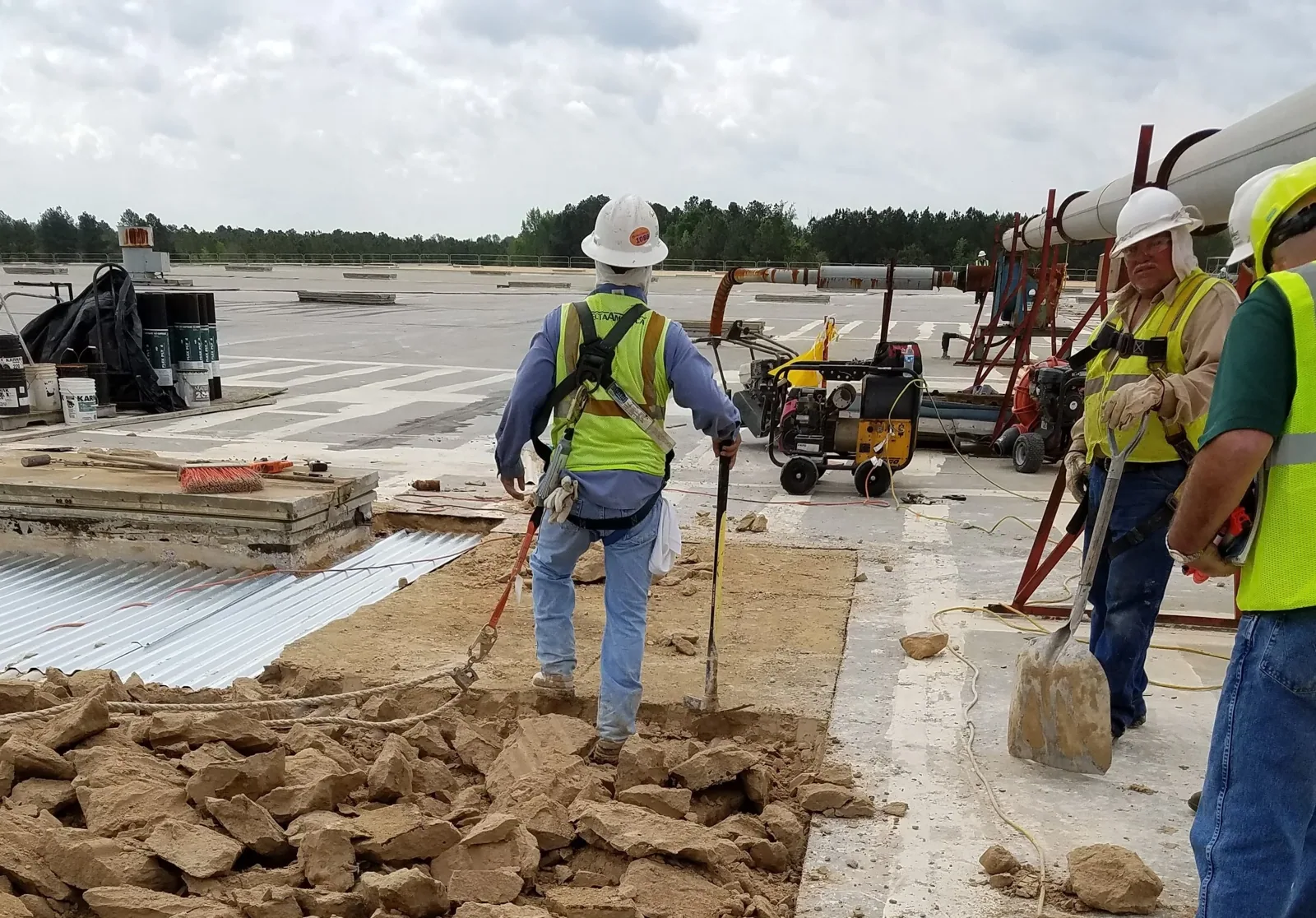
For a chain, the manager needs to know whether work affects a door, delivery entrance, patio, kitchen, or stockroom. We place equipment and debris inside an agreed boundary and note what remains accessible. A commercial leak repair can be phased around a meal period or store opening, but the section must still be closed and dry before the work zone is returned to customers.
Check Exhaust, Curbs, and Roof Transitions
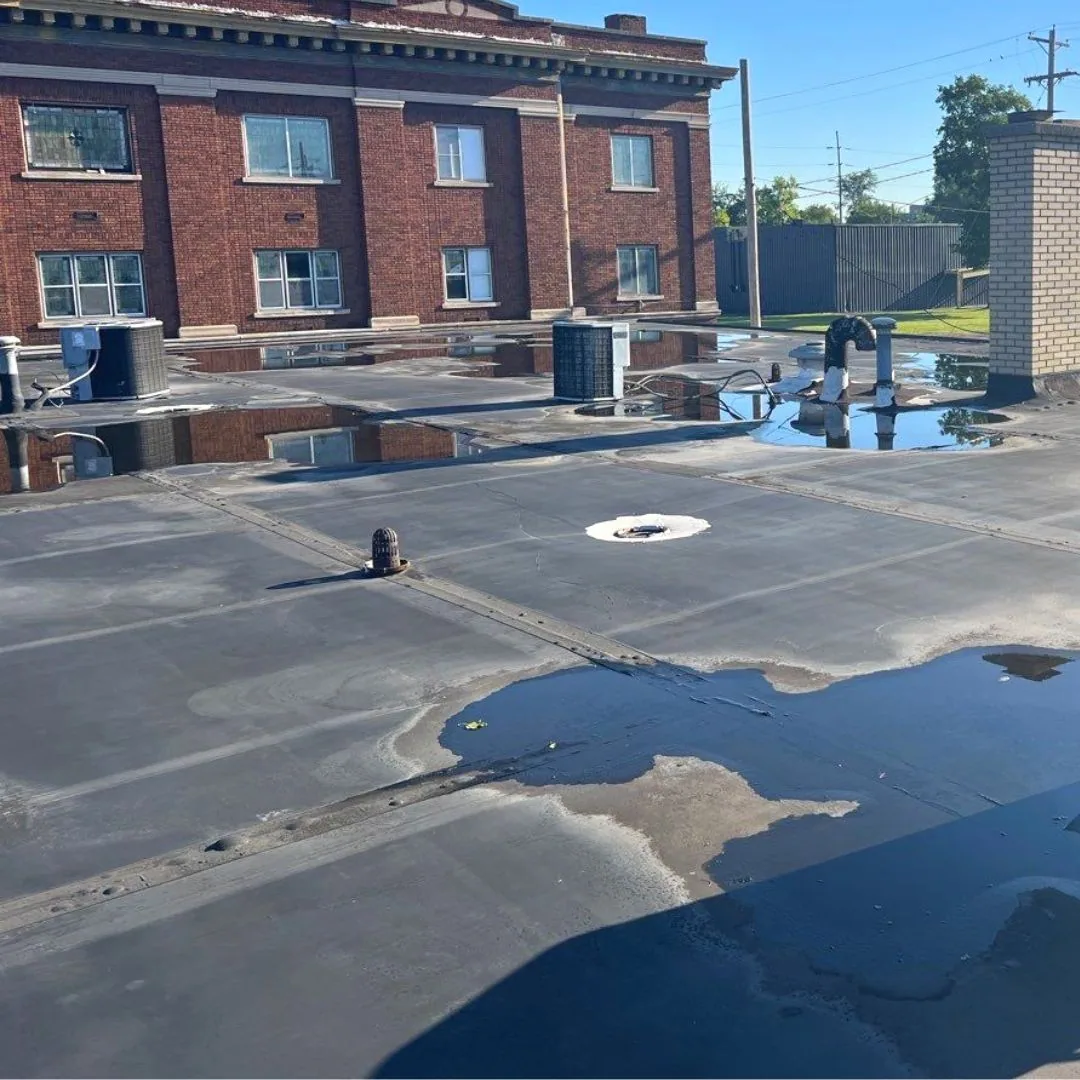
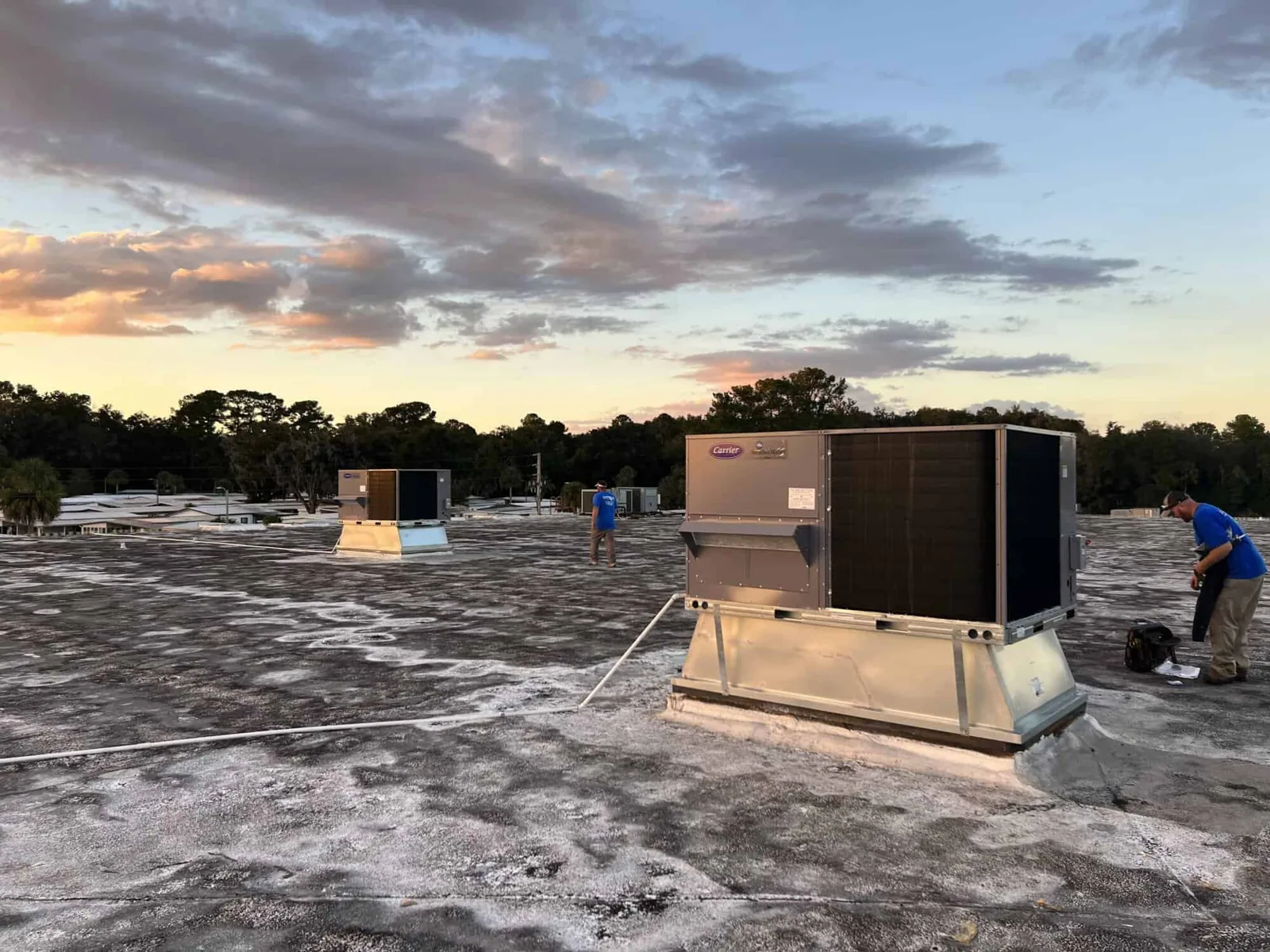
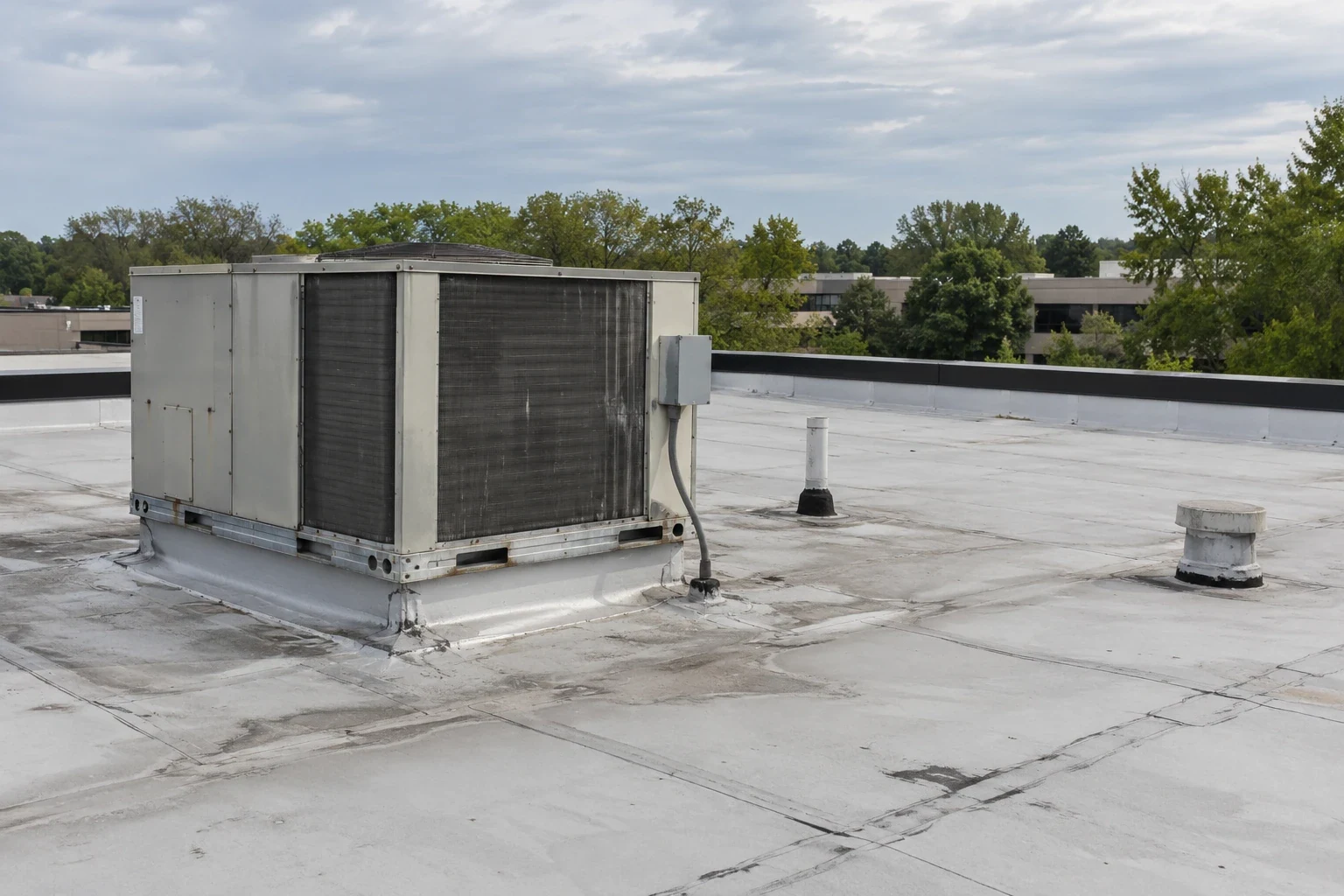
Restaurant roofs often share space with exhaust equipment, make-up air, refrigeration lines, and service platforms. Those details need a different look from a membrane seam in an open field. We check flashing, curb attachment, grease or debris exposure, nearby penetrations, drainage, and previous patches. Retail spaces may have parapets, signage supports, skylights, or tenant-installed equipment. The inspection record identifies the visible assembly and each transition that can change the scope. A curb and support review can stay separate from work on the field membrane.
Frisco's planning describes corporate and mixed-use properties as well as downtown commercial buildings, but those categories do not prove that a named tenant uses a particular roof detail. We confirm it at the property. If cooking equipment must remain in service, we coordinate an access window with the operator and identify the trade contact for temporary shutdowns. A roof inspection returns photographs and a repair line rather than a general building-wide label.
Keep Store Schedules and Roof Sections in Sync
A regional operator may have several roof decisions open at once, but each store needs its own condition map and contact. We record the address, roof section, access restrictions, reported leak, and approval path in a consistent format. That lets a facilities lead compare locations without assuming that the same system, tenant hours, or repair history applies everywhere. A property coordination record can preserve landlord, tenant, and maintenance contacts beside the scope.
Frisco identifies Dallas Parkway and US 380 as important mobility corridors, while the Rail District offers a separate downtown context. Neither tells us where a delivery truck can wait or how equipment reaches a specific roof. The site manager confirms the approved route, store hours, dumpster location, and lift access before the crew arrives. A phased work plan can keep sales and dining areas open when the roof opening, noise, debris, and customer path are safely separated.
Review the Roof after Heat or a Reported Storm
Chain operators need a seasonal review calendar that leaves each storefront with its own evidence. DFW climate normals show July and August average highs of 95.6°F and 95.8°F; a roof visit should be scheduled around the actual store hours and conditions on that roof, not a systemwide alert. Spring is the wettest and most active severe-weather part of the local year. A regional report may help select locations for inspection, but a manager should not transfer one store’s finding to the next address.
For Frisco, the 1991 through 2020 precipitation normal is 37.01 inches annually, with May averaging 4.78 inches. That monthly figure gives a reason to verify how an outlet and overflow route function before the rainy period. A drain and scupper review records the outlet observed, debris present, and the route water can follow. Operations can then prioritize a specific store, retain photos with its work order, and keep drainage correction separate from any seam or flashing repair.
Leave a Store-Level Record for the Next Visit
The closeout package identifies repairs, materials, photographs, the remaining open condition, and the next date for review. A manager can use it to reopen an area, notify a tenant, or preserve the record for an insurer. If the repair uncovered wet insulation or deck damage, we show the approved change and the exact roof section it covered. Concealed conditions outside the signed scope remain a separate decision. A dated condition report helps a chain compare repeat repairs with a planned replacement line.
Frisco's North Platinum business area and the Rail District are useful geographic contexts, but customer use and roof assembly still come from the store itself. We keep the job plan tied to the building's operating hours and observed condition. A construction coordination file can record any other trade working above the sales or kitchen space. The operator receives the repair boundary, who approved it, and the date a later check should occur. We can note whether a follow-up requires store access, landlord approval, or a return visit after another trade completes its work.
Commercial Roofing Questions
Can we keep a store open during a roof repair?
A phased repair may leave customer areas open if the lift route, roof opening, noise, odors, debris, and interior protection can be separated. We review store hours and the affected room with the manager before setting the sequence. If the work crosses an entrance or dining area, the proposal identifies the brief closure or alternate route needed.
What should a restaurant do when water appears near the kitchen?
Protect food, equipment, and staff from the affected area, then provide the roof-access contact and the location of the drip. We inspect the water path around exhaust curbs, penetrations, drains, and nearby seams. The repair plan records any kitchen shutdown or mechanical coordination needed before the roof section opens.
How do you coordinate roof repairs across chain locations?
We use separate records for each store, with its leak status, roof section, access window, landlord or tenant contact, and repair decision. A shared report format helps a facilities lead compare scope, but it does not copy one building's condition to another. Each location remains tied to its own photographs and observations.
Does a spring storm mean a store has a claimable roof loss?
A regional storm report does not establish damage at a specific location. We inspect the roof and interior findings, photograph any visible opening or movement, and keep the event date separate from the repair recommendation. The operator can then provide the documented condition to its insurer or property owner.
What affects the cost of a retail or restaurant roof repair?
Roof access, the number of equipment transitions, store hours, staging, drainage, materials, and interior protection all affect the work. If removal reveals hidden wet insulation or damaged deck, additional work needs documentation and approval. We list the confirmed scope and any approval process separately so an operating manager can review both cost and downtime.