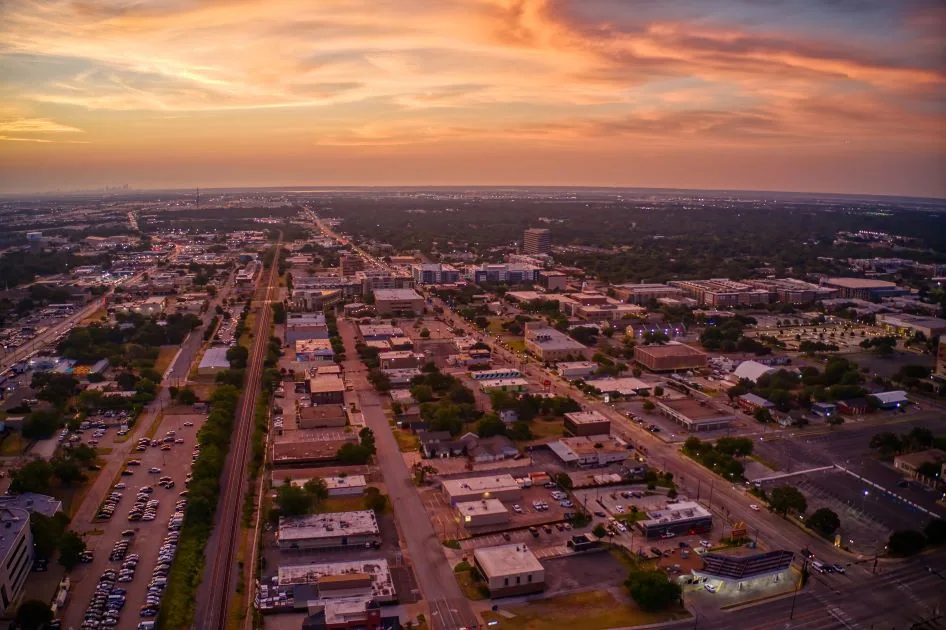
A leak above a Fairview commercial space needs an immediate water plan, a roof section, and a repair window the owner can approve. We trace the reported path and record the access route and operating hours before setting the first scope. The US 75 and SH 121 market includes commercial and mixed-use development, while Fairview Parkway infrastructure supports planned business growth. That context helps frame access and phasing; the roof inspection sets the repair boundary.
Summer heat and spring storms affect the timing of roof work across the DFW region. July and August average highs are near 96 degrees, and severe-thunderstorm frequency peaks in spring across North Texas. The regional record does not tell us whether a Fairview roof has a defect. We inspect the surface and record observable seams, curbs, drainage, edge metal, and previous repairs. An Aubrey roof assessment or commercial work in Anna has its own section map; this scope begins with the conditions at the Fairview property.
Read the Corridor Without Guessing at the Roof
US 75 and SH 121 define a commercial and mixed-use market in the Fairview EDC material. Fairview Parkway infrastructure supports planned business growth. These planning facts do not establish how many buildings are operating or what roof systems they carry. We confirm the property's current use with its manager and look at the roof itself. That keeps a corridor description from becoming a claim about one address.
If a business is evaluating a purchase or expansion, an inspection can identify what is known before a capital decision. We document the assembly visible at the roof, check transitions and drainage, and list test openings that may be needed to confirm concealed layers. A purchaser can then compare the current condition with an intended schedule without relying on a future-use label. The scope describes the present roof and reserves any design-dependent detail for a later review when drawings and access are available.
Find the Entry Point Before the Stain Spreads
A wet ceiling tile can sit several feet from the roof opening. We compare the interior report with the roof above it and inspect adjacent seams, penetrations, wall transitions, drains, and perimeter metal. When a building has several roof levels, we mark which section was reached and where water could travel between surfaces. A photograph of a stain alone does not support a large repair boundary; the roof-side observations must connect to it.
For active water, we protect the interior and document temporary measures separately from permanent repair. The roof detail still needs a sound surface, compatible material, and a closure that can be tested. If concealed layers remain uncertain, we state what a test opening would establish and ask for authorization before opening the area. A leak repair should leave the owner with a clear repair line, not an undocumented patch with no next inspection date.
Set Staging Around the Property
A corridor can be busy while an individual property has its own loading and security rules. We ask the site contact where materials can arrive, which route must remain open, and who can approve access to the roof. If tenant hours or equipment service limit the work period, we note that before assigning labor. The daily sequence identifies the section that can be opened and the point at which it will be weather-tight again.
When Fairview Parkway improvements or other site work overlap with roofing, the owner can identify the current route and any changed entrance; we do not assume construction is underway. If a lift or rooftop unit needs coordination, we set that dependency with the responsible trade before delivery. A phased reroof plan keeps protection below, material staging, and the roof opening in the same schedule. A separate roof review in Murphy would use its own property access record.
Schedule the Walk Around Exposure
DFW's July and August normal highs near 96 degrees can shorten a safe roof window. We choose a period that allows the crew to inspect and close exposed details without rushing. Heat may affect handling and surface movement, but a regional average cannot establish a failure. We look for lifted flashing, open seams, damaged closures, or water evidence that warrants a test.
North Texas severe-thunderstorm frequency peaks in spring. Hail and damaging winds occur somewhere in the Metroplex in nearly every year, though a regional event does not mean each Fairview property is affected. If the owner reports a new change, we record the roof section and compare earlier photographs, invoices, or maintenance notes where available. A documented inspection can separate a new concern from an older repair. The owner receives the next action and the date when unresolved conditions should be reviewed.
Compare the Repair with the Next Spend
A localized repair fits when the observed failure has a limit and the surrounding area can still perform. Replacement enters the discussion when moisture, recurring leaks, or attachment concerns extend beyond one detail. We show the findings that support each path and identify areas that remain untested. A claim of planned business growth cannot tell an owner whether the current roof is ready for another lease term; the building's condition must answer that question.
Cost depends on access, roof height, staging, insulation, removal layers, drainage work, and the time available to protect the space below. We list a known repair separately from an optional test or concealed-condition allowance. A replacement proposal identifies sections and phasing, while a capital timing review helps place a larger project beside other property work. The owner can approve the repair line now and keep a longer project under a separate budget date.
Waiting can change the amount of interior protection required even when the roof defect remains local. We record whether water is active, what contents or operations sit below, and how quickly a safe roof-side repair can be reached. If permanent work must wait for access approval, the first authorization can cover containment and a follow-up inspection. The owner receives the limits of that temporary step and the conditions that should trigger an earlier call, such as renewed water entry or a visible change in the roof surface.
For a property near a planned growth area, the current lease, access arrangement, and capital deadline may be different. We include those dates in the work plan so a repair decision does not drift into the next phase without a review.
If removal exposes a condition outside the priced boundary, we pause and document it before continuing. The owner can approve a test, authorize a defined extension, or protect the area and schedule another review. Each choice carries its own timing and cost consequence.
Commercial Roofing Questions
Does Fairview Parkway planning tell you what is built today?
That plan describes infrastructure intended to support future business growth. We verify the current property use and roof condition during inspection rather than assuming a project or building is complete.
How do you find a roof opening that appears away from the stain?
The reported interior mark is compared with the roof above, including connected seams, curbs, walls, and drains. A test opening is listed separately when the water path remains uncertain.
Can work fit around a Fairview property renovation?
Roof work is coordinated with the site contact and other trades. The daily plan sets the staging route, access rules, and time when the open section must be closed. If work zones conflict, we schedule a different window.
When should replacement enter the budget?
We compare it when inspection or testing shows a condition beyond an isolated repair, such as broad moisture or recurring failure. The proposal describes included sections and separates unverified conditions from confirmed work.